
“15 Cookware Pieces Every Kitchen Needs” isn’t a command to fill your kitchen with duplicate pans. It’s a practical guide to the jobs each piece can handle. You need reliable tools for meals you actually make, not fifteen new boxes to unpack.
A 10-inch skillet and a 2.5-to-3-quart saucepan make useful starting sizes. A 5-to-6-quart Dutch oven suits family-size stews. As of 2026, these remain useful guides, but they aren’t a shopping list you must follow.
15 Essential Cookware Pieces Every Kitchen Needs
Quick Answer
The 15 Cookware Pieces Every Kitchen Needs list covers core tools and options. A useful core has a skillet, two saucepans, and a Dutch oven. Add seven larger or specialty pieces for specific jobs.
Choose skillet materials for specific tasks. Skip pieces you won’t use regularly.
The 15-Piece Cookware Checklist: What’s Essential and What’s Optional
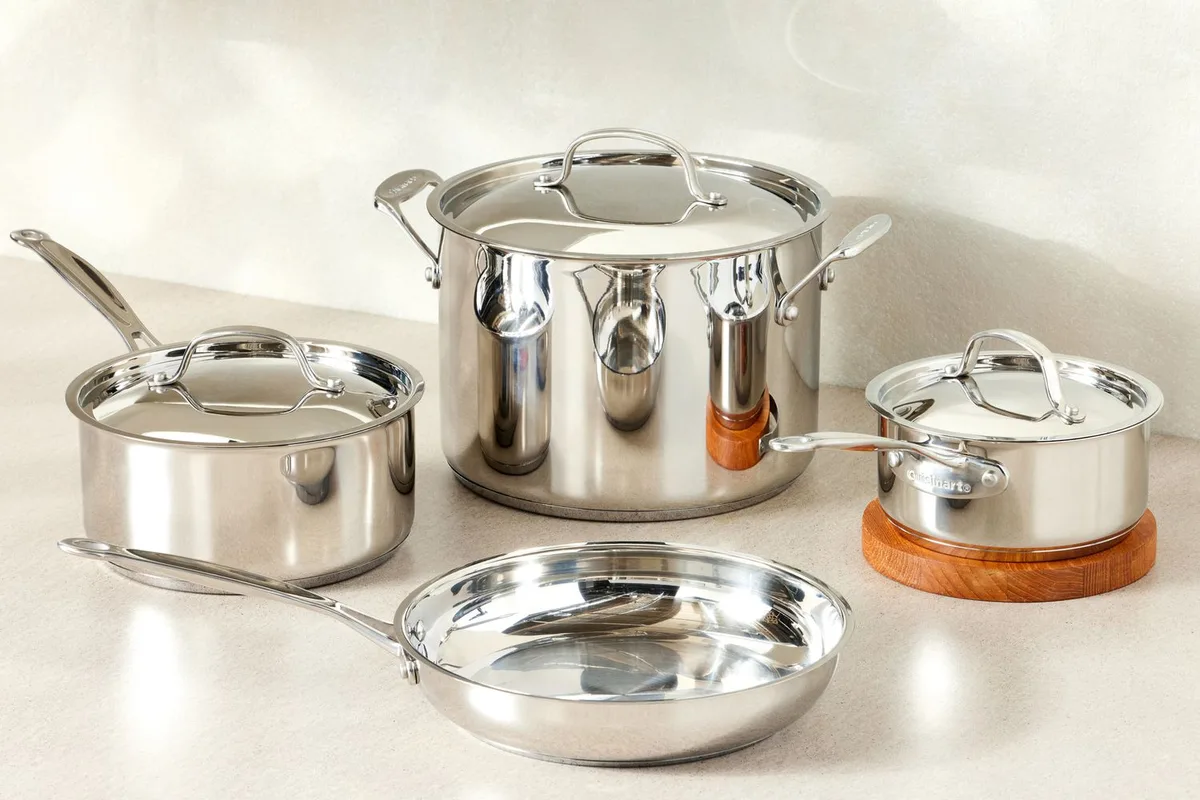
Image source: Bing (Web (fair-use with source credit))
A four-piece core handles most everyday meals. Everything else fills a particular cooking, baking, or capacity gap. Treat this as a useful menu, not a compulsory 15-pan purchase.
Versatile skillet, 10 inches: A frying pan for eggs, searing, sautéing, and pan-frying.
Carbon-steel skillet: Fast heat response for omelets, crepes, and high-heat searing.
Cast-iron skillet: Strong heat retention for searing and baking.
Nonstick skillet: A factory-coated cooking surface for eggs, fish, and easy food release.
Fully clad stainless-steel sauté pan: A layered pan with stainless steel bonded around a conductive core. Use it for sauces, shallow frying, and oven dishes.
Small saucepan with a lid, 2.5 to 3 quarts: Reheating, eggs, grains, steaming, and small-batch sauces.
Straight-sided saucepan or saucepan-pot, about 4 quarts: Pasta, rice, and larger portions.
Dutch oven with a lid, 5 to 6 quarts: Stews, soups, beans, braises, and oven-to-table meals.
Stockpot with a lid, 8 to 12 quarts: Large-batch soups, pasta, beans, and vegetables.
Pasta pot with a heatproof insert: Boil and drain pasta without moving boiling water into another pot.
Shallow braiser, 5.5 to 6 quarts: Wide, shallow cooking for meat, vegetables, and generous portions.
Wok: Stir-frying, quick cooking, or deep frying.
Rimmed baking sheet: Roast vegetables or bake cookies. A common US half sheet measures 13 by 18 inches.
Deep roasting pan with an oven-rated rack: Cook poultry or meat while collecting drippings.
Double-boiler insert or bain-marie: Hold food above simmering water for gentle melting and custard sauces.
Check actual dimensions against your oven. Some bakeware sizing mistakes come from assuming a pan will fit. Measure the usable interior, including space above the pan.
A double boiler gives you gentler heating for melting chocolate evenly. Keep the chocolate out of the lower pot. Water can cause melted chocolate to seize into a stiff, grainy mass.
Skillet Comparison: Nonstick, Carbon Steel, Cast Iron, or Stainless Steel
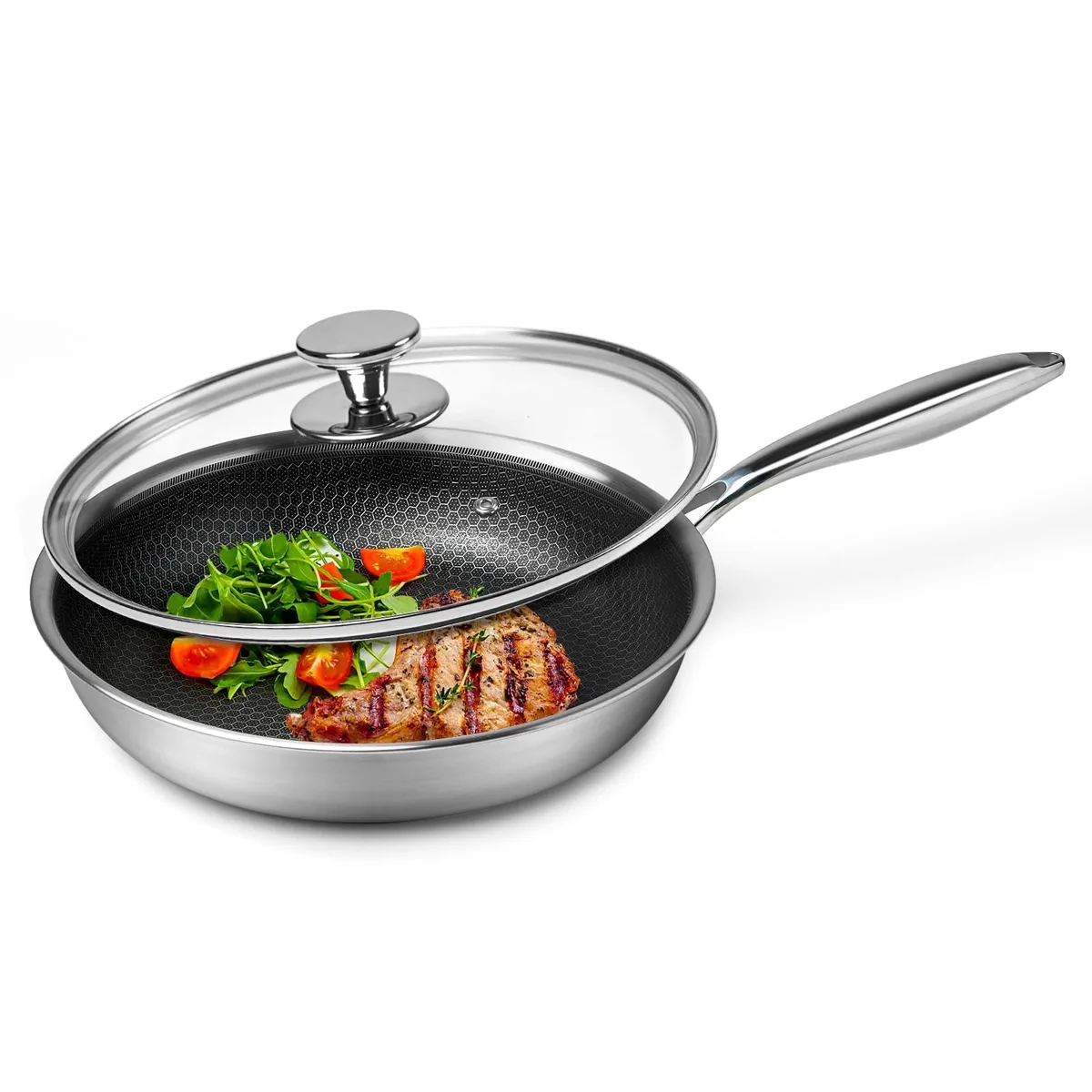
Image source: Bing (Web (fair-use with source credit))
One skillet won’t win every task. Choose the cooking surface that matches your habits, then size it to your cooking zones.
| Material | Best for | Main tradeoff |
|---|---|---|
| Nonstick | Eggs, fish, and delicate vegetables | Careful heat control and gentle cleaning |
| Carbon steel | Omelets, crepes, and high-heat searing | Seasoning care and rust prevention |
| Cast iron | Searing, baking, and strong heat retention | Weight and slower heat response |
| Fully clad stainless steel | Sauces, shallow frying, and oven dishes | Food release and hot spots when heat is uneven |
What’s the difference between seasoning and nonstick?
Seasoning is a natural cooking surface that builds up on bare carbon steel and cast iron through repeated use. It reduces sticking but isn’t permanent. Nonstick is a factory-applied coating, and its care needs differ.
Heat behavior also changes between materials. Carbon steel responds quickly when you adjust the flame. Cast iron holds heat longer, which helps maintain browning when the burner cools down.
A tomato sauce shows why material matters. Fully clad stainless steel suits a long, acidic simmer. Bare carbon steel can give an unwanted metallic taste, especially as its seasoning thins.
Which skillet size should you choose?
Choose an 8-inch skillet for small portions and single-person frying. A 10-inch skillet is a common everyday size. A 12-inch skillet gives you more surface for larger batches, but needs more burner heat and cabinet space.
Fit the base to the cooking zone. A larger burner than the base can waste energy. A much larger base can spread your heat too widely.
A heavy pan may sit steadily on the hob. A full pan can still strain your wrist when you lift it. Balance matters more than weight alone.
If one skillet handles most of your meals, start there. Add another material only when you need a different cooking result.
Pots and Baking Gear Compared: Capacity, Shape, and Lid Fit
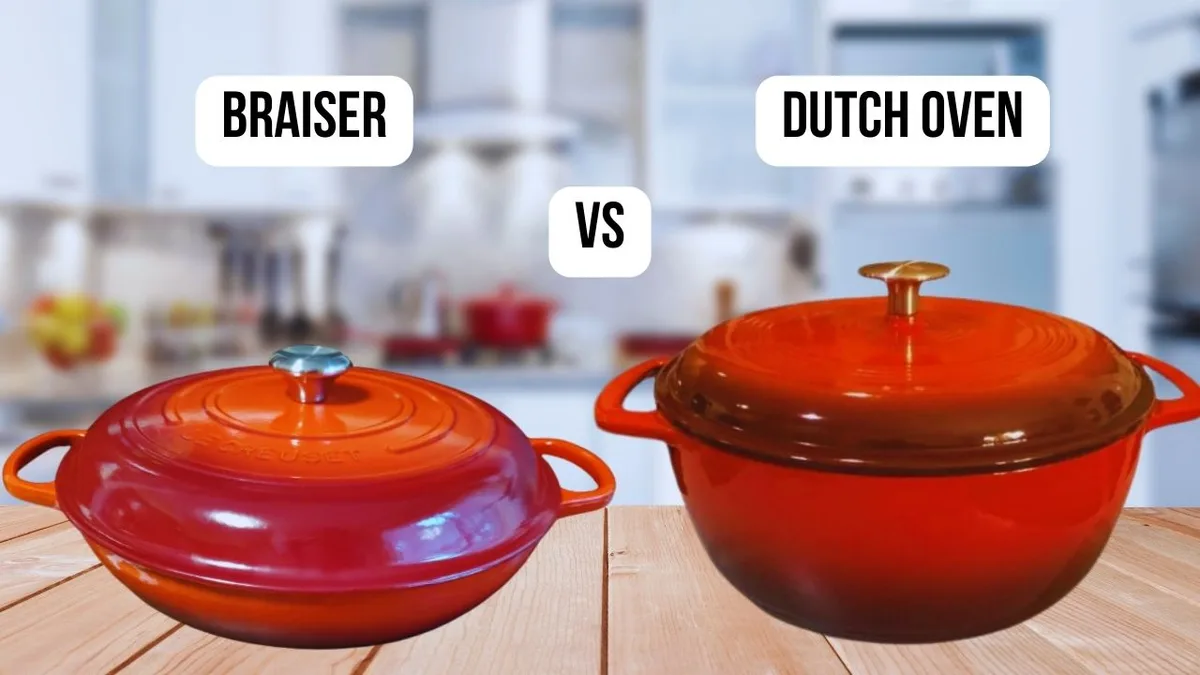
Image source: Bing (Web (fair-use with source credit))
The right pot depends on its capacity, shape, and lid. Those details change how heat, liquid, and food move inside it.
| Piece | Best for | Main difference |
|---|---|---|
| 2.5-to-3-quart saucepan | Eggs, grains, reheating, and small sauces | Compact, with less stirring room |
| 4-quart saucepan-pot | Pasta, rice, and larger portions | Taller walls and easier draining |
| 5-to-6-quart Dutch oven | Stews, soups, beans, and braises | A close-fitting lid retains heat and moisture |
| 8-to-12-quart stockpot | Large-batch soup, pasta, and vegetables | More capacity, often with a lighter lid |
| 5.5-to-6-quart braiser | Shallow braises and generous portions | Wider and shallower than a Dutch oven |
| Pasta pot with insert | Boiling and draining pasta | Drains without moving boiling water |
| Sauté pan | Sauces, steaming, and shallow frying | More room to whisk than a skillet |
| Wok | Stir-frying and quick cooking | Broad surface with sloping sides |
| Double boiler | Delicate sauces and gentle melting | Uses water to moderate direct heat |
Capacity tells you only part of the story. Check the base width, interior height, pouring clearance, and room for stirring. A larger labeled capacity doesn’t guarantee easier handling.
A Dutch oven retains moisture well. A braiser gives food more contact with the cooking surface. A stockpot prioritizes volume and batch cooking.
How do baking pans and roasting pans differ?
Sheet pans have shallow sides for exposure to oven heat. Deep roasting pans contain drippings from larger cuts of meat. Compare roasting pan dimensions with your oven before buying.
Leave space around food on a sheet pan. Crowding traps steam, slows browning, and can cook vegetables unevenly.
Check oven and hob compatibility next. A pan that looks right in the store may not suit your cooking zones.
Specs, Compatibility, and Value: What to Check Before Buying
Specifications decide whether a piece works in your kitchen. Material alone doesn’t tell you whether the base fits your hob or whether the pan fits your oven.
Will a pan work with every hob and oven?
Not automatically. Check compatibility labels, base size, and heat-source requirements before buying.
| Cooking setup | What to check |
|---|---|
| Gas | A base that gives you useful control over the flame |
| Electric | A flat base for full contact with the cooking zone |
| Induction | A compatible magnetic base for every zone you use |
| Oven or broiler | The product’s specified temperature limits |
Manufacturer specifications apply to the named model. “Oven-safe” doesn’t automatically mean induction-compatible, broiler-safe, or dishwasher-safe.
What does clad construction mean?
Clad construction bonds stainless-steel layers around a conductive core. It spreads heat beyond the cooking surface. A disc-bonded base uses a conductive disc attached to formed stainless steel.
Neither label guarantees perfectly even cooking.
Aluminum and copper are common core materials. They transfer heat quickly, but the base and cooking setup still affect your results.
Which measurements matter?
Check external dimensions, usable capacity, base width, weight, and handle clearance. Published capacity shows volume, not necessarily stirring room or headspace.
US and UK volume measures differ. One US quart equals about 946 milliliters. One UK imperial quart equals about 1,136 milliliters.
Use the unit specified by your recipe.
Is a large cookware set better value?
Judge each pan’s material, dimensions, and care needs. A larger set costs more, but extra pieces don’t necessarily fill real gaps. A 1-quart saucepan and an oversized wok may remain unused while your existing pots handle most jobs.
ISO 21095:2008 provides requirements and test methods for frying pans. That standard doesn’t replace product-specific instructions or check how a pan fits your cooking zones.
Care, Safety, and Mistakes That Shorten Cookware Life
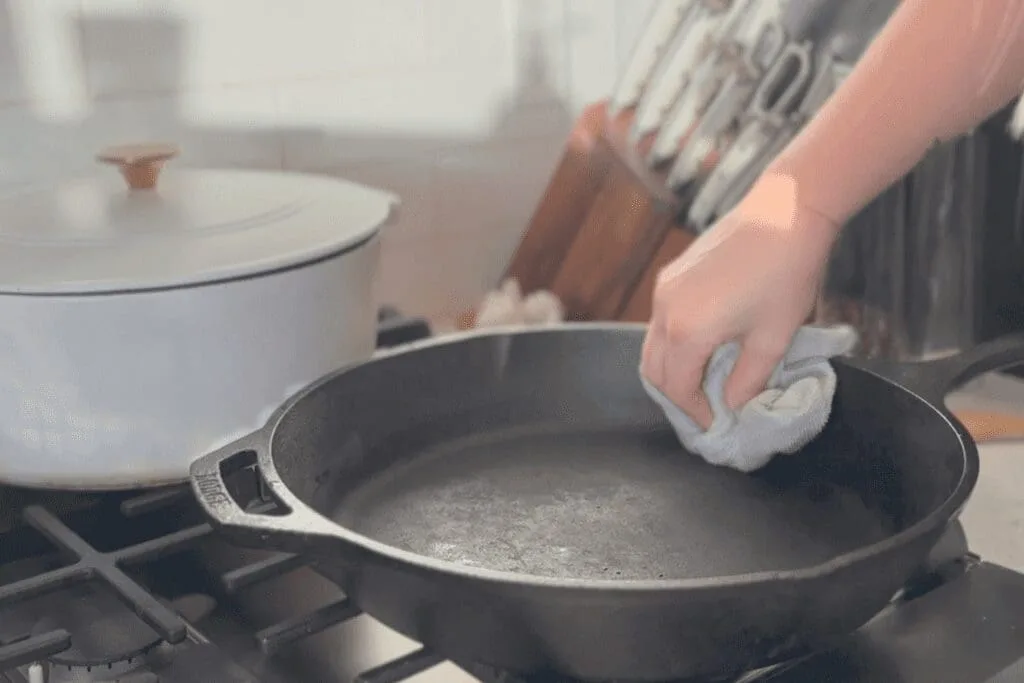
Image source: Bing (Web (fair-use with source credit))
Care affects how long cookware lasts. A coating can wear through repeated overheating or abrasion, even when a pan looks clean. Follow the maker’s instructions for every material.
How should you clean and dry cookware safely?
Let cookware cool enough to handle, then clean it according to its material. Don’t put hot glass, enamel, or coated cookware under cold water.
- Bare cast iron and carbon steel: Use a soft scrubber, dry thoroughly, and apply a very thin film of suitable oil if seasoning maintenance is needed.
- Nonstick and enamel: Use a nonabrasive tool and avoid harsh cleaners. Stacking or a damaged cooking surface can shorten service life.
- Copper and stainless steel: Dry water spots promptly and follow any polishing directions. A polished surface doesn’t guarantee better heat control.
Don’t machine-wash a pan unless its instructions allow it. Some dishwasher cycles can damage seasoning, adhesives, or coated components.
Store heavy skillets on stable shelves, not hanging handles. Keep lids separate, or use dividers where cooking surfaces could rub together.
What should you do if cooking fat catches fire?
Turn off the heat only if you can do so safely. Cover the pan with a suitable lid or use a suitable fire extinguisher. Never pour water onto a grease fire.
If you can’t control the fire immediately, leave it and call your local emergency service. Don’t lift the lid to check whether the flames are out.
Which problems mean cookware should be replaced?
Replace a pan with a loose handle, cracked enamel, severe warping, or unstable construction. Pitting can trap food even when a surface looks usable.
Stop using a nonstick pan if the coating flakes, blisters, or exposes the base. Raised seasoning flakes alone don’t necessarily mean bare cast iron needs replacing.
Check the U.S. Consumer Product Safety Commission’s public recall notices when buying. Follow any recall instructions for your exact model.
A warranty doesn’t override instructions against using damaged cookware.
How should you read coating safety claims?
Use FDA guidance on food-contact materials when assessing cookware claims. Terms such as “ceramic,” “PTFE-free,” and “PFAS-free” describe different things. None replaces the manufacturer’s care instructions or food-contact information.
For home canning, follow the USDA-tested guidance from the National Center for Home Food Preservation. A stockpot isn’t a pressure canner. Use a suitable pressure canner and a tested process for low-acid vegetables, meat, or seafood.
Frequently Asked Questions
Are 15 cookware pieces really necessary?
No. A four-piece core can cover eggs, pasta, soup, skillet meals, and many roasts. Add a stockpot for large batches, or a wok for frequent stir-frying.
The right number depends on your recipes, household size, and storage, rather than the number printed on a box.
Is nonstick cookware safe to use?
Yes, when you follow the manufacturer’s heat and care instructions. Avoid heating an empty pan, metal utensils, and sudden temperature changes. Stop using a coated pan if it flakes, blisters, or exposes the base.
A longer warranty doesn’t override those basic care rules.
Do I need nonstick, carbon steel, and cast iron skillets?
Not necessarily. Choose nonstick for easy egg release, carbon steel for quick heat changes, or cast iron for baking and strong heat retention. A well-matched stainless-steel sauté pan can cover those jobs if you don’t use every technique.
Start with your most common meals.
Can I use one pot on every hob?
Only if it meets the appliance’s requirements. Induction needs compatible cookware, usually with a magnetic base. Gas and electric hobs also need a base that sits evenly. “Oven-safe” doesn’t mean induction-compatible.
Check the base width against the cooking zone and oven.
Are nesting cookware sets a good deal?
They can be, but the individual pans matter more. Check material, usable capacity, and handle clearance. Lightweight nesting pans can save cabinet space, though thin walls may warm unevenly.
A smaller set that fits your cooking works better than a larger set stored mostly empty.
