
Constipation, loose stools, and irregular bowel movements affect people of all ages — from infants struggling with gas to adults needing more bulk. The goal isn’t just to “go” more often; it’s to achieve a healthy, well-formed stool that passes easily without strain. This guide covers the best foods to bulk up stools naturally, the key ingredients that soften stool without causing diarrhea, and the top infant formulas designed to relieve digestive discomfort in babies. You’ll also learn why a simple footstool can help complete the picture.
How Stool Bulk Works: The Fiber + Fluid Principle
Stool consistency depends on the balance of two types of dietary fiber — soluble and insoluble — plus adequate hydration.
- Insoluble fiber (found in wheat bran, nuts, and many vegetables) adds physical bulk by resisting digestion and absorbing water as it travels through the gut. This mass stimulates peristalsis and helps form larger, softer stools.
- Soluble fiber (found in oats, apples, beans, and psyllium) turns into a gel‑like substance that traps water and lubricates the stool, making it easier to pass.
Both types work best when you drink enough fluid. The Institute of Medicine recommends 25–38 grams of total fiber per day for adults, paired with roughly 8–10 cups of water. Without water, fiber can actually worsen constipation.
Common Mistakes That Undermine Stool Bulk
- Sudden fiber overload – Jumping from 10 g to 40 g overnight causes gas, bloating, and cramping. Increase by 3–5 g per week.
- Relying on fiber bars or powders – Processed fiber supplements often lack the diversity of whole‑food fibers. Food sources provide vitamins and prebiotics that supplements miss.
- Ignoring fat intake – Healthy fats (olive oil, avocado) lubricate the colon and help stool move smoothly. A very low‑fat diet can make stools hard and dry.
Top Whole Foods That Bulk Up Stools Naturally
Include these foods regularly to improve stool volume and consistency.
| Food | Fiber Type | How It Helps | Suggested Intake |
|---|---|---|---|
| Oatmeal (rolled or steel‑cut) | Soluble | Creates a gel that softens and bulks stool | ½ cup dry (4 g fiber) per day |
| Chia seeds | Soluble | Absorbs up to 12× its weight in water | 1–2 tbsp (5–10 g fiber) |
| Beans (black, kidney, chickpeas) | Both | High total fiber + resistant starch | ½ cup cooked (6–8 g fiber) |
| Prunes (dried plums) | Soluble + sorbitol | Softens stool and stimulates motility | 3–5 prunes per day |
| Pears (with skin) | Both | Natural laxative effect; skin adds insoluble bulk | 1 medium pear (5.5 g fiber) |
| Broccoli | Insoluble | Adds roughage that speeds transit | 1 cup cooked (5 g fiber) |
| Almonds | Insoluble + fat | Provides bulk and healthy fat | A handful (14 almonds = 3.5 g fiber) |
Practical tip: Start your morning with a bowl of oatmeal topped with 1 tablespoon of chia seeds and sliced pear. That single meal delivers roughly 15–17 g of fiber — more than half your daily goal.
When Whole Foods Aren’t Enough: Fiber Supplements
If you consistently struggle to eat enough fiber from food, consider a supplement. Psyllium husk (the key ingredient in Metamucil) is the best‑studied option — it’s a soluble fiber that normalizes both constipation and diarrhea. Start with ½ teaspoon in 8 oz of water and increase slowly. Always follow the product’s fluid recommendation to avoid blockage.
Infant Formula and Stool Softening: What Parents Need to Know
Babies cannot eat whole‑food fiber, so their “best foods” come from breast milk or infant formula. Many standard formulas produce firm, pellet‑like stools that cause pain, fussiness, and gas. The right formula can shift a baby’s stool to a soft, seedy consistency similar to that of a breastfed infant.
Key Ingredients That Promote Softer Stools
- Prebiotics (HMOs – Human Milk Oligosaccharides) – Feed beneficial gut bacteria, producing short‑chain fatty acids that soften stool naturally. Formulas with 5 HMOs (e.g., Similac 360 Total Care) mimic breast milk’s prebiotic profile most closely.
- Partially hydrolyzed proteins – Break down into smaller peptides that are gentler on the stomach, reducing gas and helping stool pass more easily. Enfamil NeuroPro Gentlease uses this approach.
- Lactose‑reduced or lactose‑free options – For babies with lactose sensitivity, undigested lactose can ferment and cause bloating. Sensitive formulas (like Similac 360 Total Care Sensitive) replace some lactose with corn syrup solids to reduce gas while still softening stools.
Top Infant Formulas for Stool Softening and Gut Comfort
Enfamil NeuroPro Gentlease Baby Formula
 The Gentlease formulation uses partially broken‑down proteins to reduce gas and spit‑up while promoting softer stools.
This formula is designed for babies who experience frequent fussiness, crying, or gas within 24 hours of feeding. Its blend of Brain‑Building DHA and HuMO6 Immune Blend supports development, while added prebiotics specifically target stool consistency. In practice, parents often notice a shift from hard pellets to a soft, peanut‑butter‑like texture within a few days. A common mistake is switching abruptly — transition over 3–5 days by mixing increasing amounts of the new formula with the old one.
Best for: Babies with mild to moderate gas, fussiness, or occasional constipation. Not suitable for confirmed cow’s‑milk protein allergy.
Similac 360 Total Care Infant Formula (Powder or Ready‑to‑Feed)
 The 5‑HMO prebiotic blend makes this Similac formula the closest to breast milk for supporting soft, regular stools.
The powder version (36‑oz value can, pack of 3) is economical for daily use. The ready‑to‑feed 2‑fl‑oz bottles are ideal for travel or nights when mixing isn’t practical. Both contain non‑GMO ingredients and the full 5‑HMO blend that nourishes beneficial gut bacteria. Parents report that stools become softer and less painful within one week of exclusive use.
Best for: Healthy infants whose parents want a formula that mimics breast milk’s prebiotic profile. The powder requires careful measurement and proper hygiene — follow the manufacturer’s mixing instructions exactly.
Similac 360 Total Care Sensitive Infant Formula
 Ready‑to‑feed bottles eliminate mixing errors and are especially helpful for lactose‑sensitive babies who need soft stools without excess gas.
This variant replaces some lactose with easily digestible carbohydrates. It still includes the 5 HMO prebiotics, so stool‑softening benefits remain intact while gas from lactose fermentation is reduced. It comes in ready‑to‑feed 2‑fl‑oz bottles (pack of 12) that need no refrigeration until opened — convenient for diaper bags and feeding on the go.
Best for: Babies who show signs of lactose sensitivity (excessive gas, watery stools, or fussiness after most feeds) yet still need help with stool softening.
When to Consult a Pediatrician
If your baby’s stools remain hard, infrequent, or accompanied by blood or extreme irritability after 7–10 days on a new formula, see your pediatrician to rule out food allergies, metabolic issues, or anatomical problems. The American Academy of Pediatrics emphasizes that formula changes should be guided by a healthcare professional when symptoms are severe.
The Surprising Role of a Footstool in Bowel Health
One of the most overlooked tools for achieving bulky, easy‑to‑pass stools is a simple footstool. The human colon is designed to empty most efficiently when the hips are flexed to roughly 35 degrees — the “squatting” position. A standard toilet raises the knees to only 90 degrees, which kinks the rectum and requires extra straining.
Using a step stool that elevates your feet by 7–9 inches straightens the anorectal angle and allows stool to pass with less effort. This isn’t just theory; gastroenterologists often recommend the “Squatty Potty” concept. Any sturdy, compact stool works.
Step Stools That Fit the Need
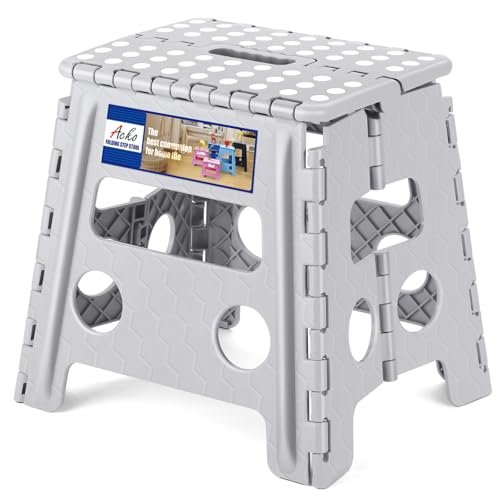
ACKO Folding Step Stool
 A foldable 13‑inch step stool that fits under the toilet when not in use, providing the ideal height for a natural squatting posture.
- Height: 13 inches (within the recommended 7–9 inch range for most adults; slightly taller users may prefer a 9‑inch stool)
- Weight capacity: 300 lbs
- Portable handle makes it easy to move between bathrooms
- Non‑slip surface adds safety
Pros: Folds flat for storage; lightweight at 2.7 pounds. Cons: Plastic construction may not match all bathroom décor; the 13‑inch height is best for taller individuals — shorter users may need a lower stool.
Youeon 9 Inch Small Wooden Step Stool
 The 9‑inch height works well for most adults aiming for the ideal hip‑flexion angle, and the wood finish blends with home interiors.
- Height: 9 inches
- Weight capacity: 300 lbs
- Non‑slip surface with a natural wood finish
- Easy assembly — no tools required
Pros: Compact footprint fits tight spaces; attractive walnut color. Cons: Wood may need periodic sealing to prevent water damage; only one step — not for reaching high cabinets.
5Rcom Folding Stool (24‑inch Tall)
 This taller stool is more suited for use as a bar‑height seat in the kitchen, but the 24‑inch height is too high for toilet posture — choose a 7‑ to 13‑inch stool for bathroom use.
Note: While this stool is excellent for extra seating or kitchen tasks, its 24‑inch height is not recommended for improving bowel‑movement posture. Place it in your home as a utility stool where extra reach is needed, such as when changing a lightbulb or reaching high shelves after a high‑fiber meal prep session.
13‑inch Lightweight Aluminum Folding Stool
 An ultralight, portable stool that can be carried to any bathroom or outdoors — ideal for camping trips where healthy bowel habits still matter.
- Height: 13 inches
- Weight: 0.96 lbs (extremely portable)
- Handbag‑style carry handle
- Aluminum frame supports 300 lbs
Pros: Packs down small; rust‑resistant aluminum. Cons: Minimal padding — fine for short bathroom use but not for prolonged sitting; single color only.
OEF Furnishings (2‑Pack) Steel Stools
 These 18‑inch stools are too tall for bathroom posture, but they work well as extra kitchen seating when you’re enjoying a fiber‑rich family meal.
Pros: No assembly; sturdy steel frame. Cons: Fixed 18‑inch height is unsuitable for toilet foot support; limited to black finish.
In practice, a simple 9‑inch or 13‑inch stool placed at the toilet transforms the angle of your pelvis. When combined with a high‑fiber diet and adequate hydration, many people notice significantly less straining within a week.
Frequently Asked Questions
What foods help bulk up stools naturally?
Oats, chia seeds, beans, prunes, pears, broccoli, and almonds are among the most effective. Pair them with at least 8 cups of water daily. For infants, formulas with HMO prebiotics or partially hydrolyzed proteins serve the same purpose.
How do prebiotics in baby formula affect stool consistency?
Prebiotics, especially HMOs, feed beneficial gut bacteria. The bacteria produce short‑chain fatty acids that lower the stool’s pH, increase water content, and soften the stool naturally. This mimics the effect of breast milk and reduces the likelihood of hard, painful stools.
Can fiber supplements improve stool bulk effectively?
Yes, but only if taken with sufficient water. Psyllium husk (soluble fiber) is the most studied supplement for both constipation and diarrhea. Start with ½ teaspoon in a full glass of water and increase slowly to avoid gas. Methylcellulose (Citrucel) is a gentler alternative that does not ferment as much, so it causes less bloating.
Which foods soften stools and ease bowel movements?
Foods high in soluble fiber and natural sugars like sorbitol work best: prunes, pears, kiwi, and oatmeal. Cooking vegetables (e.g., carrots, squash) breaks down some insoluble fiber, making them gentler. Healthy fats from avocado, olive oil, or fish also help by lubricating the intestinal lining.
How much fiber is needed daily to bulk stools?
Adults should aim for 25–38 grams of total fiber per day. Most people eat only 12–15 grams. Increase gradually by adding one high‑fiber food per day until you reach the target. For infants, the American Academy of Pediatrics does not give a specific fiber number; instead, formula with prebiotics is the standard recommendation for stool softening.
Do infant formulas with HMO prebiotics aid digestion?
Yes. HMO prebiotics are identical to those found in breast milk and have been shown in multiple clinical studies to increase beneficial Bifidobacteria in the infant gut, reduce fussiness, and produce softer, more frequent stools. Both Similac 360 Total Care and Enfamil NeuroPro Gentlease include prebiotics, though the HMO content varies.
Conclusion
Achieving bulky, soft stools — whether for yourself or your baby — hinges on three pillars: the right fiber sources, adequate fluid, and good posture. For adults, whole foods like oats, chia seeds, prunes, and beans offer a safe, effective way to increase stool volume without relying on laxatives. For infants, choosing a formula with HMO prebiotics or a partially hydrolyzed protein blend can transform hard, painful stools into the soft, seedy consistency that indicates good digestion.
Don’t overlook the practical tools: a 7‑ to 13‑inch footstool at the toilet can cut straining time in half, making the dietary changes work even better. And a clean, well‑organized kitchen makes it easier to prepare fiber‑rich meals — invest a few minutes in keeping your kitchen equipment in good shape, like properly maintaining your dishwasher filter or giving your favorite frying pans a thorough clean, so that healthy cooking becomes a seamless habit.
Start small: swap your breakfast for oatmeal with chia seeds and a pear, ensure your baby’s formula includes prebiotics, and place a low stool by the toilet. Consistency over a few weeks will yield noticeable improvements in stool bulk, comfort, and overall gut health.
If you are caring for an infant with hard stools, track changes over 7–10 days. Journal the stool’s appearance on the Bristol Stool Chart (types 3 and 4 are ideal — like a smooth sausage or a soft log) and note whether your baby seems more comfortable after feeds. For yourself, try adding one high‑fiber food per day rather than overhauling your entire diet overnight. Your gut microbiome adapts best to gradual shifts.
Remember that the healthiest stool is one you barely notice passing. By combining the right foods, the right formula, and the right posture, you can achieve that goal safely and sustainably for every member of your family.
Supporting Digestive Health Through Your Kitchen Routine
The foods you prepare and the tools you use to prepare them directly affect how consistently you can maintain a high‑fiber, gut‑friendly diet. A kitchen that works efficiently makes it easier to cook beans from scratch, steam vegetables, and store prepped ingredients — all of which support regular stool bulk.
Stock Your Kitchen with Fiber‑Friendly Equipment
A quality stockpot lets you cook large batches of lentils, chickpeas, or black beans that can be refrigerated or frozen for quick meals throughout the week. Make a double batch on Sunday, portion it into microwave‑safe dinnerware, and reheat single servings as needed. This habit alone can add 10–15 grams of fiber to your daily intake with almost no extra effort.
For steaming vegetables like broccoli, carrots, and green beans, a microwave steamer preserves more nutrients than boiling and takes only minutes. Using a reliable toaster oven for roasting chickpeas or sweet potato wedges adds a crunchy, high‑fiber snack option that keeps you away from processed foods.
Keep Your Cooking Tools in Good Condition
A dull knife makes chopping vegetables feel like a chore, which discourages you from using fresh produce. Take time to practice basic knife skills, such as shredding cabbage for coleslaw or peeling pearl onions, so that preparing vegetables becomes quick and enjoyable. When your knives are sharp, you are more likely to reach for that extra bell pepper or handful of kale.
Similarly, a nonstick frying pan that is scratched or peeling can make you avoid cooking eggs or vegetables that might stick. Investing in a well‑made pan and maintaining it with proper cleaning extends its life and keeps your cooking routine smooth. The same principle applies to your dishwasher — a clean filter ensures your cookware and dinnerware come out truly clean, reducing the chance of residue that might put you off preparing meals.
Address Kitchen Issues That Disrupt Healthy Habits
A musty smell under the sink or a slow‑leaking pipe can create an unpleasant environment that makes you avoid the kitchen altogether. Fixing these issues promptly keeps your cooking space inviting. If you need to shut off the water supply under the sink to make a repair, knowing how to do it safely prevents water damage and gets you back to meal prep faster.
For families with infants, a clean and organized kitchen is especially important. Formula preparation requires strict hygiene — bottles, nipples, and mixing tools must be sanitized, and the workspace should be free of contaminants. A ductless range hood can help remove steam and cooking odors from the kitchen, maintaining better air quality while you prepare meals for the whole family.
When to Seek Professional Guidance
If you or your child experiences persistent constipation, blood in the stool, severe abdominal pain, or unexplained weight loss, consult a healthcare provider. The National Institute of Diabetes and Digestive and Kidney Diseases (NIDDK) offers reliable information on digestive disorders, and your doctor can rule out underlying conditions that dietary changes alone may not address.
For infant formula concerns, the U.S. Food and Drug Administration (FDA) regulates all infant formulas sold in the United States and provides guidance on safe preparation and storage. If a formula switch does not improve your baby’s stool consistency after two weeks, a pediatrician or pediatric gastroenterologist can recommend specialized options, such as extensively hydrolyzed or amino acid‑based formulas for babies with cow’s milk protein allergy.
Final Thoughts on Stool Bulk and Digestive Wellness
Building better stools is not about a single miracle food or product — it is about creating a system that supports your digestive health every day. Choose whole foods that naturally provide both soluble and insoluble fiber, keep your fluid intake high, and position your body properly during elimination. For infants, select a formula with prebiotics or gentle proteins that mirror the benefits of breast milk.
Equip your kitchen to make healthy cooking easy, and keep your tools and appliances in good working order so that preparation never feels like a burden. Small, consistent steps — one extra serving of vegetables, one more glass of water, one inch of elevation at the toilet — compound into lasting improvements in how you feel.
The healthiest stool is the one you do not think about. By applying the principles in this guide, you can achieve that quiet, comfortable regularity for yourself and your family.
