
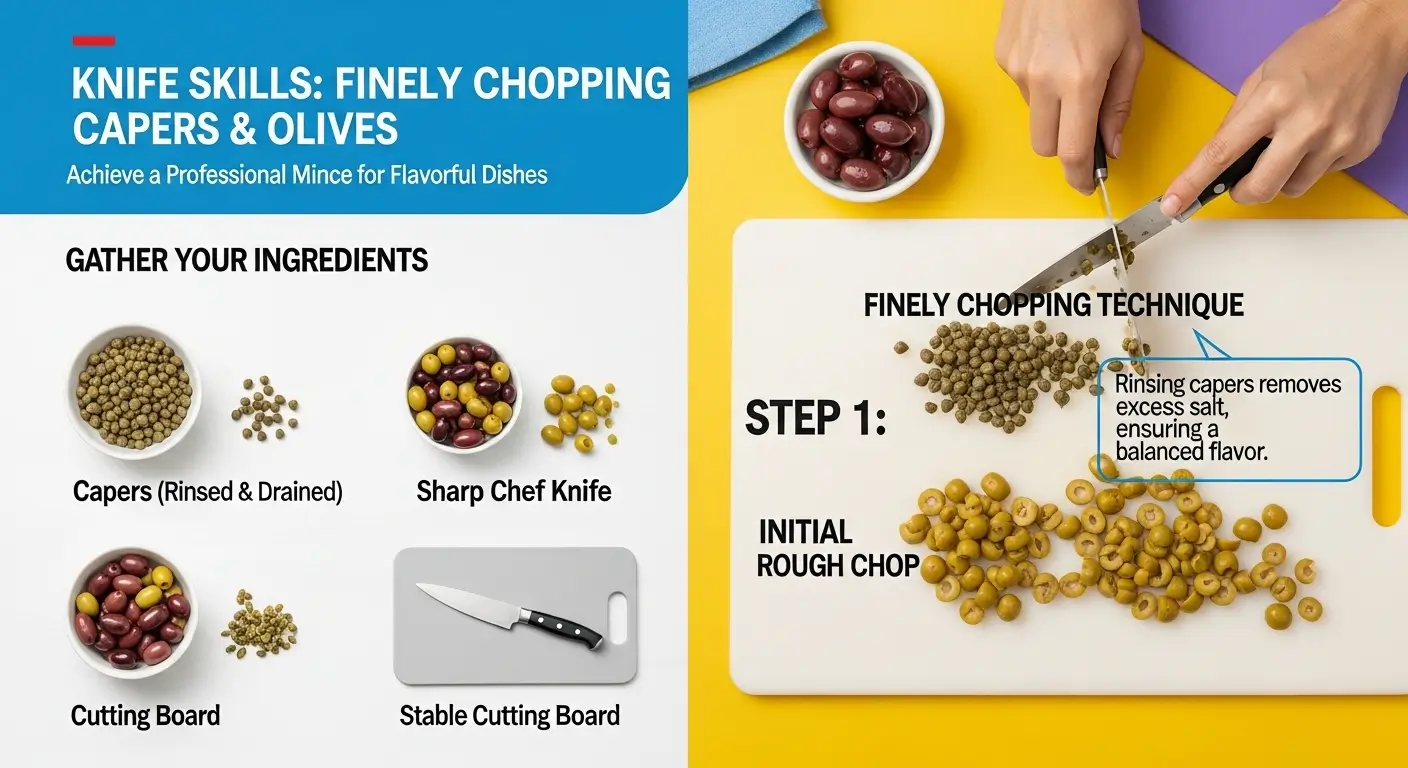
Mastering knife skills can transform your cooking, and knowing how to chop capers and olives perfectly is a game changer. You might think these tiny ingredients don’t need much attention, but how you cut them affects your dish’s flavor and texture.
If you want your meals to taste fresher and look more inviting, this guide is for you. Keep reading to learn simple, effective techniques that will boost your confidence and make every chop count. Your kitchen skills are about to level up!

Essential Tools
Mastering knife skills to chop capers and olives starts with having the right tools at your fingertips. The quality and type of your equipment can make a big difference in how efficiently and safely you work. Let’s look at what you really need to get precise, clean cuts every time.
Choosing The Right Knife
A small paring knife or a chef’s knife with a sharp, narrow blade works best for chopping capers and olives. You want a blade that’s easy to maneuver but strong enough to handle the soft texture without squashing the ingredients.
Think about your own experience: have you ever tried chopping with a dull knife? It’s frustrating and unsafe. A sharp blade gives you control and confidence.
Cutting Board Essentials
Use a stable cutting board that won’t slip while you’re working. A wooden or plastic board with a non-slip base is ideal. This stability helps prevent accidents and keeps your chopping precise.
Have you noticed how a wobbly board slows you down? Keeping your cutting surface steady lets you focus on your knife technique, not on balancing the board.
Additional Tools For Precision
- Olive pitter:Removes pits cleanly, saving you from awkward knife work and ensuring safety.
- Small bowls:Great for holding chopped ingredients, so you don’t lose track of your progress.
- Kitchen towel:Helps keep your hands dry, preventing slips while chopping.
These small tools might seem minor, but they speed up your prep and improve your results. Do you have any handy gadgets that make your chopping easier?

Credit: insaneinthebrine.com
Preparing Capers
Preparing capers properly enhances their flavor and texture, making your dishes stand out. Capers often come packed in brine or salt, which can make them too salty or bitter if not treated right. Taking a few extra minutes to rinse and dry them will balance their taste and improve how they hold up when chopped.
Rinsing Techniques
Start by placing your capers in a fine mesh strainer. Rinse them under cold running water to wash away excess salt or brine. This simple step softens their sharpness without losing their natural tang.
If you want to control the saltiness further, soak the capers in a bowl of cold water for 5 to 10 minutes. Stir them occasionally to help release more brine. Taste a few after soaking—does the salt level feel right to you? Adjust soaking time based on your preference.
Drying Methods
After rinsing, drying capers properly is key to avoid watery dishes. Spread them out on a clean kitchen towel or paper towels. Gently pat them dry, removing as much moisture as you can without crushing them.
Leaving capers too wet can dilute your recipe’s flavor and cause uneven chopping. Do you find your capers sometimes release too much liquid when cut? Proper drying prevents that and helps maintain a better texture in your salad or sauce.
Chopping Capers
Chopping capers requires a gentle touch. These small, pickled flower buds add bursts of flavor to many dishes. Handling them properly keeps their texture and taste intact. Use a sharp knife to avoid crushing. A steady hand helps create uniform pieces that blend well in recipes.
Grip And Control
Hold the knife firmly with your dominant hand. Your thumb and index finger should grip the blade near the handle. This grip offers better control and safety. Rest your other fingers on the handle for stability. Keep your chopping hand steady to avoid slipping.
Precision Cuts
Place the capers on a cutting board. Use a rocking motion with the knife to slice them finely. Keep the tip of the knife touching the board. Move the blade up and down smoothly. Chop slowly to maintain even pieces without smashing the capers.
Preparing Olives
Preparing olives properly can transform your dish from ordinary to exceptional. Whether you’re adding them to a salad or a tapenade, the way you handle olives affects both texture and flavor. Taking a moment to prep them right ensures every bite is just how you want it.
Pit Removal
Removing pits from olives might seem tedious, but it’s a skill worth mastering. If you’ve ever struggled with a knife slipping or olives flying across the counter, you’re not alone. The key is to press the olive gently with the flat side of a knife until it cracks slightly—then the pit comes out easily.
You can also use a cherry pitter or even the edge of a sturdy glass to push the pit out. This quick step saves you from biting into a hard pit later. Have you noticed how much smoother chopping gets once the pits are out?
Olive Varieties
Different olive varieties have distinct textures and flavors, which affects how you should prepare them. Kalamata olives are firm and meaty, perfect for slicing into salads without falling apart. Castelvetrano olives are softer and buttery, making them ideal for chopping finely in sauces or spreads.
Green olives tend to be firmer and slightly bitter, while black olives are softer and milder. Knowing the type you’re working with helps you decide whether to chop roughly or finely. What’s your favorite olive variety to use in cooking, and how do you prepare it?
Chopping Olives
Chopping olives is a simple skill that improves many recipes. Olives come in many sizes and textures. Proper chopping releases their flavor evenly in dishes. A sharp knife and steady hands help achieve the best cuts. Knowing how to slice and mince olives adds variety to meals. This section breaks down these essential techniques for chopping olives.
Slice Techniques
Slicing olives creates thin, even pieces. Start by placing the olive on a cutting board. Hold it steady with your fingers curled inward. Use a sharp knife to make smooth, straight cuts across the olive.
- Slice olives lengthwise for strips in salads or pizzas.
- Cut olives crosswise for round slices perfect for garnishes.
- Keep slices uniform for even cooking and presentation.
Slicing preserves the olive’s texture and shape. Avoid crushing the olives to keep their juices inside.
Minced Methods
Minced olives are tiny, finely chopped pieces. They spread flavor quickly through sauces and dips. Begin with sliced olives, then chop across those slices repeatedly. Use a rocking motion with your knife for control.
- Chop until pieces are small but not mushy.
- Scrape chopped olives into a pile and chop again for finer mince.
- Minced olives work well in tapenades and dressings.
This method enhances olive flavor without large chunks. It also helps mix olives smoothly into recipes.

Credit: insearchofyummyness.com
Safety Tips
Handling knives to chop capers and olives demands attention to safety. Sharp tools can be dangerous if not treated with care. Knowing how to maintain your knife and avoid injuries is essential for smooth cooking and confidence in the kitchen.
Knife Maintenance
A sharp knife is safer than a dull one. Dull blades require more force, increasing the chance of slipping and cutting yourself. Regularly sharpen your knife using a whetstone or a sharpening tool.
Keep your knife clean and dry to prevent rust and corrosion. Store it in a knife block or on a magnetic strip to protect the blade and your fingers. Have you checked your knife’s edge lately? A quick test is to gently slice through a piece of paper — if it tears cleanly, you’re good to go.
Avoiding Injuries
Always use a stable cutting board to prevent slipping. Place a damp towel underneath the board to keep it from moving. This simple step can save you from unexpected accidents.
Hold the knife with a firm grip, and curl your fingertips inward on the hand holding the food. This claw grip keeps your fingers safe from the blade. Also, cut slowly and deliberately when chopping small items like capers and olives to keep control.
- Never try to catch a falling knife. Step back and let it fall safely.
- Keep your work area clear of clutter and distractions.
- Focus on your task—multitasking increases the risk of injury.
Enhancing Flavors
Chopping capers and olives correctly can bring out their best flavors. Proper knife skills help release oils and aromas. This enhances the taste and texture in your dishes. Small, even pieces ensure every bite is flavorful. The right cut makes a big difference in cooking and presentation.
Pairing Suggestions
Capers and olives pair well with many foods. Their salty, tangy flavors complement fresh vegetables and cheeses. Try them with:
- Tomatoes and basil for a fresh salad
- Feta or goat cheese for creamy contrast
- Grilled chicken or fish for a savory boost
- Roasted peppers and garlic for bold flavor
Use chopped capers and olives in pasta sauces and tapenades. They add complexity and depth without overpowering dishes.
Storage Tips
Store chopped capers and olives properly to keep flavor fresh. Use airtight containers to prevent drying out. Keep them in the refrigerator for up to two weeks.
For longer storage, freeze chopped olives and capers in small portions. Use freezer-safe bags or containers. Thaw only the amount needed to maintain taste and texture.
Frequently Asked Questions
How Do You Properly Chop Capers For Recipes?
To chop capers, drain them well and pat dry. Use a sharp knife to finely mince them. This releases their flavor evenly in dishes like sauces and salads.
What’s The Best Knife For Chopping Olives?
A small, sharp paring knife works best for chopping olives. It offers better control and precision without crushing the olives.
Should You Pit Olives Before Chopping?
Yes, always remove olive pits before chopping. Pits can damage your knife and affect the texture of your dish.
How To Avoid Olive Slices From Sticking Together?
Lightly toss chopped olives in a bit of olive oil or vinegar. This helps keep pieces separate and enhances flavor.
Conclusion
Chopping capers and olives is easier with good knife skills. Always use a sharp knife for clean cuts. Hold the food steady to avoid slips. Small, even pieces cook better and look nicer. Practice these simple steps to improve quickly.
Enjoy adding chopped capers and olives to your meals. Cooking becomes more fun with better chopping skills. Keep practicing, and your dishes will taste great. Simple skills make a big difference in the kitchen.
