
Peeling pearl onions is one of those kitchen tasks that can test your patience. Their tiny size, slippery skins, and tear-inducing juices make many cooks reach for a frozen bag instead. But with the right technique, you can peel a pound of fresh pearl onions in under five minutes — and the payoff in flavor and texture is well worth the effort. This guide walks you through the exact tools, preparation, and two proven methods so you can peel pearl onions quickly, safely, and without waste.
Why Pearl Onions Are Worth the Effort
Fresh pearl onions have a sweetness and tender bite that frozen ones simply cannot match. When roasted, glazed, or added to stews, they soften into buttery, caramelized morsels that elevate the whole dish. The only catch is that stubborn outer skin. Learn to remove it efficiently, and these little alliums become a staple you’ll reach for often, from coq au vin to holiday side dishes.
Essential Tools for the Job
You don’t need a drawer full of specialty gadgets, but a few well-chosen items make a real difference.
The Right Knife
A small, sharp paring knife (3–4 inch blade) is non-negotiable. Its narrow tip lets you trim the root end without cutting into the onion’s flesh, and its short blade gives you precise control. A serrated paring knife also works well if the skins are particularly tough — the teeth grip the waxy surface instead of slipping. Whichever you choose, keep the edge sharp. A dull knife requires more force and increases the chance of a slip. For more on maintaining your blades, see our guide on routine upkeep of kitchen tools.
Other Useful Tools
- Vegetable peeler – A Y-shaped peeler can sometimes lift the skin off raw pearl onions, though it works best on larger specimens.
- Small saucepan – For blanching, a 2-quart pot is plenty.
- Bowl of ice water – This stops the cooking process and shock-loosens the skins.
- Clean kitchen towel – After blanching, wrap the onions in the towel and rub gently; the friction strips off the loosened skins in seconds.
- Cutting board – Ideally one with a non-slip surface or a damp towel underneath for stability.
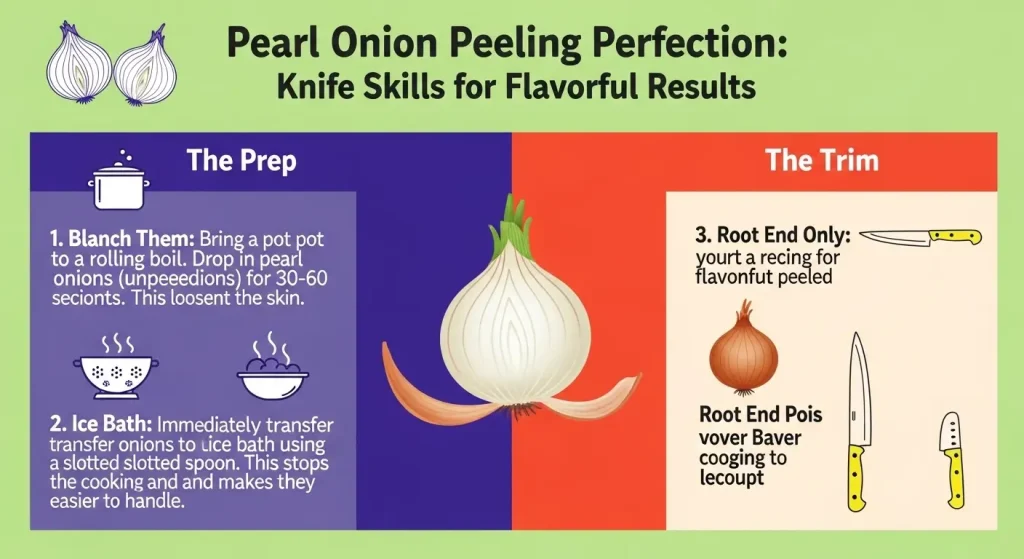 A sharp paring knife is the essential tool for precise onion preparation.
Preparation: Selecting and Setting Up
Choosing Fresh Pearl Onions
Look for onions that are firm, heavy for their size, and have smooth, glossy skins. Avoid any with soft spots, mold, or green shoots. Smaller pearl onions (about ¾ inch in diameter) are actually easier to peel because their skin is thinner and more delicate. Larger ones may need a few extra seconds of blanching.
Workspace Setup
- Clear your counter and place your cutting board on a damp towel to prevent sliding.
- Fill a small saucepan with water and bring it to a rolling boil.
- Fill a bowl with cold water and a handful of ice cubes.
- Set out your paring knife, a bowl for discarded skins, and a clean kitchen towel.
- Have a dry paper towel nearby for your hands — wet fingers make gripping the onion harder.
Two Proven Peeling Methods
Blanching Method (Fastest and Most Reliable)
This method gives consistent results and is the one most professional kitchens use.
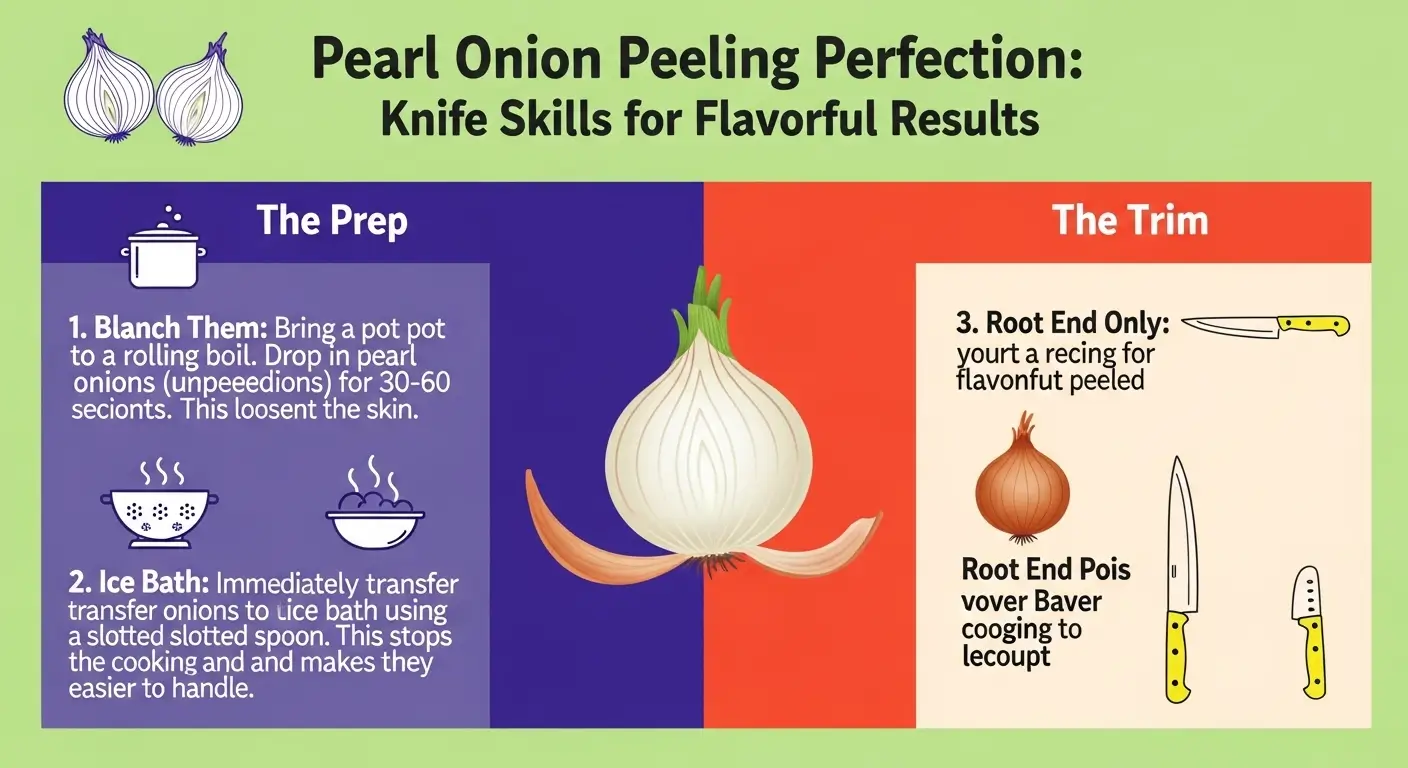
- Trim the root end – Using your paring knife, cut off the very tip of the root (not the stem end). Leave a tiny flat surface so the onion stays intact.
- Blanch – Drop the onions into the boiling water. Boil for exactly 1 minute for small onions, or up to 2 minutes for larger ones. Do not overcook — the onions will start to soften and lose their texture.
- Shock in ice water – Immediately transfer the onions to the ice bath. Let them sit for 30 seconds to 1 minute.
- Peel – Use your fingers to squeeze the onion gently at the stem end; the skin should slip right off. If any stubborn bits remain, nick the edge with your paring knife and pull the skin away.
Pro tip: Peel the onions while they are still cool but not ice-cold. The skins release most easily when the onion is just below room temperature.
Cutting Method (No Boiling Required)
If you prefer not to blanch, or you’re working with only a handful of onions, this technique works well.
- Trim both ends – Cut off the root end and the stem end, each about ⅛ inch deep.
- Score the skin – Make a shallow lengthwise cut from one end to the other, just through the skin. Do not cut into the flesh.
- Peel – Use your thumbnail or the knife tip to lift the edge of the skin at the score line, then pull it away in one piece.
This method is slower than blanching and works best on very fresh onions with thin skins. If you find the skin sticking, dip the onion in hot water for 10 seconds to loosen it.
Tips for Easy Peeling
- Work in batches — blanch and peel all the onions before moving to the next step.
- Peel over a bowl to catch the skins and keep your workspace clean.
- If your eyes water, chill the onions in the fridge for 30 minutes before peeling; cold onions release fewer volatile compounds.
- For a large quantity (more than 2 pounds), consider using a kitchen towel rub after blanching: wrap the onions in the towel and roll them back and forth. The friction removes most of the skins in one go.
Safety First: Handling Knives and Slippery Onions
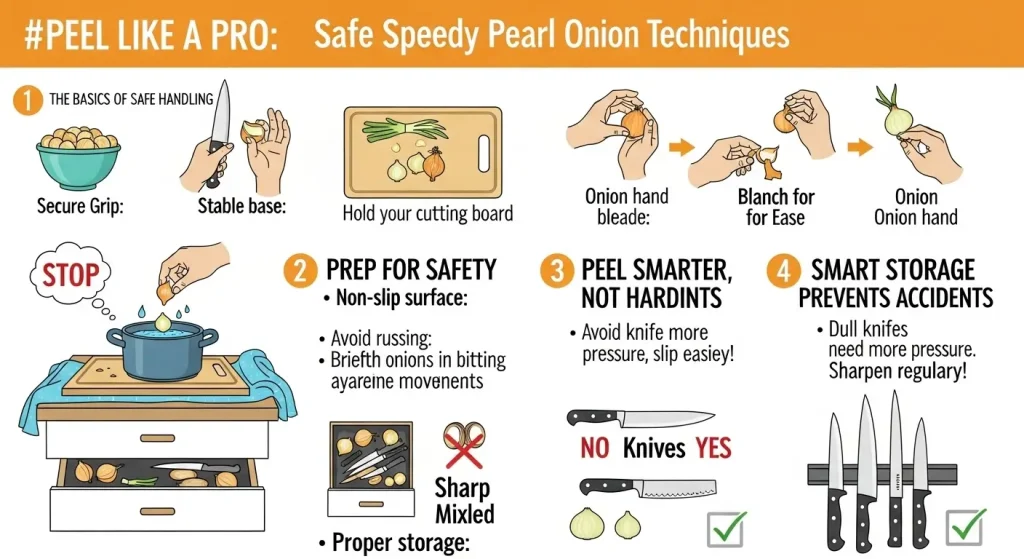 Proper knife grip and a stable cutting board reduce the risk of slips.
Proper Grip and Technique
- The claw grip – Curl the fingers of your holding hand inward, tucking your fingertips away from the blade. Use your knuckles to guide the knife.
- Secure the onion – For small pearl onions, hold them between your thumb and index finger, keeping your other fingers clear.
- Cut on a stable surface – Place a damp paper towel or a silicone mat under your cutting board to prevent it from sliding.
Common Mistakes to Avoid
- Rushing – Slow down, especially when trimming the root end. A hurried cut can send the onion flying or slice your finger.
- Using a dull knife – A sharp knife requires less force and is actually safer. Learn to sharpen your knives regularly with a honing steel or whetstone.
- Leaving knives loose in a drawer – Store them in a knife block or on a magnetic strip. Loose blades dull faster and are dangerous to reach for.
Storing Peeled Pearl Onions
Once peeled, pearl onions are more perishable because the protective skin is gone. Proper storage keeps them fresh and ready to use.
Refrigerator Storage
- Place the peeled onions in an airtight container or a resealable plastic bag with the air pressed out.
- Store them in the refrigerator’s crisper drawer. Use within 3 to 5 days for best quality.
- If they start to smell sour or develop a slimy film, discard them.
Freezing for Longer Storage
Peeled pearl onions freeze beautifully for cooked applications.
- Spread the onions in a single layer on a baking sheet lined with parchment paper.
- Freeze until solid (about 2 hours).
- Transfer to a freezer-safe bag or container. Label with the date.
- Use within 6 months. Frozen onions work well in soups, stews, and braises, but their texture softens, so they are not ideal for raw salads or crisp roasts.
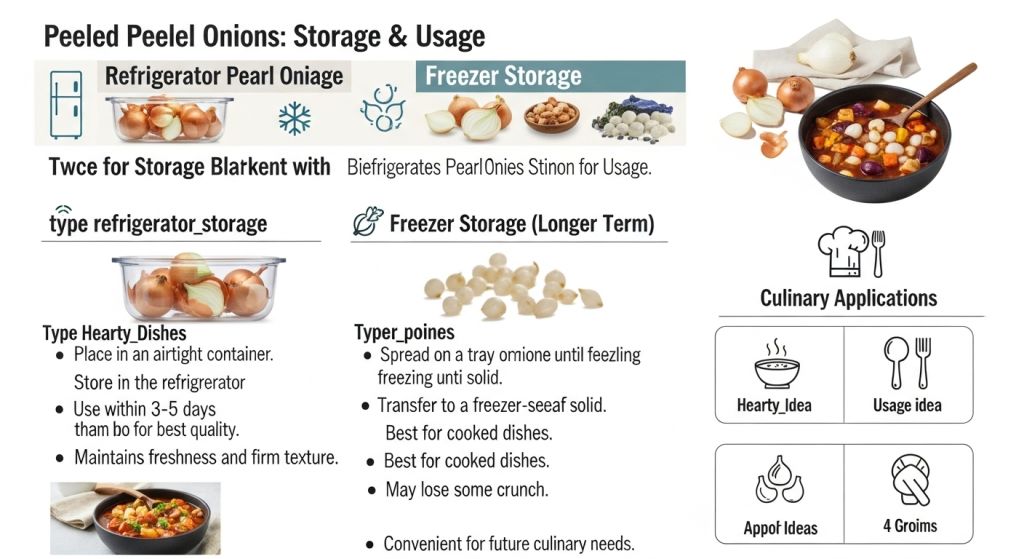 Peeled pearl onions stored in an airtight container keep fresh for up to five days.
Culinary Uses
- Roasted – Toss with olive oil, salt, and pepper; roast at 400°F for 20–25 minutes until golden and tender.
- Glazed – Simmer in butter, sugar, and stock or wine until the liquid reduces to a glossy coating.
- Pickled – Quick-pickle in vinegar, sugar, and spices for a tangy snack or cocktail garnish.
- Stews and braises – Add whole to beef bourguignon, coq au vin, or pot roast during the last 30 minutes of cooking.
Troubleshooting Common Issues
| Problem | Cause | Solution |
|---|---|---|
| Skins stick after blanching | Onions were not blanched long enough, or they cooled too slowly | Return to boiling water for another 30 seconds, then shock again |
| Onions are mushy after peeling | Over-blanched or boiled too long | Reduce blanching time to 45 seconds next batch |
| Can’t get a grip on the onion | Wet fingers or onion is too cold | Dry your hands and the onion with a towel |
| Onions feel slimy after storage | Moisture buildup in container | Pat dry before storing; use paper towel in the container to absorb excess moisture |
Maintaining Onion Freshness
- Store unpeeled pearl onions in a cool, dry place with good airflow — a pantry or cellar works well. Do not keep them near potatoes, as the ethylene gas from potatoes causes onions to sprout and spoil faster.
- Use unpeeled onions within 1 week of purchase for the best peeling results.
- If you notice a strong sulfur smell or soft spots, discard those onions immediately.
Frequently Asked Questions
How do you peel pearl onions quickly?
The fastest method is blanching: boil them for 1 minute, then transfer to ice water. The skins loosen and slide off with a gentle squeeze. For large batches, wrap the blanched onions in a kitchen towel and rub them — the friction removes most skins in seconds.
What knife skills are needed for peeling pearl onions?
You need only basic knife skills — trimming the root end and making a shallow score on the skin. Use a small, sharp paring knife and the claw grip to keep your fingers safe. For more foundational knife techniques, check out our general kitchen skills advice.
Can I peel pearl onions without boiling water?
Yes. You can trim both ends, score the skin lengthwise, and peel it off with your fingers. The cutting method works best on very fresh onions. Alternatively, freeze the onions for 30 minutes; the cold firms the flesh and loosens the skin slightly, though results are less consistent than blanching.
Why is peeling pearl onions important in cooking?
The outer skin is tough, papery, and has a bitter flavor. Removing it allows the onion’s natural sweetness to come through and ensures a tender, pleasant texture in every bite. Leaving the skin on can ruin the mouthfeel of an otherwise perfect dish.
How do I stop my eyes from watering when peeling pearl onions?
Chill the onions in the refrigerator for 30 minutes before peeling. Cold temperatures slow the release of the volatile sulfur compounds that cause tears. Working near a running vent or fan also helps.
Conclusion
Peeling pearl onions does not have to be a frustrating chore. With a sharp paring knife, a quick blanch, and a steady hand, you can transform a pile of tiny bulbs into a bowl of ready-to-cook gems in minutes. The key is preparation: set up your workspace, use the right tool for each step, and don’t rush. Practice the blanching method and the cutting method to see which works best for you.
Once you’ve mastered this skill, you’ll find yourself adding pearl onions to braises, roasts, and pickles with confidence. For more kitchen tips and detailed guides on everything from cookware selection to cleaning your stovetop, explore our full collection of resources.
