
How to Clean a Dishwasher Door Seal is a quick task that stops musty odors from reaching your plates. The rubber gasket around the door traps moisture, soap scum, and food particles every time the machine runs. If you never wipe it out, that buildup turns into black mildew fast.
You only need a few basic supplies and about fifteen minutes.
Manufacturer specifications indicate most EPDM rubber gaskets tolerate wash temperatures up to about 75 °C before the material starts to harden. Aggregate user reviews show that door seals typically last between five and ten years with regular care. As of 2026, appliance manufacturers still recommend inspecting the gasket every one to three months to catch grime before it damages the rubber.
The next section gives the exact steps in order.
How to Clean a Dishwasher Door Seal
How to Clean a Dishwasher Door Seal starts with unplugging the unit. Pull back the rubber seal folds. Scrub with warm soapy water and a soft brush.
Rinse, dry thoroughly, and leave the door ajar. Repeat every one to three months.
Why Dishwasher Door Seals Trap Mold, Soap Scum, and Odors
The door seal on a front-loading dishwasher keeps water inside the tub during a wash cycle. That same tight compression creates a warm, damp pocket where mold and mildew thrive. Every time you run a load, detergent residue, grease, and tiny food particles get pushed into the folds of the rubber gasket.
Those particles do not rinse away because the seal presses flat against the tub rim.
Households that run frequent daily loads see buildup faster because the machine runs more often. Hard water leaves mineral spots along the gasket edge, and liquid detergent can leave a filmy soap scum that traps even more grime. Over time, that combination turns into black specks or a slimy film you can see when you open the door.
If the seal stays damp between cycles, mold spores colonize the folds within days.
Running the sanitize setting helps kill bacteria inside the wash tub, but it does not scrub the rubber seal itself. The water inside the cycle may reach high temperatures, yet the gasket stays relatively cool and shielded from direct spray. That is why the musty smell returns even after you run an empty load with cleaner.
The sanitize setting treats the interior, not the door perimeter.
Top-loading dishwashers typically do not use a door seal because water does not press against a vertical door. Front-loading models rely on the gasket to form a watertight barrier when the door latches shut. That barrier is exactly what traps moisture after the cycle ends.
If you leave the door closed tight, the interior stays humid and the seal never dries out.
Leaving the door ajar after a wash helps airflow reach the gasket. Yet most people close the door immediately to keep the kitchen looking tidy. That habit seals in humidity and gives mold a head start.
The seal material itself, usually EPDM rubber, can handle heat and water but not constant dampness without airflow.
You will know the seal needs attention when dishes come out with a damp, earthy odor or when you spot dark spots along the rubber edge. Cleaning it regularly removes the food source mold needs to grow. It also protects the rubber from breaking down prematurely, which saves you from a costly gasket replacement later.
What the Rubber Door Gasket Looks Like and Where Grime Hides
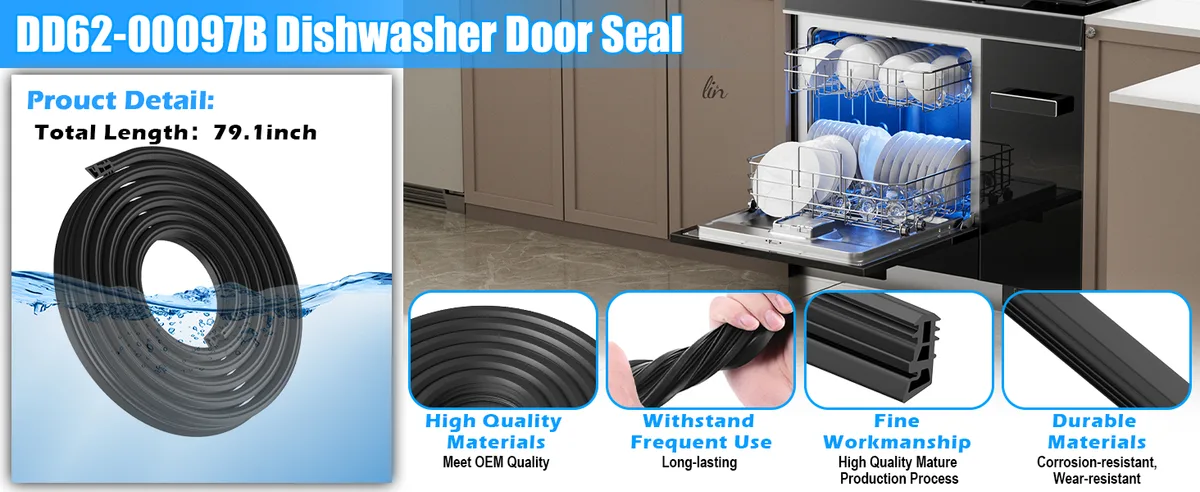
Most dishwasher door seals are made from EPDM rubber, a black or grey material that stays flexible under heat and water. The gasket runs around the entire perimeter of the door opening and presses against the tub rim when you close the latch. Its cross-section is usually a bulb or lip shape, which creates a compression point that blocks water from leaking out.
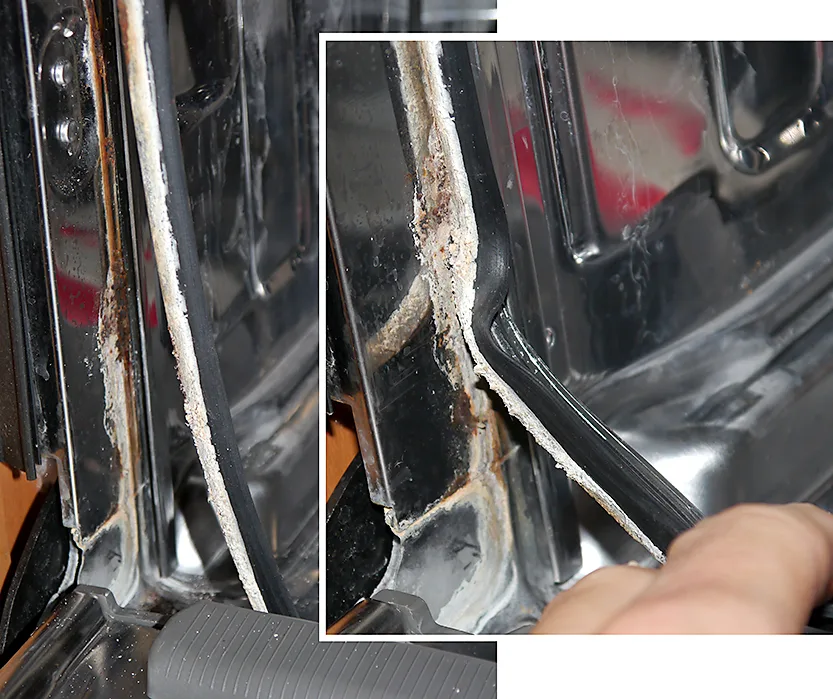
That compression point is also where grime collects. The rubber folds over itself in places, creating narrow crevices that can be three to eight millimetres deep. Soap scum, grease, and food particles settle into those gaps and stay there because the dishwasher spray arms do not aim directly at the door seal.
You might see black specks along the edge or a white chalky film from hard water minerals.
A flashlight helps you spot the trouble areas. Shine it along the seal while the door is open and look for dark discoloration inside the folds. The area near the detergent dispenser often traps dried soap residue, and the spot around the door strike plate can catch small food bits.
If you run your finger along the rubber and feel a slimy film, that is biofilm from bacteria and mold.
Some seals are removable, while others are bonded in place and cannot be pulled off without damaging them. Knowing which type you have matters before you start scrubbing. A bonded seal needs gentle cleaning in place, while a removable one can be taken out for a deeper soak if the manufacturer allows it.
Tools and Supplies for Cleaning a Dishwasher Door Seal
You do not need specialty chemicals to clean a dishwasher door seal. Most of the supplies are already in your kitchen or cleaning cabinet. A microfiber cloth works best because it traps grime without leaving lint behind.
A soft-bristled toothbrush reaches into the narrow folds where a cloth cannot go.
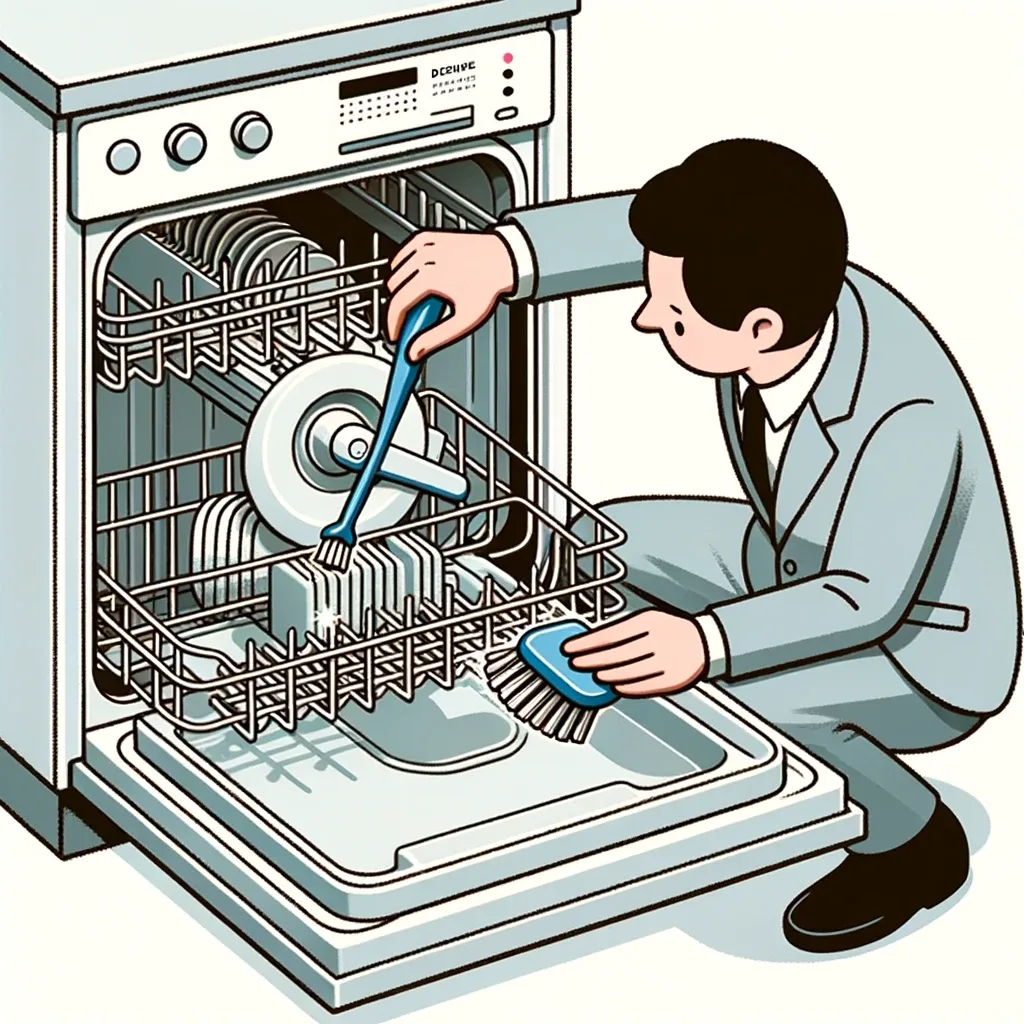
Warm water and a few drops of mild liquid dish soap are enough for routine cleaning. If you see white mineral buildup, mix equal parts white vinegar and warm water in a spray bottle. Vinegar is safe for EPDM rubber and dissolves limescale without perishing the material.
For tougher spots, make a paste with baking soda and water, apply it to the crevice, and let it sit for five minutes before scrubbing. Paper towels shed fibers that cling to the rubber, so use a cloth instead.
Avoid pod residue that can leave a sticky film on the gasket if the dispenser does not flush fully. That residue attracts more dirt and makes the seal harder to clean over time. Do not use bleach, ammonia, or petroleum-based solvents on the rubber.
Harsh chemicals can crack or harden the gasket, which leads to leaks.
Cotton swabs help with tight corners near the door latch, and a flashlight lets you inspect your work after you finish. A rubber seal conditioner is optional and only recommended if the manufacturer specifically approves it for your model.
| Supply | Best For |
|---|---|
| Microfiber cloth | Wiping without lint |
| Soft toothbrush | Deep crevices |
| White vinegar | Mineral deposits |
| Baking soda | Tough grime |
| Flashlight | Inspection |
Safety Rules and Warranty Warnings Before You Start
Before you touch the gasket, disconnect power to the dishwasher. Unplug the unit or switch off the circuit breaker so the machine cannot start while your hands are near the door. Water and electricity do not mix, and a sudden cycle could injure you or damage the appliance.
Never mix vinegar and bleach in the same space. Combining them creates toxic chlorine gas that can harm your lungs. If you choose to use a commercial dishwasher cleaner, read the label and never combine it with vinegar or bleach.
Wear rubber gloves if you have sensitive skin, since prolonged contact with vinegar or soap can dry out your hands.
Avoid sharp tools like screwdrivers or steel wool. A stiff brush or scraper can gouge the rubber and create tiny tears where mold grows later. Stick to a soft toothbrush and a microfiber cloth.
If you notice the seal is already cracked or hard, stop cleaning and plan to replace it instead of scrubbing harder.
Manufacturer specifications in your owner's manual list approved cleaning agents for your specific model. Using an unapproved chemical can void the warranty on the door seal or the entire appliance. Official care guides from GE Appliances and other major brands outline what is safe to use on gaskets and tub liners.
If you are unsure whether your seal is removable, check the manual before you pull on it. Forcing a bonded gasket can tear the rubber and break the watertight seal. When in doubt, clean in place and leave removal to a service technician.
After you finish cleaning, restore power only when the door is fully dry and closed properly. Running the machine with a wet seal can trap moisture against the electronics in some models.
Step-by-Step: How to Clean a Dishwasher Door Seal
The actual cleaning takes about ten to twenty minutes, depending on how much buildup is hiding in the folds. Follow these steps in order to avoid damaging the rubber.
Disconnect Power and Open the Door
Unplug the dishwasher or flip the breaker off. Open the door all the way so you can see the full perimeter of the gasket. Prop it open if it does not stay put on its own.
A flashlight helps you inspect the seal before you start scrubbing.
Pull Back the Seal Folds to Expose Hidden Crevices
Gently pull back the rubber folds with your fingers. Do not use a knife or screwdriver to pry the seal away from the tub. Look for black mold, white mineral spots, or slimy film inside the folds.
If you see a crack or a tear, stop and plan to replace the gasket rather than clean it.
Scrub With Warm Soapy Water and a Soft Brush
Dip a soft toothbrush in warm water mixed with a drop of mild dish soap. Scrub the exposed crevices gently in a circular motion. Wipe away loosened grime with a damp microfiber cloth.
For heavy buildup, spray the vinegar solution from the previous section and let it sit for a few minutes before scrubbing again.
Rinse, Dry, and Leave the Door Ajar
Wipe the seal with a clean, damp cloth to remove soap residue. Dry the rubber thoroughly with a dry microfiber cloth. Leave the dishwasher door ajar so air can circulate around the gasket and it dries completely.
Closing the door too soon traps moisture and invites mold back within days.
If the door does not latch properly after cleaning, check for a misaligned seal or debris in the strike plate. Door alignment issues often trace back to a gasket that was pushed out of place. Poor water flow can also leave soap behind on the rubber, so check your fill pressure if residue returns quickly.
Signs Your Dishwasher Gasket Needs Replacement Instead of Cleaning
If the rubber feels hard or brittle, cleaning will not restore it. A gasket that has lost its flexibility cannot compress tightly against the tub rim. That gap lets water leak onto your kitchen floor during every cycle.
Look for visible cracks, tears, or permanent dents where the seal no longer springs back.
Water pooling under the door after a cycle is a clear warning sign. Mold stains that refuse to scrub out after two or three attempts suggest the rubber has absorbed contaminants. In those cases, replacement is the only reliable fix.
Aggregate reviews indicate that a torn seal often causes error codes or mid-cycle stops on modern dishwashers.
A door that will not latch fully may mean the gasket is compressed out of shape. A misaligned seal prevents the strike plate from engaging, which can cause door alignment issues. If your dishes feel damp after a cycle, you may have a drying issue worth investigating separately.
Replacement gaskets usually cost between $30 and $120 depending on the brand and model. Ordering by model number ensures the new seal matches your tub profile. If you see water leaking around the door after a cycle, a moisture alarm under the unit can catch the problem early before it damages your cabinets.
Hard water regions accelerate wear on the gasket surface. Mineral deposits build up faster and eat into the rubber if left untreated , they can eat through the rubber and cause permanent leaks. Replacing the seal early prevents water damage to your cabinetry.
Vinegar, Baking Soda, and Dishwasher Cleaner: Which Works Best
Vinegar works best for mineral deposits and light soap scum. Mix equal parts white vinegar and warm water, spray the seal, and let it sit for a few minutes before scrubbing. The acid dissolves chalky buildup without harming EPDM rubber.
This method suits homes with hard water where white film appears along the gasket edge.
Baking soda tackles tougher grime and sticky residue. Make a paste with water, apply it to dark crevices, and scrub after five minutes. It is mildly abrasive but safe for rubber when used gently.
Choose this option if you feel a slimy film that vinegar alone does not cut through.
Commercial dishwasher cleaner tablets handle heavy buildup inside the tub, but they are not always safe for the door seal. Some formulas contain bleach or strong enzymes that can perish rubber over time. Check your owner's manual before running a cleaner cycle with the seal in place.
Aggregate user reviews show that tablets work well for interior odor but can leave residue on gaskets if not rinsed.
Running the high-heat wash option treats the interior wash tub but does not scrub the rubber perimeter. For light monthly maintenance, vinegar is the safest bet. For stubborn buildup, use baking soda.
Reserve commercial tablets for deep interior cleaning only when the manufacturer approves them.
Mistakes That Damage a Dishwasher Door Seal
Using bleach on the gasket is the most common error. Bleach breaks down EPDM rubber and causes it to crack within months. Never mix bleach with vinegar, as the combination creates toxic gas.
If you need a disinfectant, choose a product labeled safe for rubber seals.
Scrubbing with steel wool or a stiff nylon brush gouges the surface. Tiny scratches become hiding spots for mold and bacteria. Always use a soft toothbrush or microfiber cloth instead.
Closing the door immediately after cleaning traps moisture inside. The gasket needs airflow to dry fully. Leave the door ajar for at least an hour before shutting it.
This simple habit prevents mildew from returning overnight.
Forcing a bonded seal off the tub rim can tear the rubber permanently. Some seals are glued or clipped in place and are not meant to be removed by the owner. If you are unsure, leave the seal attached and clean it in place.
Pulling too hard can also bend the door frame or damage the latch mechanism.
Using an unapproved adhesive to reattach a loose seal can void the warranty on the door assembly. Manufacturer specifications in your owner's manual describe the correct replacement procedure.
Monthly Maintenance to Stop Mold Coming Back
Wipe the door seal with a dry microfiber cloth after each use. This removes surface moisture before mold has a chance to grow. It takes ten seconds and makes a noticeable difference over time.
Households that do this weekly report fewer odor issues.
Leave the dishwasher door ajar after every cycle. Air circulation dries the gasket and the tub interior. Closing the door traps humid air, which is exactly what mold needs.
If you have small children or pets, prop the door open just enough to allow airflow without creating a safety hazard.
Run an empty cycle with dishwasher cleaner once a month. This flushes detergent buildup from the spray arms and tub, which reduces the amount of residue that reaches the seal.
Check the detergent dispenser for pod residue after each load. Undissolved pods leave a sticky film that attracts grime to the gasket. A booster can improve dissolution in hard water areas.
If pods consistently fail to dissolve, try switching to liquid or powder detergent.
Schedule a quick inspection every three months. Shine a flashlight along the gasket and look for new cracks or dark spots. Early action prevents a small issue from becoming a leak that damages your cabinetry.
Hard water regions may need more frequent attention because mineral scale provides a foothold for mold. Wiping the seal weekly in those areas prevents scale from hardening into permanent stains.
Frequently Asked Questions
How often should I clean a dishwasher door seal?
Clean the seal every one to three months depending on how often you run the dishwasher. Heavy daily use calls for monthly attention, while occasional loads can stretch to quarterly. Wiping the gasket dry after each cycle extends the time between deep cleanings.
Can I use bleach to clean a dishwasher door seal?
No. Bleach breaks down EPDM rubber and causes cracking. Use warm soapy water, white vinegar, or baking soda instead.
If you need a stronger cleaner, choose one labeled safe for rubber gaskets.
Why does my dishwasher smell musty even after cleaning?
The odor likely comes from mold trapped inside the seal folds where spray arms cannot reach. Running a sanitize cycle treats the tub but does not scrub the door gasket. Clean the seal manually with a toothbrush and soapy water to remove the source.
Do I need to remove the door seal to clean it?
Most dishwasher seals are bonded in place and should not be removed. Cleaning in place with a soft brush is sufficient for routine maintenance. Only remove the seal if your owner's manual explicitly permits it.
What should I do if the gasket is torn?
Replace it. A torn seal cannot form a watertight barrier and will leak during cycles. Order a replacement by model number and install it according to the manufacturer's instructions.
Is a dishwasher leak detector worth installing?
A leak detector can alert you to water under the appliance before it damages your floor. It is especially useful in homes with older dishwashers or in kitchens with wood cabinetry. Pair it with regular seal maintenance for the best protection.