
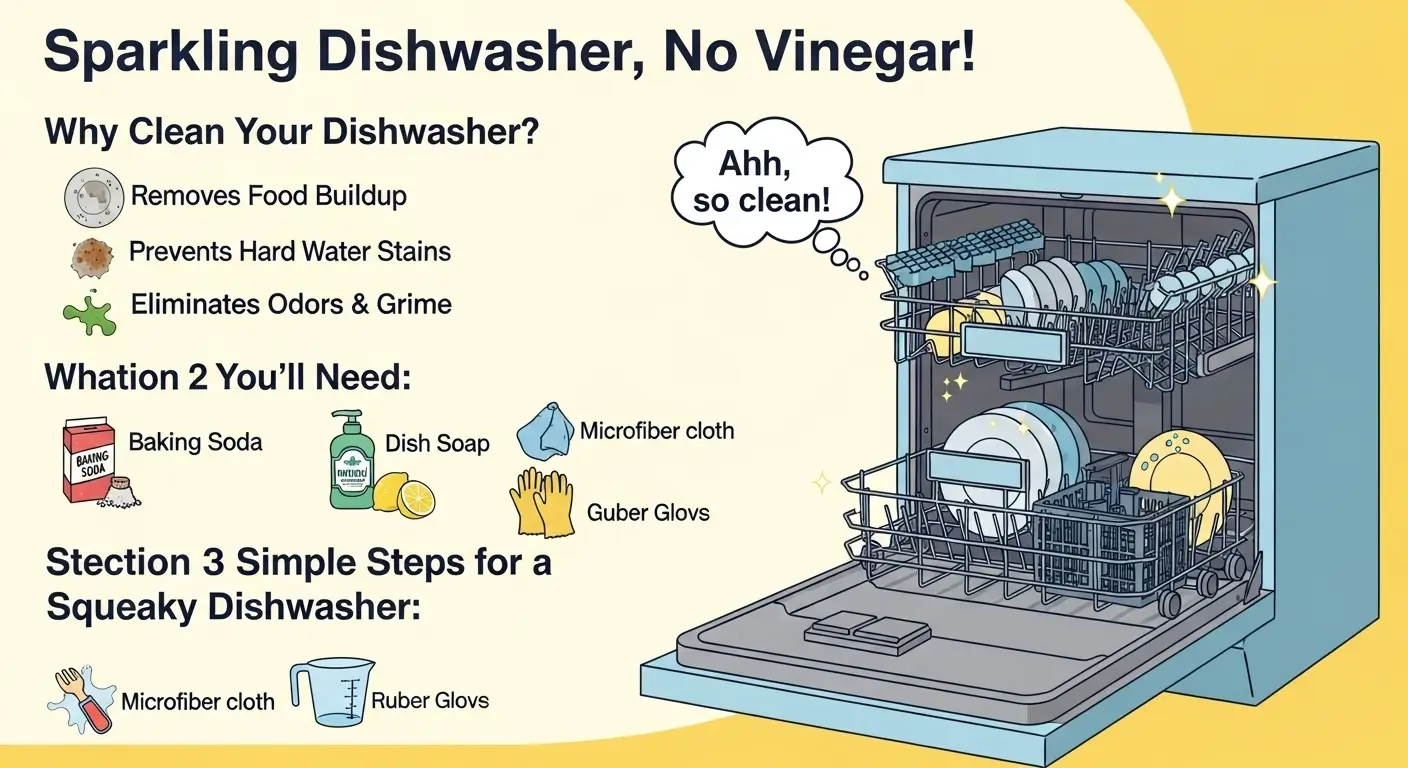
Have you ever opened your dishwasher, expecting to find sparkling clean dishes, only to be greeted by an unpleasant odor or a less-than-pristine interior? You’re not alone.
While vinegar is often touted as a go-to cleaning solution, it’s not always the best choice for everyone. Whether you’re looking to avoid the smell, prevent potential damage to seals, or simply try something new, there are alternative methods that can leave your dishwasher fresh and spotless.
Imagine enjoying the confidence of knowing your dishes will come out perfectly clean every time. Intrigued? Let’s explore effective ways to clean your dishwasher without using vinegar. Keep reading to discover easy tips that could change the way you think about dishwasher maintenance.
Preparation Steps
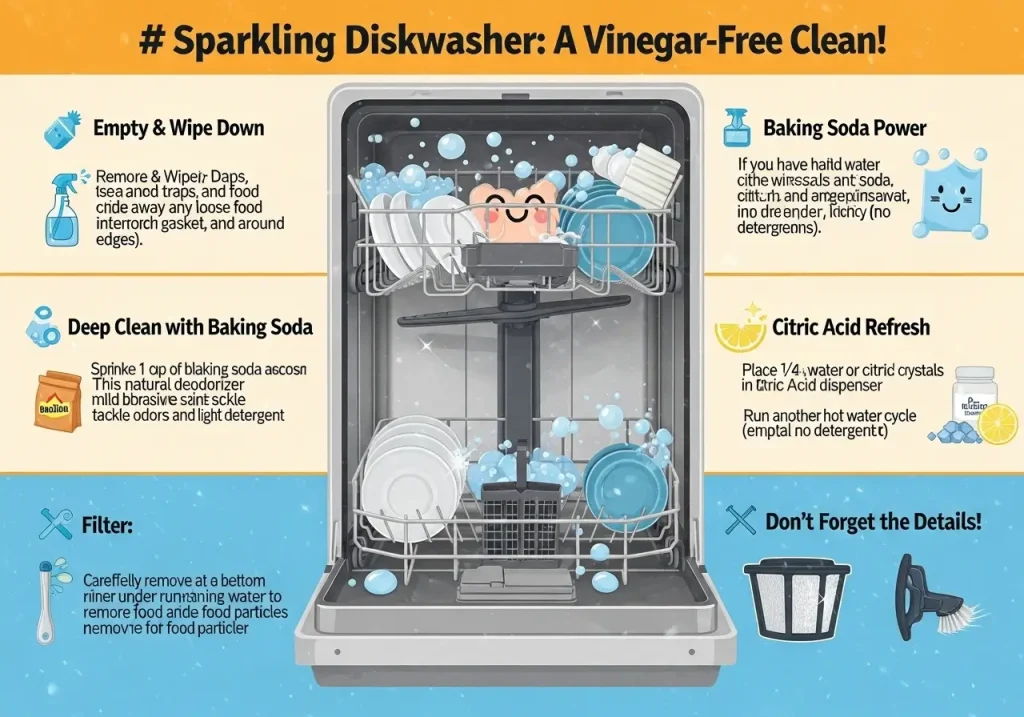
Getting ready to clean your dishwasher without vinegar requires some simple preparation steps. You’ll want to make sure you have everything you need and that you’re ready to tackle the task safely. Let’s break down the process to ensure you’re fully prepared for a sparkling clean dishwasher.
Gather Cleaning Supplies
First, you’ll need to gather the right cleaning supplies. Start with a soft brush or an old toothbrush—these are great for scrubbing away grime in tight spots. Baking soda is also essential. Its natural cleaning power helps lift stains and deodorizes as well.
You’ll also need a microfiber cloth for wiping down surfaces. If you have some dishwashing gloves, they can be handy to protect your hands from any residue. Having these supplies ready will make the cleaning process smoother.
Safety Precautions
Before you dive in, consider safety precautions. Make sure your dishwasher is off and unplugged if it’s a countertop model. This simple step prevents any electrical mishaps.
Check for any sharp edges or broken parts inside the dishwasher. You don’t want any surprises that could lead to cuts or injuries. It’s a quick check that ensures your safety while you clean.
Finally, ensure good ventilation in your kitchen. Open a window or turn on a fan. This helps disperse any odors from cleaning products and keeps the air fresh.
Have you ever found yourself halfway through a task only to realize you’re missing something crucial? By preparing thoroughly, you avoid this common pitfall. Are you ready to take on the dishwasher cleaning challenge? With your supplies in hand and safety measures in place, you’re all set to tackle the next steps with confidence!

Credit: www.homedit.com
Removing Food Debris
Cleaning a dishwasher is easy without vinegar. Use baking soda and warm water to scrub away food debris. This simple method leaves your appliance fresh and odor-free.
Cleaning a dishwasher without vinegar might sound tricky, but it’s entirely possible and just as effective. The first step in maintaining a clean and efficient dishwasher is removing food debris. Over time, bits of food can accumulate and affect your dishwasher’s performance. Let’s dive into some practical steps you can take to keep your dishwasher sparkling clean and running smoothly.
Clean The Filter
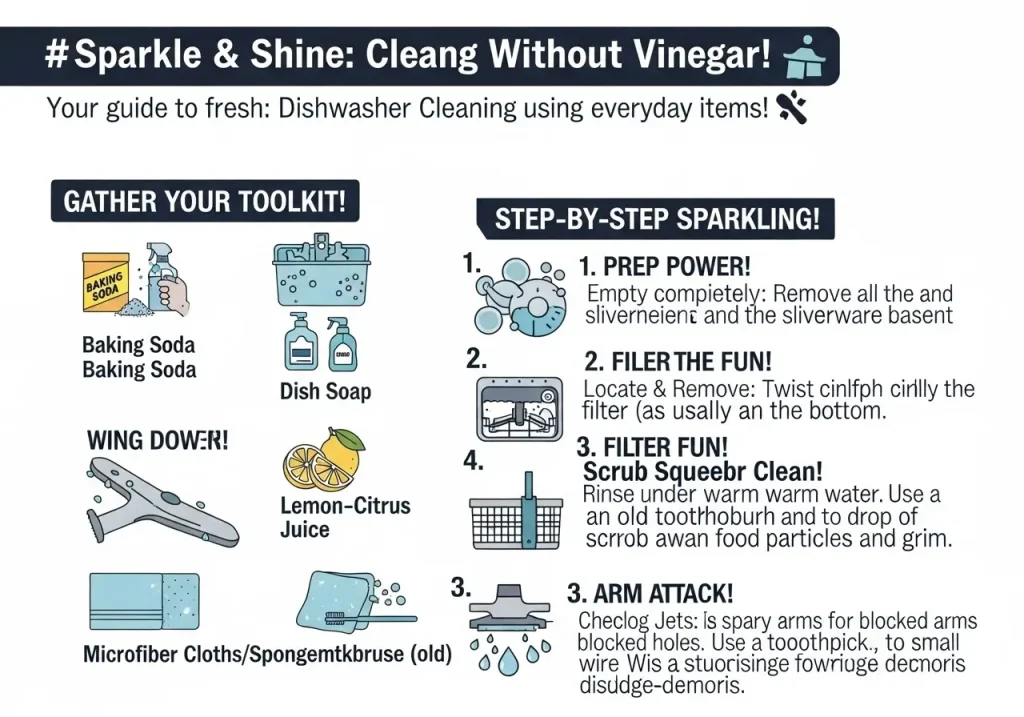
The filter is the heart of your dishwasher’s cleaning mechanism. It’s the place where trapped food particles gather. To clean it, start by removing the bottom rack to access the filter. Twist the filter counterclockwise and lift it out gently. Rinse it under warm running water to remove debris. Use a soft brush to scrub away stubborn particles. Reinstall it by twisting it back into place until it locks. Have you checked your filter recently? Regular maintenance here can save you from bigger issues down the line.
Wipe The Door And Seals
The door and seals are often overlooked, yet they play a crucial role in keeping your dishwasher airtight. Begin by using a damp cloth to wipe down the edges of the door. Pay close attention to the seals where food particles often hide. If you spot any gunk, use a toothbrush dipped in warm soapy water to scrub it away. Rinse with a clean damp cloth to remove soap residue. Are there any hidden spots you might be missing? A quick wipe can make a big difference. Keeping these areas clean not only improves efficiency but also extends your dishwasher’s lifespan.
Cleaning With Baking Soda
Clean your dishwasher with baking soda for a fresh sparkle. Sprinkle one cup on the bottom. Run a hot water cycle to eliminate odors and grime. Effective and easy without vinegar.
Cleaning your dishwasher without vinegar might seem challenging, but baking soda is a fantastic alternative. It’s an excellent choice for tackling odors and grime. Using baking soda can leave your dishwasher fresh and clean without harsh chemicals. It’s a simple process that anyone can follow. Plus, it’s cost-effective and something you probably already have in your kitchen. Let’s dive into the steps to transform your dishwasher with baking soda.
Sprinkle Baking Soda
Begin by clearing out your dishwasher. Remove any dishes, utensils, or racks to give you full access. This ensures that the baking soda reaches all the nooks and crannies. Sprinkle a cup of baking soda across the bottom of your dishwasher. Make sure it’s evenly distributed to cover the surface. Baking soda works as a natural deodorizer and cleaner, perfect for tackling stubborn stains and smells. Have you noticed that musty odor every time you open your dishwasher? Baking soda can be your hero. Just a sprinkle can make a world of difference.
Run A Hot Cycle
Close the dishwasher and set it to run on the hottest cycle available. The heat will help dissolve the baking soda, allowing it to work its magic. This hot cycle is crucial for breaking down any grease or grime. Think about how refreshing it feels after a hot shower. Your dishwasher will feel the same way after this cycle. The heat combined with baking soda cleans and refreshes the interior. Once the cycle is complete, open the dishwasher to let it air out.
Enjoy the clean, fresh scent and shine. Doesn’t it feel great to have a sparkling clean dishwasher without using any harsh chemicals? Cleaning your dishwasher with baking soda is straightforward and effective. Have you tried it yet? Share your thoughts and experiences in the comments!
/how-to-clean-the-dishwasher-1900465_07-6452d6083d11478497770f43bfd83258.jpg)
Credit: www.thespruce.com
Using Hydrogen Peroxide
Cleaning a dishwasher can seem like a daunting task. But with hydrogen peroxide, it becomes simple and effective. This powerful cleaner tackles grime and bacteria effortlessly. It’s a great alternative to vinegar, especially for those who dislike its smell. Hydrogen peroxide is gentle on your dishwasher and tough on dirt. Let’s explore how to use it effectively.
Mix With Water
Start by creating a cleaning solution. Mix equal parts of hydrogen peroxide and water in a spray bottle. This mixture is safe for your dishwasher. It cleans without causing damage. Shake the bottle gently to combine the ingredients. Your cleaning solution is now ready to use.
Target Stubborn Stains
Spray the solution on stubborn stains. Focus on areas with visible grime or residue. Let it sit for a few minutes. This allows the peroxide to break down dirt. Use a soft brush or cloth to scrub gently. Rinse the area with clean water afterward. Your dishwasher will look refreshed.
Lemon Juice As An Alternative
Lemon juice offers an effective way to clean a dishwasher naturally. Its acidic nature helps dissolve mineral deposits and grease, leaving your appliance smelling fresh. Simply pour lemon juice into the detergent cup and run a cycle for a sparkling clean dishwasher.
Lemon juice serves as a great alternative to vinegar for cleaning dishwashers. It offers natural cleaning power with a fresh scent. Many people prefer it due to its citrusy fragrance and effectiveness in removing grime. Lemon juice is a versatile cleaning agent that works wonders in maintaining dishwashers.
Natural Deodorizer
Lemon juice acts as a natural deodorizer. It eliminates musty odors inside the dishwasher. The refreshing scent of lemon leaves your dishwasher smelling clean and fresh. The citric acid in lemon juice neutralizes unpleasant smells effectively. It ensures your kitchen always has a pleasant aroma.
Enhance Shine
Lemon juice helps enhance the shine of your dishwasher. It removes stains and hard water spots. This makes the interior gleam with cleanliness. The natural acids in lemon juice break down mineral deposits. This leaves surfaces looking bright and polished. Regular use keeps your dishwasher looking new and shiny.
Regular Maintenance Tips
Keeping your dishwasher clean ensures it runs smoothly and efficiently. Regular maintenance prevents build-up and unpleasant odors. You don’t need vinegar to maintain your appliance. Follow these simple tips for a sparkling dishwasher.
Weekly Wipe Down
Start with the door. Wipe it with a damp cloth. Focus on the edges and corners. Use mild dish soap for stubborn spots. Next, clean the gasket. This rubber seal traps dirt and grime. A soft brush can help remove debris. Don’t forget the bottom of the door. Food particles often gather there.
Now, check the filter. Remove and rinse it under warm water. This prevents clogging and keeps water flowing. Lastly, inspect the spray arms. Ensure no food bits block the holes. A toothpick can clear any blockages. A quick weekly wipe-down keeps your dishwasher in top shape.
Monthly Deep Clean
Once a month, give your dishwasher a deeper clean. Remove all racks and utensils. Wipe the interior walls with a damp cloth. Use baking soda for any stains. Sprinkle it on a wet sponge. Scrub gently to avoid scratches.
Next, focus on the spray arms again. Remove them if possible. Soak in warm, soapy water for a few minutes. Rinse thoroughly before reattaching. Finally, place a cup of baking soda on the top rack. Run a hot water cycle. This helps deodorize and freshen your appliance. Regular deep cleaning ensures your dishwasher remains efficient and odor-free.
Common Mistakes To Avoid
Cleaning a dishwasher without vinegar can be tricky. Many people make common mistakes that can lead to poor results. Avoid these mistakes to keep your dishwasher clean and efficient.
Overloading The Dishwasher
Overloading can block water flow and prevent proper cleaning. The dishwasher needs space for water and detergent to circulate. Crowded dishes can lead to soap residue and food particles sticking around. Place items carefully and avoid cramming too many at once. This ensures a thorough clean for every load.
Ignoring Hard Water Buildup
Hard water leaves mineral deposits on surfaces. These deposits can clog spray arms and block filters. Regularly check and clean these parts to avoid buildup. Use a soft brush or cloth to wipe away any deposits. Keeping these components clean helps maintain washing performance and extends the life of your appliance.
Frequently Asked Questions
What To Use To Clean The Dishwasher If You Don’t Have Vinegar?
Use baking soda and lemon juice to clean your dishwasher. Sprinkle baking soda on the bottom. Add lemon juice to a cup and place it on the top rack. Run a hot water cycle for effective cleaning. This method removes odors and leaves your dishwasher fresh.
What Is The Best Natural Cleaner For A Dishwasher?
The best natural cleaner for a dishwasher is white vinegar. Place a cup on the top rack. Run a hot water cycle. This removes grease, odors, and limescale effectively. Baking soda also helps; sprinkle on the bottom and run another cycle for added freshness.
These methods are safe and eco-friendly.
What Is The Best Way To Clean The Inside Of A Dishwasher?
Clean the inside of a dishwasher by placing a cup of white vinegar on the top rack. Run a hot water cycle. Sprinkle baking soda on the bottom and run a short cycle. Remove and clean filters regularly for optimal performance.
Is Vinegar Or Baking Soda Better For The Dishwasher?
Baking soda is better for cleaning dishwashers. It effectively removes odors and residues. Vinegar can damage rubber parts. Use baking soda for a safer, fresher dishwasher.
Conclusion
Cleaning your dishwasher without vinegar is simple and effective. Just use household items like baking soda and lemon juice. These clean and deodorize effortlessly. Regular maintenance ensures your dishwasher stays in top condition. Wipe down surfaces and unclog filters frequently.
This keeps your appliance running smoothly. No need for harsh chemicals. Natural solutions are often best. A clean dishwasher means cleaner dishes. It’s easy to keep your kitchen fresh. Follow these steps to avoid residue and odors. Enjoy sparkling clean results every time.
Simplify your cleaning routine today. Your dishwasher will thank you.
