
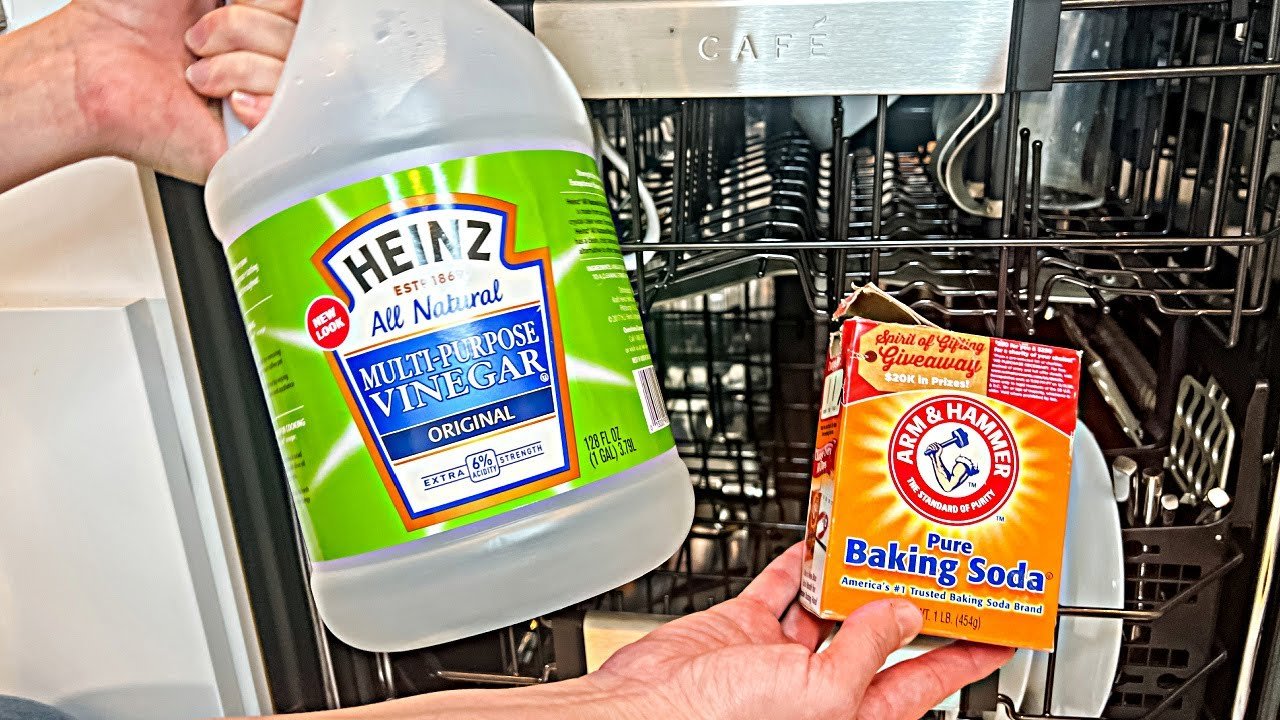
Is your dishwasher leaving behind unpleasant odors, streaks, or a general lack of sparkle? Over time, food particles, grease, and mineral deposits can build up, hindering performance and impacting the cleanliness of your dishes. Fortunately, you don't need harsh chemicals to restore your appliance to its former glory. Your kitchen pantry likely already holds the best natural cleaning tools: white vinegar and baking soda.
This guide will walk you through a simple, step-by-step process to deep clean your dishwasher using thesehousehold staples. Not only is this method effective, but it's also budget-friendly and environmentally conscious, ensuring your kitchen runs smoothly and your dishes are impeccably clean.
Why Choose Vinegar and Baking Soda for Dishwasher Cleaning?
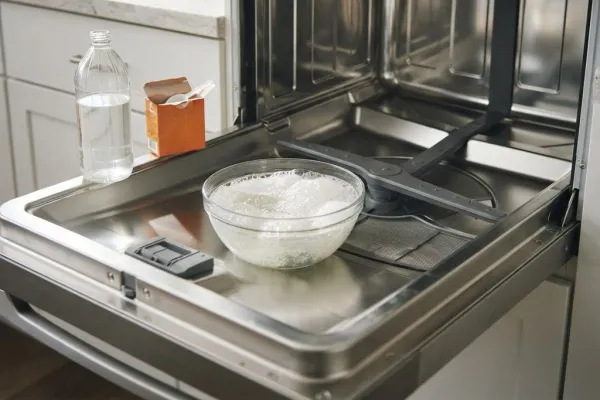
Opting for natural cleaning agents like vinegar and baking soda for your dishwasher offers a multitude of advantages over chemical-ladencleaners. These common pantry items are surprisingly powerful, tackling grime, odors, and mineral buildup without posing risks to your health, your appliance, or the planet.
Eco-Friendly and Sustainable
Unlike many commercial cleaners that release volatile organic compounds (VOCs) into the air and waterways, vinegar and baking soda are biodegradable and non-toxic. Using them aligns with a greener lifestyle, reducing your household's chemical footprint and contributing to a healthier home environment.
Cost-Effective Cleaning
Purchasing specialized dishwasher cleaning tablets or sprays can add up. Vinegar and baking soda are inexpensive, readily available ingredients that most people already have on hand. This makes regular dishwasher maintenance an affordable practice, saving you money without compromising on cleanliness.
Powerful Odor Neutralization
Dishwashers can develop stubborn odors from lingering food particles and stagnant water. Vinegar's acidity is excellent at breaking down odor-causing bacteria, while baking soda is a natural deodorizer that absorbs smells. Together, they effectively neutralize unpleasant aromas, leaving your dishwasher smelling genuinely fresh.
Gentle Yet Effective Cleaning Action
Vinegar's acetic acid works to break down soap scum, hard water stains, and mineral deposits that can dull your dishwasher's interior and affect its performance. Baking soda acts as a mild abrasive, gently scrubbing away food residue and grime without scratching surfaces. This dual action ensures your appliance is thoroughly cleaned without risking damage to seals or internal components.
Safe for Appliances and Health
Commercial cleaners can sometimes be harsh on rubber seals and plastic parts within your dishwasher, potentially leading to wear and tear. Vinegar and baking soda are gentle enough for regular use, preserving the integrity of your appliance. Furthermore, they are safe to use around children and pets, eliminating concerns about harmfulchemical residues contaminating your dishes or the air in your kitchen.
Essential Materials for Your Natural Dishwasher Clean

To embark on your natural cleaning journey, you'll only need a few readily available items. These are common household essentials, making the process convenient and accessible.
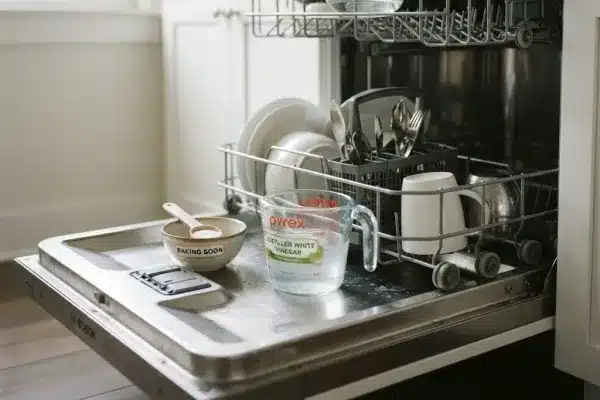
- White Vinegar: Use plain white distilled vinegar. Its acidity is key for breaking down grease and mineral buildup. Avoid apple cider or balsamic vinegar, as their sugars and colors could potentially stain.
- Baking Soda: Also known as sodium bicarbonate, this staple is a mild alkali and a fantastic deodorizer and gentle abrasive.
- A Dishwasher-Safe Cup or Bowl: To hold the vinegar during the cleaning cycle.
- Soft Cloth or Sponge: For wiping down accessible surfaces.
- An Old Toothbrush or Small Brush: Ideal for reaching into nooks, crannies, and around seals.
These simple tools, combined with vinegar and baking soda, are all you need for a comprehensive clean that rivals any commercial product.
Pre-Cleaning Steps: Preparing Your Dishwasher
Before you begin the vinegar or baking soda treatments, a little preparation ensures the most effective clean.
1. Empty the Dishwasher Completely
Remove all dishes, cutlery, glasses, and racks. This allows full access to the interior tub, spray arms, and filter. Check the bottom of the dishwasher for any large food debris or lodged items.
2. Inspect and Clean the Filter
The dishwasher filter is crucial for trapping food particles, but it can easily become clogged. If your dishwasher has a removable filter (consult your owner's manual if unsure), take it out. Rinse it under hot running water. For stubborn gunk, use an old toothbrush and a little dish soap or a vinegar-water solution to scrub it clean. A clogged filter is a common cause of both poor cleaning performance and unpleasant odors. This simple maintenance step can significantly improve how your dishwasher functions. Learn more about general kitchen maintenance.
:max_bytes(150000):strip_icc()/how-to-clean-the-dishwasher-1900465_07-6452d6083d11478497770f43bfd83258.jpg) A clean dishwasher filter is essential for optimal performance and odor prevention.
Image source: www.thespruce.com
A clean dishwasher filter is essential for optimal performance and odor prevention.
Image source: www.thespruce.com
3. Wipe Down Door Seals and Edges
Moisture can linger on the door seals and the area where the door meets the tub, leading to mold or mildew growth. Use a damp cloth, perhaps with a little vinegar solution, to wipe down the rubber seals and the edges of the door. An old toothbrush is excellent for getting into the tight corners.
Step-by-Step: Cleaning with White Vinegar
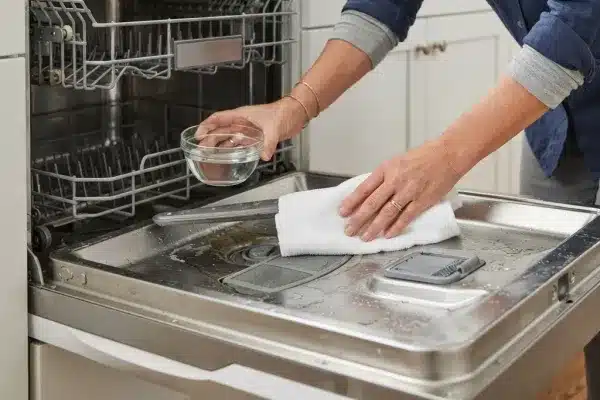
Vinegar’s acidic nature makes it perfect for tackling limescale, mineral deposits, and grease.
Step 1: Place Vinegar in the Dishwasher
Pour approximately 1 to 2 cups of white vinegar into a dishwasher-safe cup or bowl. Place this container on the top rack of the empty dishwasher. Ensure it’s stable and won't tip over during the cycle.
Step 2: Run a Hot Water Cycle
Close the dishwasher door. Select the hottest water setting available on your dishwasher. Run a full wash cycle with no detergent. The hot water will agitate and distribute the vinegar throughout the interior, allowing it to break down grime, sanitize, and neutralize odors.
Once the cycle is complete, you should notice a significant reduction in any musty smells.
Step-by-Step: Cleaning with Baking Soda
Baking soda adds an extra layer of cleaning power, acting as a deodorizer and a gentle scrubber to lift away remaining residue.
Step 1: Sprinkle Baking Soda
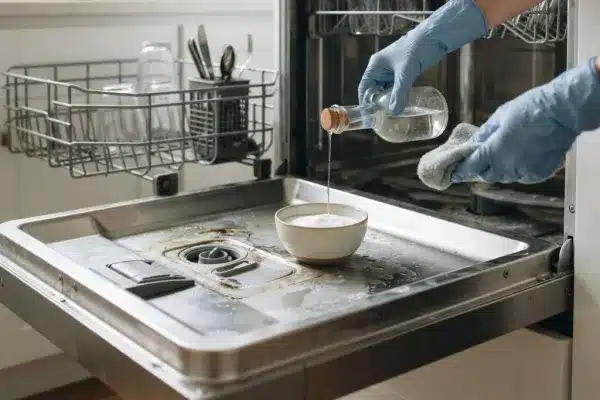
After the vinegar cycle (or as a standalone cleaning step if you prefer), sprinkle about 1 cup of baking soda evenly across the bottom of the dishwasher tub. Pay attention to corners and areas where debris tends to accumulate.
Step 2: Run a Short, Hot Cycle
Close the dishwasher door. Select a short, hot water cycle. Again, do not add detergent. Baking soda will react with the hot water to create a gentle scrubbing action and absorb lingering odors.
Once this cycle finishes, open the dishwasher. You should see a clean, fresh-smelling interior, free from visible residue and ready to make your dishes sparkle.
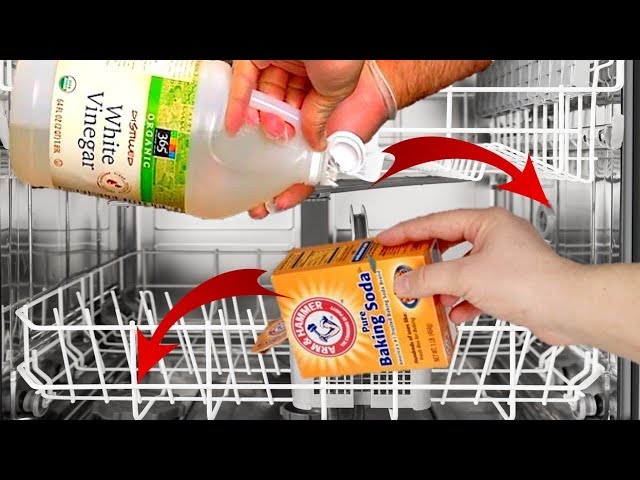 Distributing baking soda on the tub floor targets grime and odors.
Image source: www.youtube.com
Distributing baking soda on the tub floor targets grime and odors.
Image source: www.youtube.com
Addressing Stubborn Issues: Deep Cleaning Tips
For dishwashers that are particularly neglected or prone to specific problems, a few extra steps can make a world of difference.
Cleaning the Spray Arms
Food particles can clog the small holes in the spray arms, reducing water pressure and cleaning efficiency.
- Removal: Most spray arms can be unscrewed or gently pried off. Consult your dishwasher's manual for specific instructions.
- Cleaning: Use a toothpick or a small needle to clear any blockages in the spray holes. Rinse the arms thoroughly. If they are heavily soiled, soak them in a vinegar-water solution for an hour before cleaning.
Tackling Built-Up Grime on the Tub Interior
While the vinegar and baking soda cycles are effective, some manufacturers recommend occasional manual wiping for stubborn areas.
- After the cleaning cycles, use a damp cloth or sponge with a gentle solution of water and a drop of dish soap to wipe down the interior walls, racks, and the inside of the door.
- Rinse thoroughly with a clean, damp cloth to remove any soap residue.
Dishwasher Maintenance for Lasting Sparkle
Consistent care ensures your dishwasher remains efficient and odor-free between deep cleans.
Establish a Regular Cleaning Schedule
Aim to run a vinegar and baking soda cleaning cycle once a month. This proactive approach prevents significant buildup and keeps your appliance running at its best. Regular maintenance is key to prolonging the life of your kitchen appliances. Explore our blog for more kitchen tips.
Avoid Common Cleaning Mistakes
- Don't mix vinegar and baking soda in the same cycle: While they are great together for cleaning surfaces, their chemical reaction in a closed dishwasher cycle can be less effective and potentially cause foaming or overflow issues. Always run them in separate cycles.
- Never use bleach: Bleach can damage rubber seals and hoses over time and can react dangerously with other residues.
- Avoid abrasive scrubbers: Steel wool or overly stiff brushes can scratch the interior tub or racks. Stick to soft cloths, sponges, or an old toothbrush.
- Don't run cleaning cycles with dishes inside: The cleaning agents need to circulate freely to work effectively on the dishwasher itself. Removing dishes ensures a thorough clean.
Frequently Asked Questions About Dishwasher Cleaning
Can I use vinegar and baking soda at the same time in my dishwasher?
It’s generally recommended to use them in separate cycles for optimal results and to avoid potential foaming issues. Run a cycle with vinegar, then follow up with a separate cycle using baking soda.
Where do I put the vinegar when cleaning my dishwasher?
Pour 1 to 2 cups of white vinegar into a dishwasher-safe cup or bowl and place it on the top rack of the empty dishwasher before running a hot wash cycle.
How much vinegar and baking soda should I use?
For a standard cleaning, use 1 to 2 cups of white vinegar and about 1 cup of baking soda sprinkled on the bottom of the tub. Adjust slightly based on your dishwasher's size and how dirty it is.
Can baking soda and vinegar unclog a dishwasher?
While they can help break down minor grease and food particle clogs, they are not a substitute for professional drain cleaning for severe blockages. If you suspect a significant clog, it's best to consult your dishwasher's manual or a service technician.
Conclusion: Enjoy a Fresher, More Efficient Dishwasher
Maintaining a clean dishwasher is essential for both hygiene and appliance longevity. By leveraging the natural power of white vinegar and baking soda, you can effectively tackle odors, grime, and mineral buildup without resorting to harsh chemicals. This simple, eco-friendly, and cost-effective cleaning method ensures your dishwasher runs efficiently and your dishes come out sparkling clean every time.
Make this natural cleaning routine a regular part of your household chores, and you'll enjoy the peace of mind that comes with a spotless, fresh-smelling kitchen appliance for years to come. Happy cleaning!
