
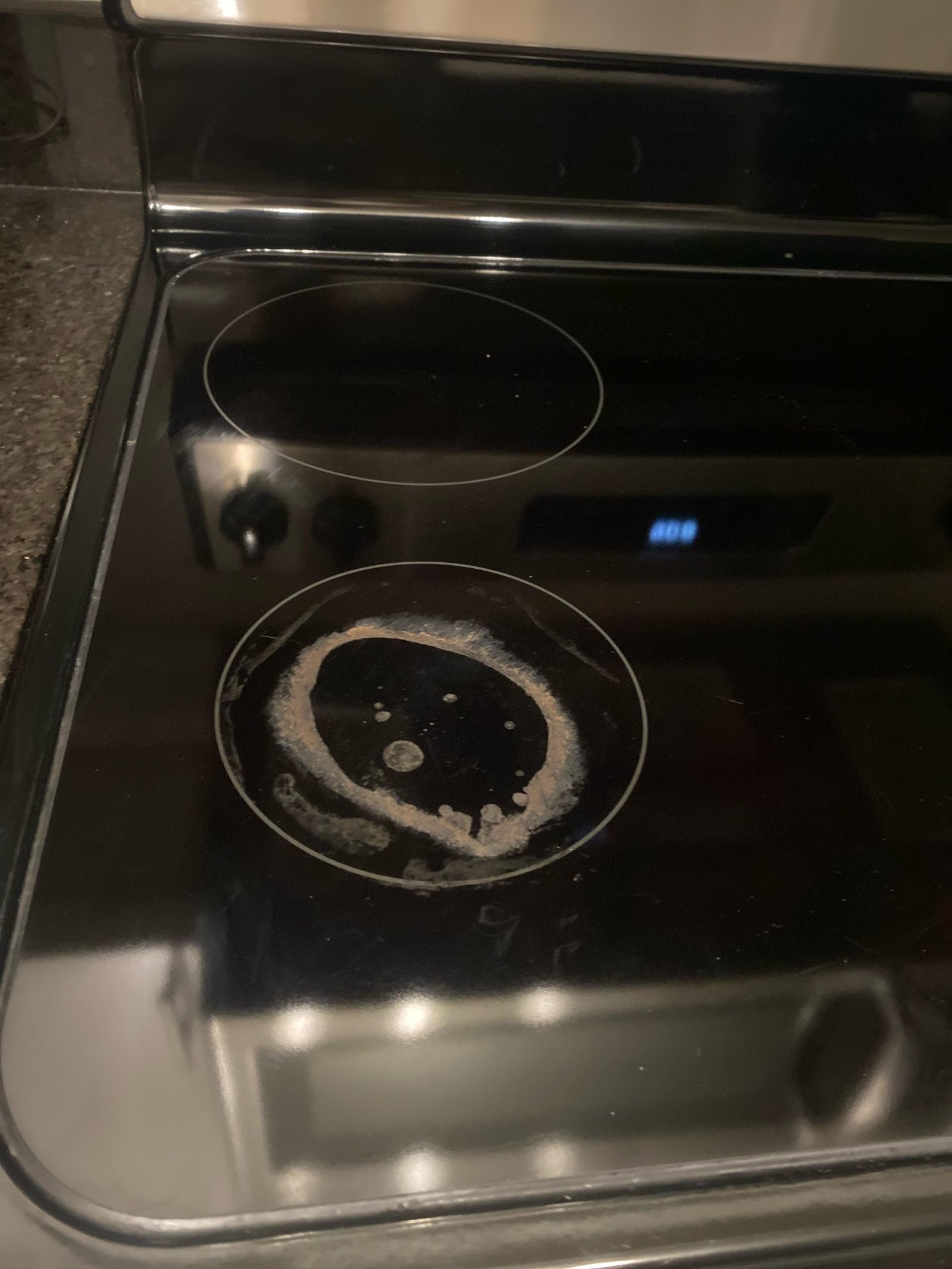
Your glass cooktop can transform a kitchen’s look—until a boiled-over sauce or dropped slice of cheese leaves a dark, baked-on scar. In practice, those marks are a mix of polymerized grease, caramelized sugar, and microscopic pits from overheated metal. The good news: with the right technique you can restore the surface without scratching it. For more kitchen maintenance strategies, explore our weekly guides to keep every appliance in top shape.
Understand What You’re Dealing With
Not all burn marks respond to the same treatment. Identifying the residue type saves time and prevents damage.
- Heat tint (rainbow discoloration): Caused by high temperature alone, not dirt. It is a thin oxide film on the glass and usually clears with a dedicated cooktop polish.
- Carbonized food: Burnt-on starch, sugar, or protein forms a black crust. These need a mild abrasive like baking soda plus dwell time.
- Melted plastic or foil: Requires careful scraping with a single-edge razor while the glass is warm (not hot) to avoid embedding debris.
- Aluminum or copper streaks: Reactive metals leave silvery smears that a cream cleaner lifts better than acid vinegar.
A common mistake is attacking every mark with vinegar; its acidity does little on pure carbon. Match the method to the stain for faster results.
Preparation and Safety
Proper setup prevents scratches and injuries. The surface must be completely cool—never clean a warm cooktop because trapped cleaners can bake on harder.
Gather the Right Supplies
Collect these before you start:
- Soft microfiber cloths (at least two)
- Plastic or silicone scraper, or a single-edge razor blade holder designed for ceramic glass
- Baking soda (pure sodium bicarbonate)
- Distilled white vinegar
- Mild dish soap
- Commercial ceramic cooktop cream (optional but effective)
- Nitrile gloves to protect skin from alkaline paste
Having everything within arm’s reach means you won’t pause mid-scrape and let product dry.
Safety Precautions
Wear gloves; baking soda paste and commercial creams can irritate skin. Ensure the area is ventilated, especially if using proprietary chemicals. Major appliance makers such as GE Appliances specify non-abrasive, non-flammable cleaners for ceramic glass, so avoid acetone or oven spray. Test any new product on a hidden corner near the front edge first.

- A practical demonstration of the recommended cleaning motions.* Credit: www.tiktok.com
Initial Cleaning Steps
Even before tackling the dark spots, remove surface grit that could act like sandpaper.
Remove Loose Debris
Use a dry microfiber cloth or a soft brush to sweep crumbs, salt, and dust. In practice, a slightly dampened corner of the cloth picks up fine particles without spreading them. Never use a wired brush or steel wool at this stage.
Damp Wipe Down
Wipe the entire top with a cloth soaked in warm water and a drop of dish soap. This lifts greasy film so your stain treatment contacts the mark directly. Rinse the cloth often. If you also handle keeping dishwashers fresh, you’ll recognize the same principle: clean before you deep-clean.
Removing Tough Burn Marks
Stubborn marks need a little chemistry and patience. Below are three field-tested approaches.
Baking Soda Paste
Mix three tablespoons of baking soda with one tablespoon of water to a spreadable paste. Cover the mark, let it sit 15–20 minutes. The mild alkalinity loosens carbon. Scrub with a circular motion using a damp microfiber. For an extra boost, a vinegar appliance rinse mindset applies: spray a 1:1 vinegar-water mix on the paste, let it fizz, then wipe. This combo lifts most food burns without scratching.
Vinegar Solution Alone
For light heat tint, fill a spray bottle with equal parts vinegar and water. Mist the area, lay a warm (not hot) damp towel over it for five minutes, then buff. Vinegar’s acid cuts mineral and oxide films. Avoid this on deep carbon—it simply wastes time.
Razor Scraper Method
When paste fails, a razor blade scraper made for glass tops is the pro move. Hold the blade at a shallow 30-degree angle, apply light pressure, and push debris away from you. The edge shears the mark without gouging if the glass is cool and the blade is new. A common mistake is using a corner or pressing vertically, which can chip the surface. Work in small sections, wiping the blade between passes.

- Focus on a tough burn mark before treatment.* Credit: www.tiktok.com
Commercial Cooktop Cleaners
Crema-style cleaners (e.g., CeramaBryte-style formulas) contain fine minerals suspended in surfactant. Apply a nickel-sized amount, buff with the supplied pad, then polish off. Trade-off: they cost more and some leave a waxy residue if not wiped thoroughly. Always check the label against your model’s manual.
Polishing and Protecting the Surface
After the mark disappears, restore the factory sheen.
Buff With Microfiber
Use a dry microfiber to buff in overlapping circles. The slight static charge pulls remaining haze. Replace the cloth if it feels gritty—hidden particles cause swirls.
Apply a Cooktop Protectant
A thin layer of silicone-based cooktop protectant (available from appliance brands) fills micro-pores, making future spills slide off. Apply monthly. This step is optional but extends the time between deep cleans.
Preventing Future Burn Marks
Daily habits beat monthly scrubbing. Small changes keep the glass flawless.
- Wipe after every use: Once cool, a quick microfiber pass stops residue from baking next time.
- Use correct cookware: Warped or rough-bottomed pots scratch and deposit metal. Consider quality nonstick pans with smooth bases.
- Manage heat: Medium settings prevent boil-overs that caramelize instantly.
- Ventilate: Steam and grease settle on nearby surfaces. Understanding overhead ventilation helps you reduce kitchen fallout.
- Choose safe dishes: Avoid dragging stoneware; durable ceramic ware rated for high heat is safer on the glass.
Common Mistakes That Damage Glass Tops
Avoid these errors that we see repeatedly in repair calls.
Abrasive Pads and Powders
Steel wool, scouring powder, and even some green scrub sponges embed scratches that permanently catch light. Stick to microfiber or the blue non-scratch side of a sponge.
Ignoring Manufacturer Instructions
Your model’s manual lists approved cleaners and warns against flammable liquids. Overlooking it can void warranty. A neighbor once used oven cleaner, which etched the glass—an expensive lesson.
Using the Wrong Heat Level
Cranking to high with an empty pan superheats the glass and causes permanent heat tint. Preheat gradually.

- An unconventional approach shared by home cooks online.* Credit: www.reddit.com
Frequently Asked Questions
How do you clean a burnt glass stove top?
Cool the surface. Apply baking soda paste, dwell 15 minutes, scrub with microfiber. For resilient spots, use a razor scraper at a low angle. Finish with a damp wipe and dry buff.
Can brown burn marks be removed from glass?
Yes. Brown marks are usually carbon or sugar. A baking soda/vinegar combo removes most; heat tint may need a commercial cream polish.
Is it safe to use a razor blade on a glass cooktop?
Yes, if you use a holder designed for ceramic glass, keep the blade flat, and the surface cool. Never use a bare handheld blade or apply vertical pressure.
How do I stop boil-over marks from returning?
Use medium heat, clean spills immediately after cooling, and consider a monthly protectant. Reliable countertop oven picks can also offload high-risk recipes.
Conclusion
Restoring a glass stove top is straightforward once you match the stain to the method and respect the surface’s fragility. Start with gentle paste, escalate to a scraper only when needed, and seal the results with regular polishing. Implement the prevention habits above and your cooktop will stay showroom-clean with minimal effort. Ready to upgrade other kitchen gear? Browse our compact baking appliances for tools that make messes easier to manage.
