
A musty odor under the kitchen sink is more than a minor nuisance—it is a warning signal that moisture, microbial growth, or a plumbing fault is present in a dark, enclosed space. Left untreated, the smell intensifies and can warp cabinet materials or degrade indoor air quality. In this guide we combine field-tested cleanup steps with preventive maintenance so you can restore fresh air quickly and keep it that way. Our home care blog shares similar routines for other trouble spots in the kitchen.
Why the Cabinet Under Your Sink Smells Musty
Musty scents are produced by microbial volatile organic compounds (MVOCs) released as fungi and bacteria break down organic matter in damp, poorly ventilated enclosures. The sink base is uniquely vulnerable because supply lines, a drain, and daily splashes all converge in a box that rarely sees airflow.
Hidden Moisture and Slow Leaks
Even a pinhole drip at a slip-joint nut can release several ounces of water per week. In practice, we often find the cabinet floor soaked only after pulling out stored bottles. A common mistake is assuming a dry top surface means no leak; water travels along pipes and drips at the lowest point. Use a flashlight to inspect every connection and the bottom panel. Understanding typical pipe setups helps you spot where rubber washers or threaded fittings commonly degrade.
P-Trap Failure and Dry Water Seals
The P-trap holds a small water plug that blocks sewer gas from entering the home. If a sink goes unused for a week, that water evaporates and odors escape. A poorly aligned trap or missing vent can also siphon the seal out. A full under-sink diagram shows the U-bend location so you can verify correct installation and confirm the trap remains filled after use.
Organic Debris and Drain Biofilm
Food particles, grease, and soap scum accumulate on pipe walls, forming a slimy biofilm. Anaerobic bacteria in that film emit sulfurous, earthy smells that read as “musty.” Garbage disposals compound the issue if not flushed with cold water for at least 30 seconds after grinding. In practice, a disposal that smells clean at the rim can still harbor decaying matter in the discharge elbow.
Mold and Mildew Colonies
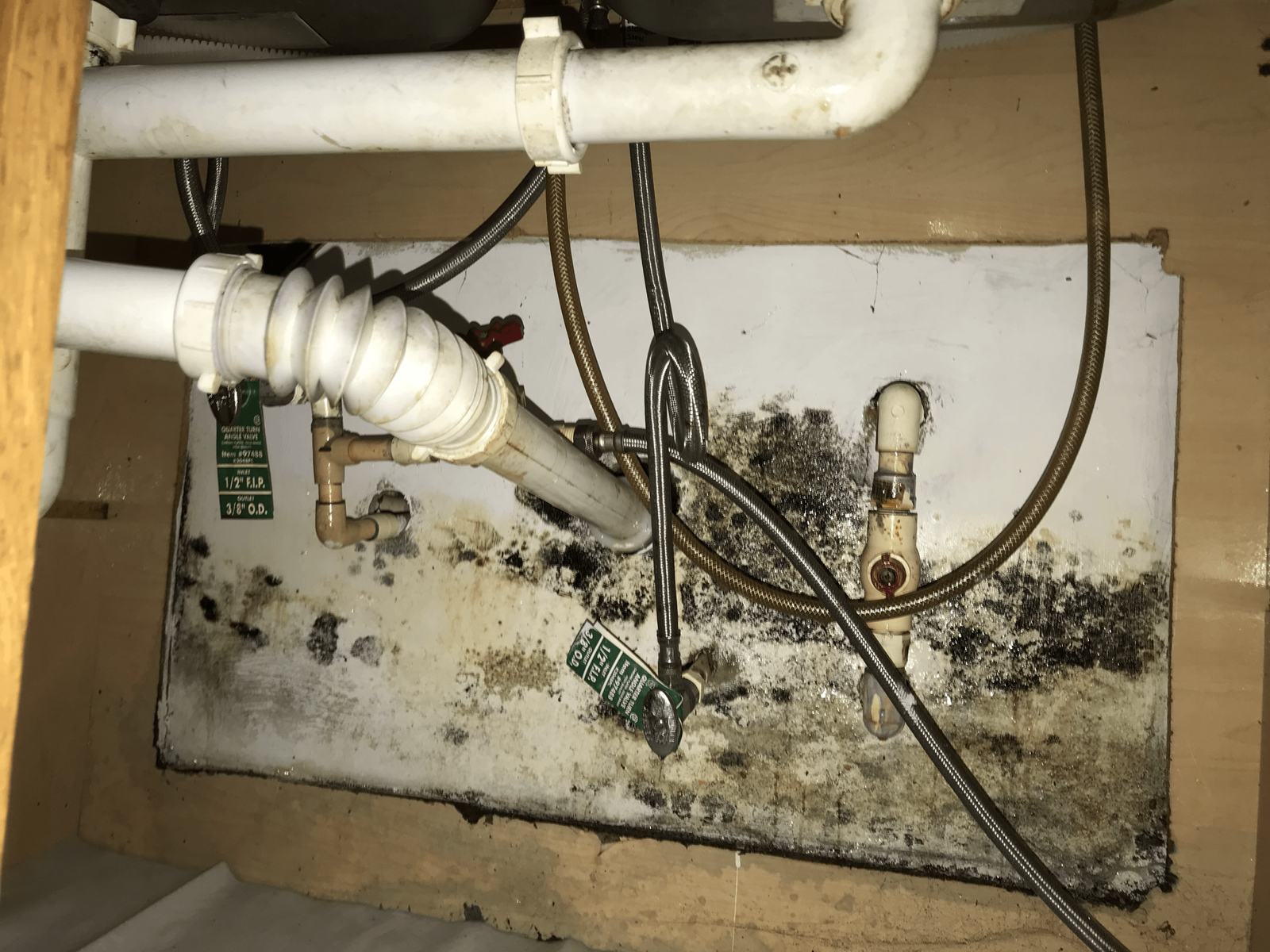
When relative humidity stays above 60% on wood or MDF, mold spores germinate and release the classic damp odor. The resulting patches may be white, green, or black.
 Active mold on cabinet flooring signals trapped moisture.
Image source: www.reddit.com
Active mold on cabinet flooring signals trapped moisture.
Image source: www.reddit.com
The EPA’s mold guidance stresses fixing water leaks within 24–48 hours to stop spore spread and prevent recurrence.
Step-by-Step Inspection to Locate the Source
Before cleaning, pinpoint the trigger so you don’t just mask the smell. Follow this sequence:
- Clear the cabinet of all items and disposable packaging.
- Run the tap and watch supply lines, the trap, and dishwasher hose for drips.
- Sniff test near the drain, the trap weep hole, and the back wall.
- Probe with a moisture meter on wood or composite surfaces.
- Check the dishwasher connection if the sink shares a drain line.
| Surface | Healthy moisture | Action if higher |
|---|---|---|
| Wood floor | Below 15% | Dry thoroughly, monitor daily |
| MDF side wall | Below 12% | Inspect behind for slow leak |
| Pipe insulation | Dry to touch | Replace if saturated |
Consulting a schematic of the pipes before loosening fittings prevents accidental disconnection and helps you identify the exact joint to test.
Fast Odor Elimination: Immediate Actions
Empty, Clean, and Disinfect
Remove everything from the cabinet. Scrub all surfaces with an EPA-registered disinfectant or a 1:10 bleach solution (never mix bleach with ammonia or acidic cleaners). Wear gloves and ventilate the area. Pay attention to screw heads and corner seams where grime hides. After scrubbing, dry with microfiber towels and a box fan; residual dampness is the single biggest cause of repeat smells.
Baking Soda and Vinegar Treatment
Sprinkle a generous layer of baking soda on the floor and shelves; let it sit 24 hours to absorb ambient odors. Then spray equal parts white vinegar and water, wait 30 minutes, and wipe clean. The same vinegar cleaning steps used for appliances apply here, neutralizing alkaline residue and leaving the wood fresh as the scent evaporates.
Build a Cleaning Kit and Improve Airflow
Keep the cabinet door open for several hours and position a small fan to push air through the space. Store a dedicated odor kit so future resets are fast.
 Routine inspection prevents odor buildup under the sink.
Image source: www.advantaclean.com
Routine inspection prevents odor buildup under the sink.
Image source: www.advantaclean.com
Reset the Garbage Disposal
Grind two cups of ice cubes to scour the chamber, then feed lemon or lime peels for a fresh note. Follow with a cold-water flush for one minute. For deeper cleaning, add half a cup of baking soda and a cup of vinegar, wait 10 minutes, then rinse.
Long-Term Prevention Strategies
Routine Drain and Pipe Maintenance
A monthly baking soda and vinegar flush keeps grease from hardening in the line. If you notice rust blooms or persistent condensation on the pipes, consider replacing damaged sections before a failure occurs. Tightening slip nuts with a wrench—just past hand-tight—prevents slow weeps that spawn mold.
Leak-Proofing and Ventilation
Install a louvered vent in the cabinet door for passive airflow. Use a humidity monitor and aim for readings under 50%. Place a drip tray under the trap as an early-warning system; a full tray means a failing seal. Stackable bins that lift items off the floor also improve circulation and make leak checks easier.
Persistent Odor Causes
Some smells originate beyond the cabinet itself. See other odor sources for sewer gas clues such as a missing cleanout cap or a vent stack blockage that push odors backward through the drain.
When to Call a Professional
If the musty scent returns within days of a thorough DIY reset, or you see warped boards, stained drywall, or extensive mold patches, contact a licensed plumber or remediation specialist. Structural damage behind the cabinet often hides from view, and specialized cameras or moisture mapping are required to find it. Early professional intervention protects both the cabinet and your household’s air.
Frequently Asked Questions
Why does my kitchen sink base smell musty even when the drain is clear?
The most common reasons are hidden leaks at pipe joints, a dried-out P-trap seal, mold on the cabinet floor, or biofilm inside the disposal elbow. Inspect with a flashlight and moisture meter rather than assuming the drain is the only source.
What is the fastest way to eliminate the odor today?
Empty the cabinet, wipe surfaces dry, run a baking soda and vinegar treatment, and leave the door open with a fan. Fix any visible drip immediately; odor control fails if the moisture source stays active.
Can mold under the sink affect health?
Yes. Mold releases spores and MVOCs that may trigger allergies, asthma, or respiratory irritation in sensitive people. The EPA recommends prompt moisture control and professional help for large colonies.
How often should I inspect under the sink?
A quick visual and tactile check every two weeks prevents buildup. A deeper clean—including the vinegar rinse and absorber refresh—every two to three months keeps the space dry and odor-free.
Conclusion
Eliminating a musty under-sink smell starts with finding the moisture source, then cleaning, drying, and protecting the cabinet with smart habits. Use the inspection steps, natural deodorizers, and ventilation upgrades outlined above to restore freshness fast. If the musty smell returns within days of a complete reset, schedule a plumbing inspection before hidden damage spreads.
