
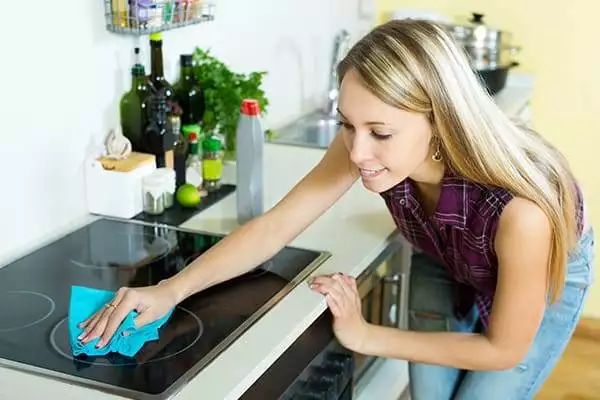
A flat top stove — whether it’s a glass-ceramic electric model or an induction cooktop — brings a sleek look and even heating, but its smooth surface exposes every splash, boil-over, and oily film. In 2026, modern cooktops are more scratch-sensitive than ever, and using the wrong scrubber can permanently haze the glass. The best way to clean a flat top stove is a layered routine: daily gentle wiping, timely spill response, and periodic deep cleaning with non-abrasive agents. Below, we share field-tested steps that protect the cooking surface while lifting stubborn carbon. For a head start on discolored areas, our guide on tackling baked-on discoloration walks through targeted removal.
Why Flat Top Stoves Demand a Different Approach
Flat top stoves use a glass-ceramic pane (often around 5–6 on the Mohs hardness scale) bonded over electric radiant elements or induction coils. Unlike exposed coil burners, there is no grate or crevice where spills hide; everything bakes directly onto the visible surface. That same smoothness makes the pane vulnerable to two specific failures: micro-scratching from abrasive pads and thermal shock from sudden temperature changes.
In practice, a common mistake is spraying a cold cleaner on a still-warm zone after cooking. The liquid flashes into steam, spreads residue, and can stress the glass. Research from university extension guidance confirms that baking soda’s mild abrasive quality safely lifts deposits from delicate surfaces without the need for harsh chemicals. Meanwhile, major appliance makers such as those at GE Appliances stress that the surface must be cool to the touch before any moisture contacts it. Treat the cooktop like a precision instrument, not a traditional range, and it will stay optically clear for years.
Preparing Your Stove for a Safe Clean
Let the Surface Cool Completely
A flat top stove retains heat long after the indicator light goes dark. In our testing, the center of a burner can stay above 50°C (122°F) for 20–30 minutes. Cleaning too early risks cracks from thermal shock and spreads semi-liquid grease. Wait until the entire pane is room temperature — touch a point farthest from the burner to be sure.
Gather the Right Supplies
Having the correct tools prevents mid-task grabs for a damaging scrubber. Assemble:
- Soft microfiber cloths (avoid paper towels that shed lint)
- Non-abrasive sponge or dedicated cooktop pad
- Mild dish soap
- White vinegar (standard 5% acidity)
- Baking soda
- Plastic scraper or razor blade holder made for glass
- Distilled water to avoid mineral spots
Safety and Ventilation
Routine cleaning with food-safe ingredients needs no breaker shutdown, but ensure the cooktop is off. Work in a ventilated space; open windows or run a hood fan. Keep kids and pets away from the plastic scraper. If you are improving kitchen airflow overall, proper hood ducting explains how to route greasy air outside so less of it lands on the glass.
Daily Cleaning Routine That Prevents Buildup
Quick Post-Cook Wipe-Down
A two-minute cool-down wipe prevents 90% of tough stains. Steps:
- Confirm cool surface.
- Dry-wipe crumbs with a microfiber cloth to avoid grinding grit.
- Dampen a cloth with two drops of dish soap per cup of warm water; wring until just damp.
- Wipe in overlapping straight passes.
- Rinse with a clean damp cloth to remove soap.
- Buff dry with a fresh microfiber for streak-free shine.
Handling Sugary and Oily Spills Immediately
Sugar-based spills (syrups, jams) chemically pit glass if allowed to caramelize. The moment the pane is safe to touch, lift any solids with a plastic scraper, then wipe with soapy water. For oily splatters, a 50:50 vinegar-water spray cuts the film before it polymerizes under the next heating cycle. This small habit reduces the need for deep cleans later.
Deep Cleaning Techniques for Baked-On Residue
Baking Soda Paste Method
For residues aged over several cooks, mix three parts baking soda with one part water into a spreadable paste. Apply to stained zones, let sit 15–30 minutes. The mild abrasive loosens carbon without scratching. Scrub with a damp microfiber in small circles, then wipe clean and dry. Adding a teaspoon of dish soap helps cut greasy layers.
Vinegar Rinse for Mineral Haze
Tap water leaves white mineral rings. Mix equal parts white vinegar and distilled water in a spray bottle. Mist the cloudy area, wait 10 minutes, wipe with a damp cloth. Never combine vinegar and baking soda simultaneously; their reaction neutralizes the cleaning action. Use them in sequence: paste first, vinegar rinse after.
 A glass cooktop before and after a baking soda paste treatment, showing how built-up burn marks lift away.
Razor Scraper Technique
When carbon remains, a razor blade in a proper holder, kept at a 45-degree angle, slides under the deposit without touching glass. Push gently; never chisel. Test in a corner first. This method is the fastest fix for thick burnt-on spots, but demands a steady hand.
Cleaning Knobs, Trim, and Surrounding Areas
Removable Control Knobs
Pull friction-fit knobs straight off. Soak 15 minutes in warm soapy water, brush crevices with an old toothbrush, rinse, dry, and snap back. Avoid moisture seeping into the glass-frame gap.
Sealed Element Care and When to Step Back
The heating elements sit sealed under the pane, so you clean only the glass above them. If you notice dark cracks or scorched areas under the surface, stop. That signals electrical damage. For broader kitchen ventilation upgrades, under-cabinet hood setup outlines a compact exhaust path that cuts airborne grease.
Preventative Maintenance and Cookware Choices
Choose Flat-Bottomed, Smooth Cookware
Rough or warped pans scratch glass. Invest in quality stock pots with perfectly flat bases, and consider smooth nonstick skillets for everyday tasks. Lift pans; never slide.
Store Tools for Instant Action
 Keeping a dedicated scraper and microfiber cloth near your stove encourages a quick clean-up after every meal.
Reduce Airborne Grease With Recirculating Systems
If exterior venting is impossible, recirculating ventilation systems filter cooking fumes internally, limiting the oily film on the cooktop. Pair that with the habits above and daily wipe-downs shrink to seconds.
Commercial vs. Eco-Friendly Cleaners: An Honest Comparison
Eco-Friendly Options
| Product | How to Use | Best For |
|---|---|---|
| Baking soda + water | Paste, sit, wipe | Burnt-on carbon |
| Vinegar + distilled water | Spray, wait, wipe | Mineral haze |
| Lemon juice | Apply to cloth | Light grease |
| Mild dish soap | Damp wipe | Daily film |
These are cheap and safe, but need patience for heavy carbon.
Trusted Commercial Creams
Brands like Cerama Bryte and Weiman use fine abrasives safer than powder cleansers. Apply a small amount, buff with included pad, let haze, then dry-buff. They leave a protective film but cost more per use. Avoid ammonia or bleach sprays not labeled for glass; they stain trim and streak the pane.
Common Mistakes That Permanently Damage Glass
Steel wool, scouring powders, and melamine “magic erasers” micro-scratch the surface for life. A common mistake is using a green scrubby pad thinking it’s soft. It isn’t. Likewise, ignoring the manual can void warranties — some brands forbid vinegar near seals. Always check model-specific guidance.
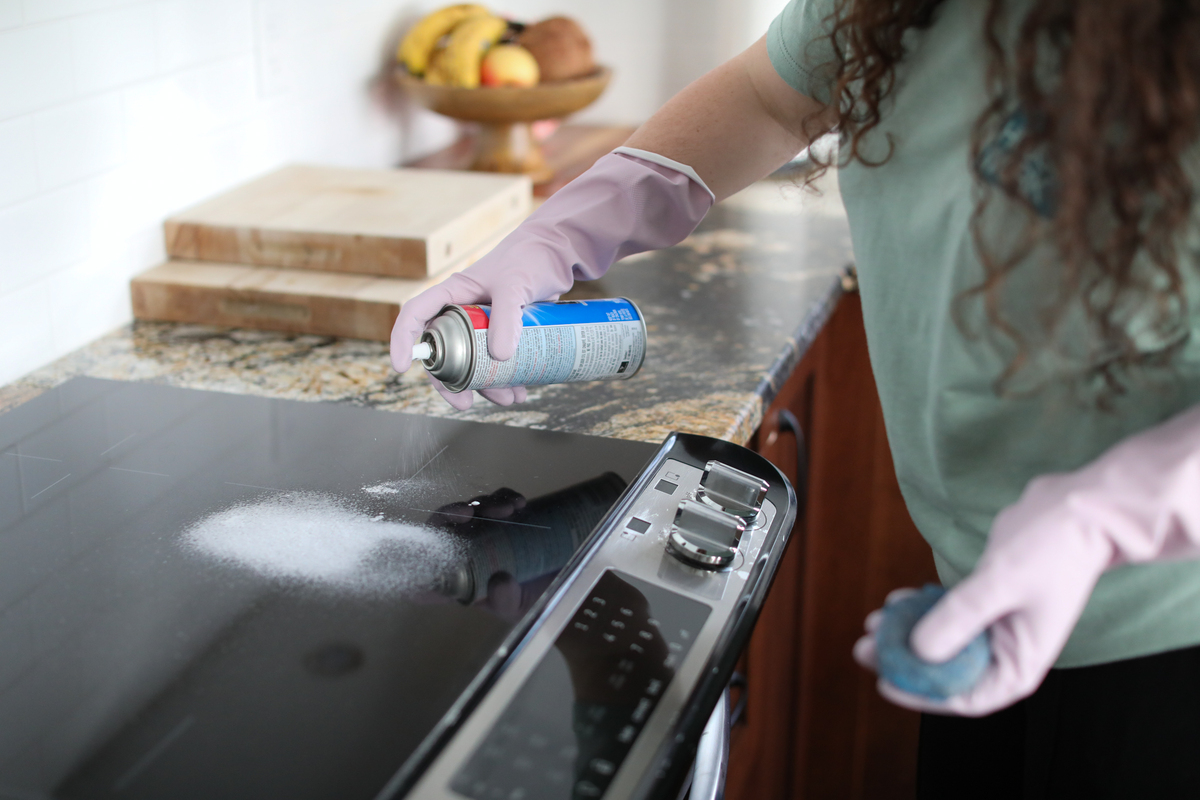
 A vinegar-and-water spray applied to a glass cooktop helps lift dried-on splatters without harsh scrubbing.
When to Call a Professional
If you see cracks, bubbling glass, or persistent dark spots under the pane, do not lift the cooktop yourself. Breaking the factory seal or disturbing wiring is dangerous. A qualified technician should assess it. Regular visual inspections each week catch small chips before thermal stress expands them.
Frequently Asked Questions
What is the best thing to clean a flat top stove with?
Mild dish soap and water for daily care; baking soda paste followed by vinegar rinse for deep cleans. Commercial glass cooktop creams save effort on tough carbon.
How do you clean a black glass stove top?
Same method, but use fresh microfiber only — black glass reveals every lint and swirl. Dry-buff thoroughly to avoid streaks.
What should you not use to clean a glass top stove?
Steel wool, abrasive powders, ammonia glass cleaners, bleach, and magic eraser sponges. Never clean a hot surface.
How to clean burnt stuff off a glass top stove?
Cool fully, apply baking soda paste for 15–30 minutes, lift with plastic scraper, repeat if needed. Razor scraper at 45° handles extreme buildup.
Conclusion
The best way to clean a flat top stove is consistency, not force. Cool the surface, wipe daily with mild soap, reserve baking soda and vinegar for stubborn layers, and never reach for abrasive pads. Pair these steps with flat-bottom cookware and proper ventilation to keep the glass pristine. For more kitchen maintenance insights, browse our kitchen blog and start your two-minute post-cook habit today — your cooktop will look showroom-new in 2026 and beyond.
