
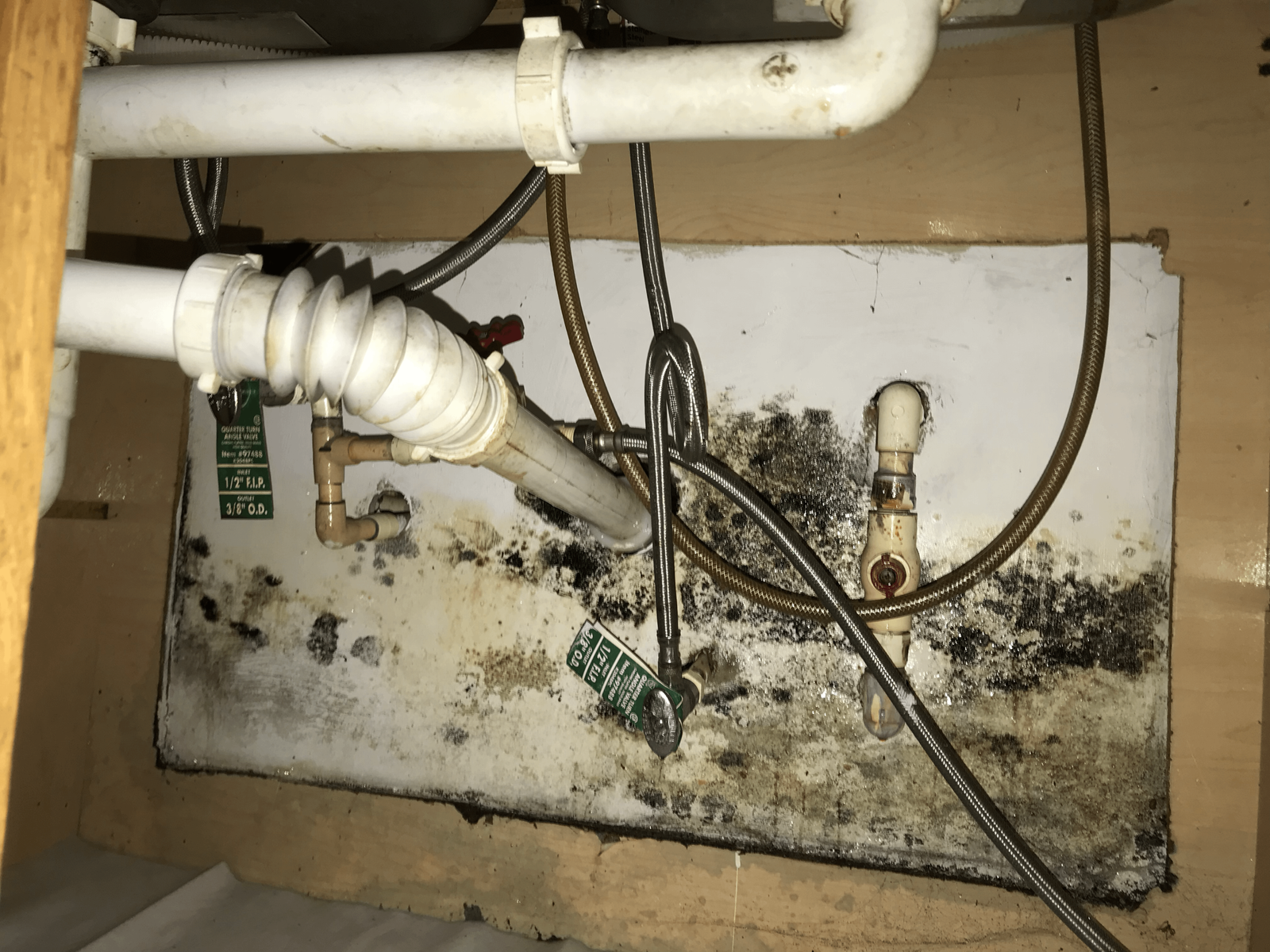
A musty, damp odor coming from under your kitchen sink isn’t just unpleasant—it’s a clear signal that moisture and mold have taken hold. Left unchecked, that smell can spread, damage your cabinetry, and affect your family’s breathing. The good news is that most under-sink mold problems can be solved with a few deliberate steps and the right approach. This guide covers exactly what causes the smell, how to eliminate it safely, and how to keep it from coming back—all without guesswork or pricey products.
 Visible mold growth on the cabinet floor and near the plumbing. Credit: www.reddit.com
Understanding the Root Cause of That Musty Smell
The smell itself is a byproduct of mold and mildew breaking down organic material. Mold releases volatile organic compounds (VOCs) as it grows, and those compounds are what you smell. To stop the odor permanently, you have to find the moisture source—not just clean the surface.
Common Sources of Moisture
- Slow plumbing leaks: A pinhole leak in a supply line or a loose slip nut can drip for weeks without you noticing. Even a teaspoon of water per day is enough to keep wood damp and allow mold to thrive.
- Condensation on cold pipes: In humid kitchens, cold water pipes sweat. That moisture drips onto the cabinet floor and soaks into particleboard, which acts like a sponge.
- Sink seal failure: The caulk or gasket between the sink rim and the countertop can crack over time. Water sneaks down the sides and pools under the cabinet.
- Garbage disposal gunk: Food particles trapped in the disposal flange or the drain hose can rot, producing a smell that mimics mold. This is often mistaken for a mold issue when the real problem is organic slime in the drain line.
How to Identify Hidden Leaks
Don’t rely on visible water alone. A dry-looking surface can still be damp underneath. Try these checks:
- The paper towel test: Place a dry paper towel under every pipe joint and valve. Come back in 24 hours. If the towel is wet or even slightly damp, you have a leak.
- Touch the bottom of the cabinet: Particleboard often feels dry on top but is soft and swollen underneath. Press firmly with your thumb. If it gives way, moisture has been soaking in for a while.
- Check the dishwasher hose: If your dishwasher connects under the sink, the hose can crack where it bends. Run a cycle and watch for drips at the connection point. For related advice, see the guide on how to clean a dishwasher filter—a clogged filter can cause backups that push water into the cabinet.
The Role of Poor Ventilation
Even without a leak, a closed cabinet in a humid kitchen creates a perfect microclimate for mold. Air circulation is often the missing piece. Simply leaving the cabinet doors open for an hour after doing dishes can drop humidity levels significantly. If that’s not practical, consider installing a small vent grille or a battery-powered moisture absorber.
Health Risks of Mold Under the Sink
Mold spores are lightweight and become airborne easily. Every time you open the cabinet, you disturb the spores and breathe them in. The health effects range from mild irritation to serious respiratory problems.
Short-Term Symptoms
- Sneezing, runny nose, or nasal congestion
- Itchy or watery eyes
- Skin rash or hives
- Coughing or throat irritation
These symptoms often mimic seasonal allergies, so many people don’t connect them to the mold under their sink. Pay attention to whether symptoms improve when you leave the kitchen for a few hours.
Long-Term Concerns
Chronic exposure can lead to:
- Asthma exacerbation or new-onset asthma
- Recurrent sinus infections
- Chronic fatigue and headaches
- Weakened immune response in vulnerable individuals
The U.S. Environmental Protection Agency recommends addressing any mold problem promptly, regardless of the type of mold, because all mold can cause health effects in sensitive people. Children, the elderly, and those with compromised immune systems are at highest risk.
Tools and Supplies You’ll Need
Before you start cleaning, gather everything in one place. Rushing to find a brush mid-job spreads spores through the air.
| Tool / Supply | Purpose |
|---|---|
| N95 respirator mask | Prevents inhaling spores |
| Rubber gloves (long-cuffed) | Protects skin from mold and cleaning solutions |
| Safety goggles | Keeps spores out of eyes |
| Spray bottle with white vinegar | Kills mold naturally |
| Baking soda | Deodorizes and scrubs |
| Stiff-bristled brush (nylon) | Removes mold from wood and pipe surfaces |
| Old towels or rags (disposable) | For wiping and drying |
| Flashlight | Helps spot hidden mold in corners |
| Bucket of warm water | For rinsing after cleaning |
| Fan or dehumidifier | Dries the area thoroughly |
Step-by-Step Quick Fix Solutions That Actually Work
Follow these steps in order. Skipping the moisture source means the smell will return within days.
Step 1: Shut Off the Water and Clear the Space
Turn off the hot and cold water valves under the sink. If you’re not sure how, refer to the detailed guide on how to turn off water under the kitchen sink. Removing the water pressure lets you safely check fittings without a surprise spray.
Remove everything from the cabinet: cleaning supplies, trash can, sponges, dish racks. Discard anything that looks moldy or smells musty—some items are cheaper to replace than to clean.
Step 2: Wear PPE and Ventilate
Put on your N95 mask, gloves, and goggles. Open a kitchen window and position a fan to blow air out of the room. This reduces the concentration of spores you’ll breathe during cleaning.
Step 3: Dry the Area First
Mold cleans off much easier when the surface is dry. Use old towels to blot up any standing water. Then aim a fan at the cabinet for 30–60 minutes. Drying the surface also prevents the cleaning solution from being diluted.
Step 4: Clean with White Vinegar
Fill a spray bottle with undiluted white vinegar (5% acidity). Spray all affected surfaces—wood, pipes, plastic, metal—generously. Let it sit for at least one hour. Vinegar penetrates porous wood and kills about 82% of mold species. It’s safer than bleach, which only kills surface mold on non-porous materials and can release toxic fumes when mixed with other cleaners.
After the hour, scrub with a stiff brush. Pay special attention to corners, pipe joints, and the bottom edges of the cabinet where moisture collects.
Step 5: Apply Baking Soda for Odor
Sprinkle baking soda over the damp, scrubbed surfaces. Let it sit for 15–20 minutes. The baking soda neutralizes lingering VOCs and absorbs moisture. Then scrub again with a brush dipped in warm water. Rinse with a clean damp cloth.
Step 6: Dry Completely
This is the most important step. Use a fan or a hairdryer on a cool setting to dry every surface until it feels bone-dry to the touch. If you close the cabinet while it’s still damp, mold will return within 48 hours.
Step 7: Check for Leaks Again
After cleaning, turn the water supply back on and run the faucet for a minute. Inspect every joint, valve, and hose connection for drips. Tighten any loose slip nuts with a wrench—just a quarter turn is often enough. For a visual reference of the plumbing under your sink, consult the plumbing under kitchen sink diagram to identify each component.
If you find a steady leak, you may need to replace a section of pipe. The article on pipe under kitchen sink leaking offers step-by-step repair instructions for common issues.
Proactive Prevention Strategies
Once the smell is gone, keep it gone with these habits.
Weekly Inspections
Make it a habit to open the cabinet door once a week and shine a flashlight inside. Look for:
- Water stains or dark spots on wood
- Dampness on the bottom liner
- A musty smell that reappears
Early detection is the cheapest fix.
Improve Airflow
- Leave cabinet doors open for 30 minutes after using the sink or dishwasher.
- Install a small vent fan inside the cabinet (low-profile models available for under $30).
- Place a moisture-absorbing product like activated charcoal or silica gel crystals in a breathable container.
Use Mold-Resistant Materials
When you replace the cabinet floor or shelves, choose:
- Waterproof vinyl or rubber liners (cut to fit and replace every year)
- Mold-resistant paint (contains fungicides that inhibit growth)
- Plastic or metal shelving instead of particleboard
Address the Dishwasher Connection
If your dishwasher drains through the sink’s disposal, the hose can trap food debris and create a smell that mimics mold. Run a cleaning cycle with vinegar and baking soda once a month. For a thorough approach, the guide on how to clean a Frigidaire dishwasher filter applies to most brands—a clean filter prevents backups and odors.
When to Call a Professional
Some mold problems are too large or too hidden for DIY methods. Consider professional help if:
- The mold covers more than 10 square feet (roughly a 3×3 foot area)
- The wood is soft, crumbly, or structurally damaged
- You smell mold even after cleaning and drying
- You or a household member has asthma, allergies, or a weakened immune system
- The mold returns within a week despite following all the steps
Professionals use moisture meters, thermal imaging, and air scrubbers to find the source and remove it completely. They can also repair the underlying plumbing. If you’re dealing with a recurring leak, it may be time to replace the drain assembly—a task best left to a licensed plumber.
Frequently Asked Questions
Why does the smell come back after I clean?
The most common reason is that you didn’t fix the moisture source. If a pipe is still leaking or condensation is still forming, the mold will regrow. Also, if you used bleach on porous wood, it only whitened the surface—mold deeper in the wood remains alive.
Can I use bleach to kill mold under the sink?
Bleach is effective on non-porous surfaces like tile or glass, but it does not penetrate wood or drywall. The chlorine evaporates quickly, leaving water behind that can actually feed mold. For under-sink cabinets, vinegar or hydrogen peroxide (3%) are safer and more effective.
Is it safe to store food under the sink after cleaning?
It’s best to avoid storing food under the sink altogether. The space is prone to temperature swings and moisture. If you must store items, keep them in sealed plastic bins. For items like dinnerware, the best microwave and dishwasher safe dinnerware sets are better stored in a dry cabinet away from plumbing.
How long does it take to get rid of the smell?
After a thorough cleaning and drying, the smell should fade within 24–48 hours. If it lingers longer, either the mold is still present in hidden areas (like behind the cabinet back panel) or the smell is coming from the drain, not the cabinet.
Take Control of Your Kitchen’s Freshness
A moldy smell under the kitchen sink doesn’t have to be a recurring headache. By identifying the moisture source, cleaning with proven methods like vinegar and baking soda, and maintaining good airflow, you can eliminate the odor and keep it away. The key is consistency—a quick weekly check and prompt leak repair are far easier than a full remediation. Implement these steps, and your kitchen will smell clean and welcoming every time you open that cabinet door. If the problem persists despite your best efforts, call a professional to protect your home and your health.
