
Can you clean an LG dishwasher filter rather than replace? Usually yes, as long as the mesh and frame are intact. LG's reusable filters are built to trap food and grease, not to be tossed after every dirty load.
In our research, most clogged filters respond well to warm soapy water and a soft brush. Manufacturer specs indicate LG uses twist-lock assemblies on many LDF, LDT, and LDP models. Per NSF/ANSI 184, residential dishwashers must handle soil removal, and a clean filter protects that performance.
If your filter is torn, warped, or missing tabs, cleaning won't restore it.
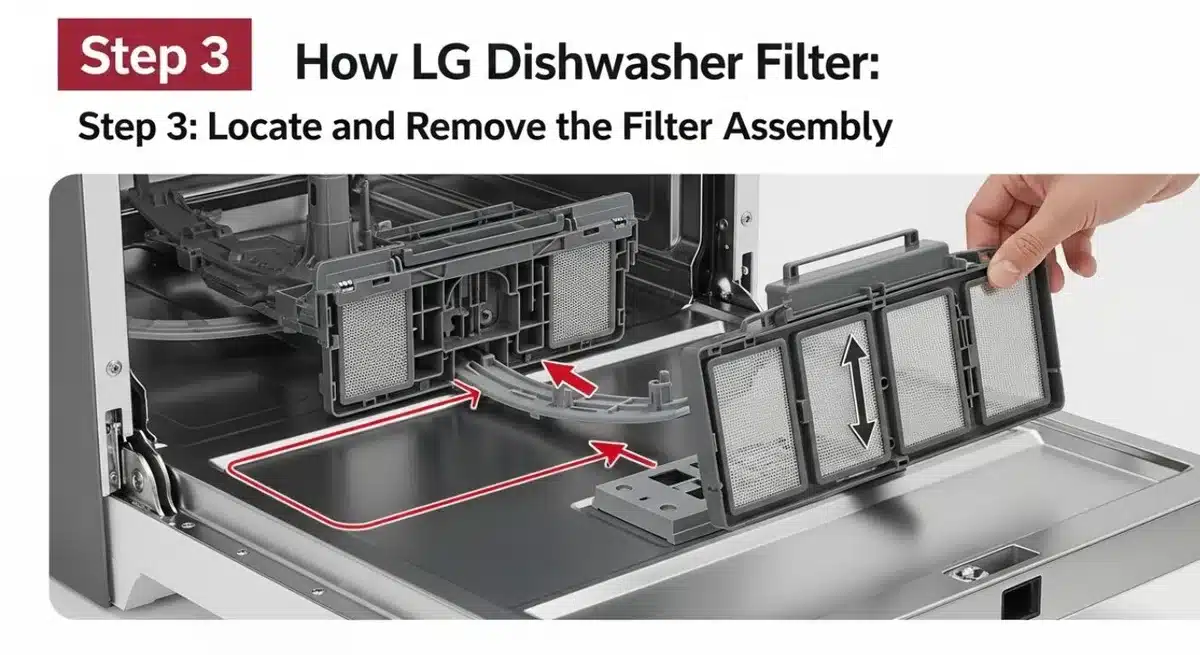
Image source: Bing (Web (fair-use with source credit))
Quick Answer
Yes, you can clean an LG dishwasher filter rather than replace it. Clean it monthly with warm water and dish soap. Use a soft brush on the mesh.
Replace it if the mesh is torn or the frame is warped. As of 2026, most LG filters cost about $20 to $80.
How Your LG Dishwasher Filter Works and What Fails First
Your LG dishwasher filter sits in the sump area under the lower spray arm. Water passes through it before reaching the drain pump and circulation pump. A clogged filter is why you see cloudy dishes, grit, odors, and standing water.
Coarse, Fine, and Micro Filters Explained
Most LG models use a multi-part filter assembly. The coarse filter catches large food particles. The fine or micro filter traps smaller debris and grease.
Some newer models have a self-cleaning filter system, but many still use a manual, removable assembly.
Reusable vs Self-Cleaning LG Filter Designs
A reusable filter is meant to be rinsed, soaked, and put back. A self-cleaning design still needs occasional checks, but it grinds or flushes more debris on its own. If you've handled another brand's filter care, the basics carry over.
What Fails First
Grease and food debris usually build up before the plastic fails. Hard water scale comes next, especially in mineral-heavy areas. The filter itself fails when the mesh tears, the frame warps, or the locking tabs snap.
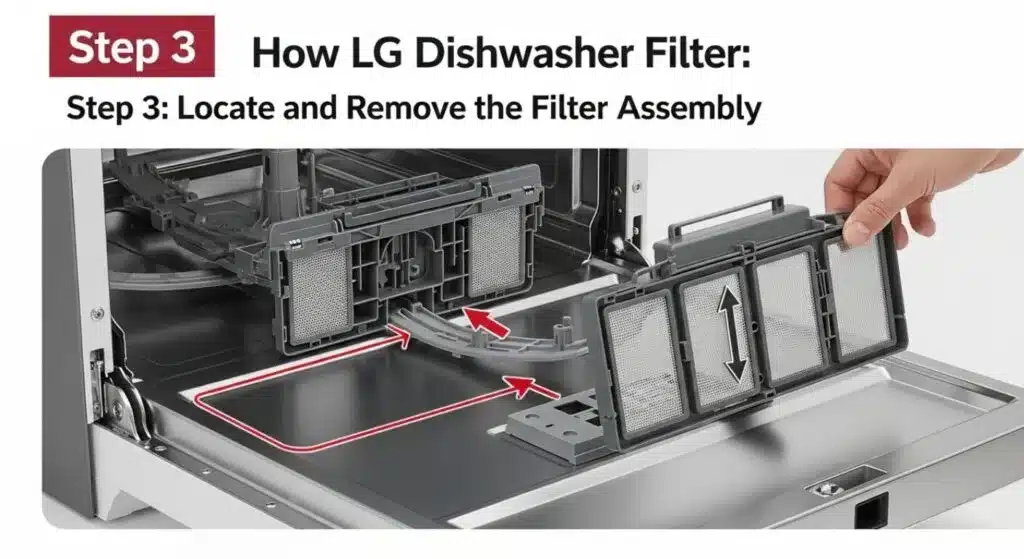
Image source: Bing (Web (fair-use with source credit))
The Decision Variables: Filter Type, Damage, and Buildup
The real question isn't clean versus replace. It's whether cleaning can restore water flow and whether the filter is still structurally sound. Use the condition of the filter, not the calendar, to decide.
| Condition | What it means | Best action |
|---|---|---|
| Grease film | Normal cooking residue | Clean with warm soapy water |
| Hard water scale | White, crusty buildup | Soak in vinegar or citric acid |
| Food debris | Rice, seeds, labels | Rinse and brush the mesh |
| Torn mesh | Holes or stretched openings | Replace the filter |
| Warped frame | Poor seating or gaps | Replace the filter |
| Broken tabs | Won't lock into housing | Replace the filter |
Model Check: LDF, LDT, LDP, and ThinQ Reminders
LG model families matter because filter part numbers change by design. Check your owner's manual for the exact removal method. If your model supports LG ThinQ, maintenance reminders can prompt a quick filter rinse before odors start.
Hard Water, Grease, and Food Debris: What Cleaning Can Fix
If the mesh is intact, cleaning can fix grease, soft food debris, and light scale. Hard water is trickier. USGS water hardness data shows mineral levels vary a lot by region.
In hard water areas, you may need monthly descaling instead of quarterly cleaning.
Tears, Warping, and Broken Tabs: What Cleaning Can't Fix
If the mesh is torn, water bypasses the filter and sends debris to the pump. If the frame is warped, the filter won't sit flush. If the tabs are broken, it can shift during a cycle.
In each case, replacement is the safer call.
Cleaning Your LG Filter: Step-by-Step Workflow
This is a 10 to 15 minute job when the filter is only dirty. You don't need special tools. You do need to avoid abrasive scrubbers and harsh chemicals that degrade plastic.
Removing the Bottom Rack and Filter Assembly
- Unload the dishwasher and turn off power at the breaker.
- Pull out the bottom rack.
- Locate the filter under the lower spray arm.
- Twist the filter counterclockwise and lift it out.
- Separate the coarse and fine sections if your model allows.
Soaking, Brushing, and Descaling Without Damage
Rinse under warm running water first. Soak the parts in warm soapy water for 10 to 15 minutes. Use a soft brush or old toothbrush on both sides of the mesh.
For scale, use a vinegar and baking soda method only if your manual allows it.
Reassembling and Confirming a Flush Fit
Rinse everything thoroughly and air dry. Reassemble the filter parts. Twist clockwise until it locks.
Confirm the filter sits flush with no gaps. Run a short rinse cycle and check for drainage.
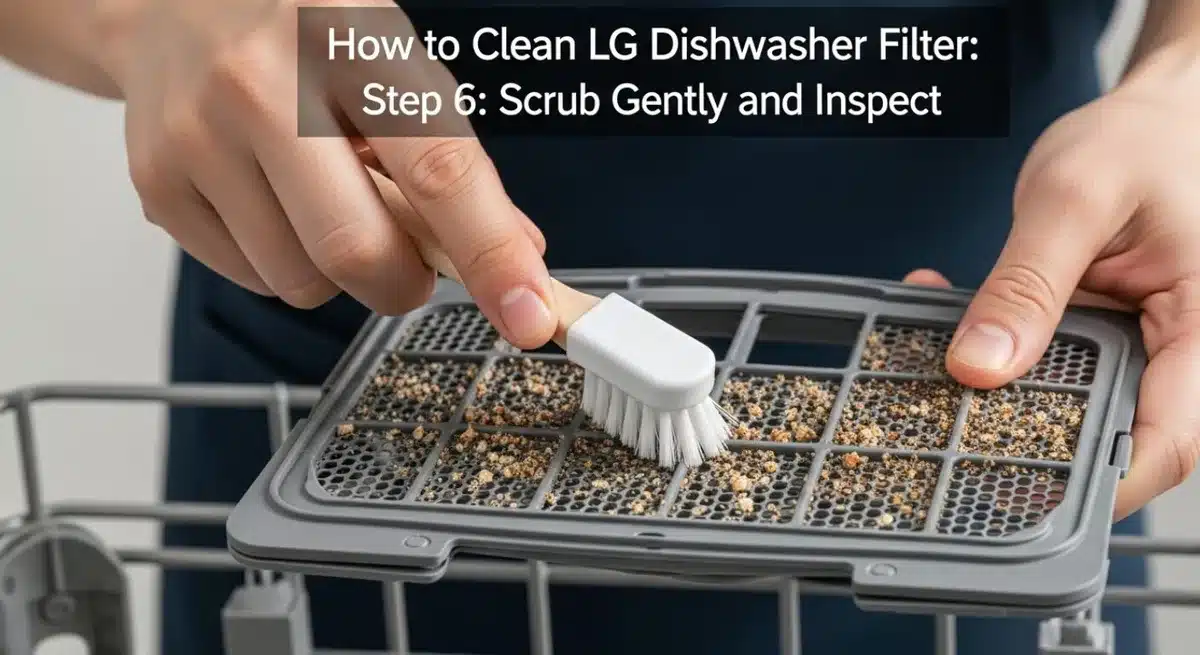
Image source: Bing (Web (fair-use with source credit))
When Cleaning Fails: Signs You Need a Replacement
If you've cleaned the filter and the problem stays, the filter may be past saving. The same is true if you spot damage during cleaning. Don't force a damaged filter back into the housing.
Persistent Odor, Standing Water, and OE Error Codes
Persistent lingering odors after two cleanings point to trapped residue or a drain issue. Standing water and OE, FE, or AE codes often mean a blockage. Check the filter seating first.
If the filter is clean and seated, inspect the drain hose and pump.
Sourcing the Right OEM or Aftermarket Filter by Model Number
Look for the model and serial plate on the dishwasher door frame. Order by that model number, not by a photo. OEM LG filters fit best.
Aftermarket filters can work, but cheap ones may seat poorly. Also check the dispenser buildup if detergent isn't dissolving.
Final Check Before You Replace
Run one more cycle with the clean filter. If dishes come out gritty, the filter is bypassing debris. If water pools again, the issue may be the drain pump.
If the filter is discontinued, a compatible assembly or professional repair may be the only path.
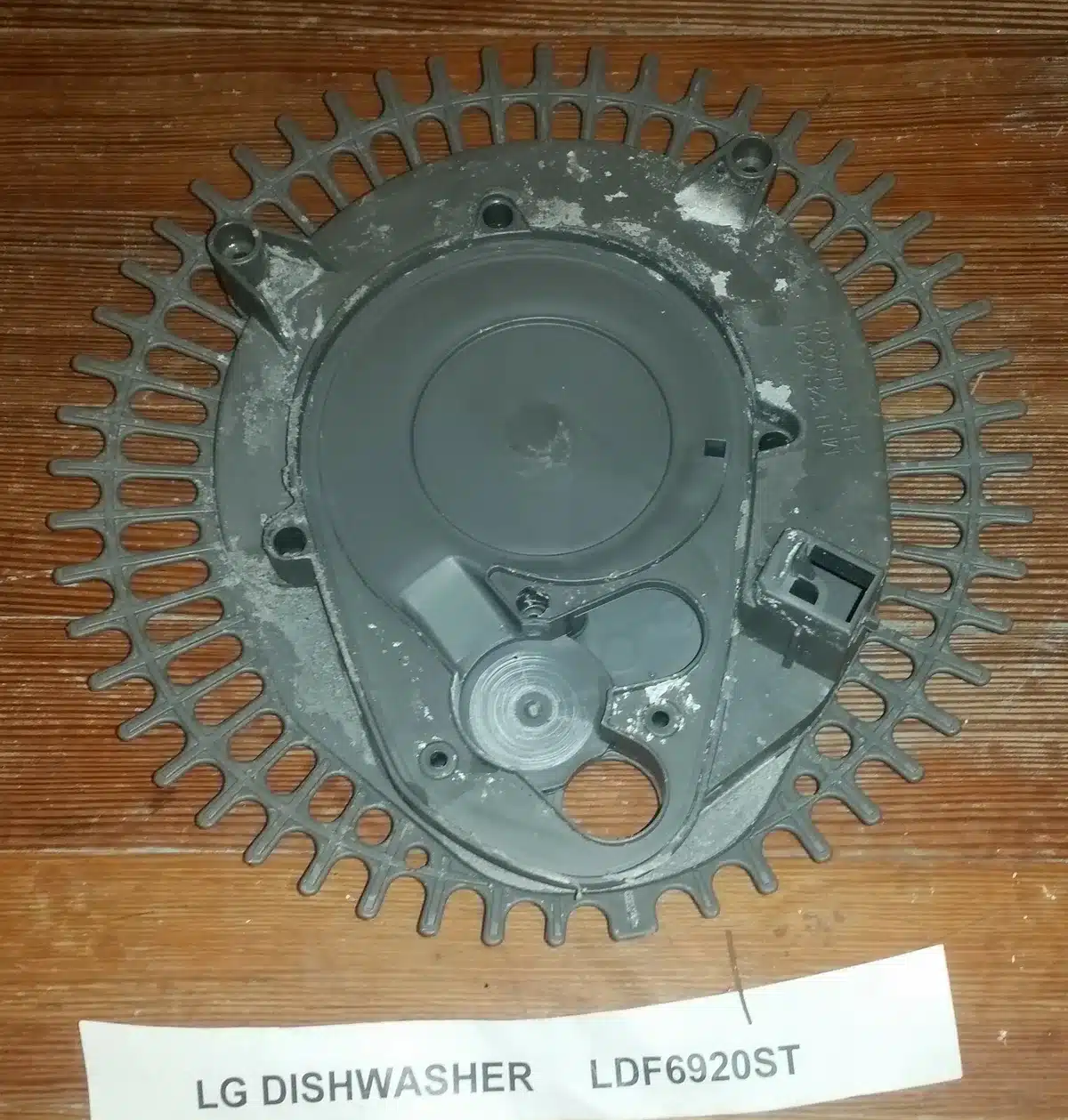
Image source: Web (Bing) / ebay.com (Web image (fair-use with source credit))
Mistakes to Avoid (and Safety Warnings)
A few common errors turn a simple cleaning job into a costly repair. Avoid them and your filter will last longer, clean better, and keep your warranty intact.
Abrasive Tools, Bleach, and Forcing Twist-Lock Parts
Never scrub the mesh with steel wool or a scouring pad. That tears the fine openings and lets debris slip through to the pump. Skip bleach and harsh solvents unless your LG manual approves them.
They can crack plastic and degrade rubber seals.
Forcing the twist-lock is another mistake. If the filter won't turn, check for food jammed in the housing. Apply steady pressure, not brute force.
Broken tabs mean a replacement filter, not a workaround.
Running Without a Filter and Warranty Risks
Running a cycle with no filter sends food straight into the drain pump and circulation pump. That's how you turn a $20 filter into a $200 repair. Manufacturer specs confirm the filter must be seated before any wash cycle.
DIY cleaning usually doesn't void your warranty. Damage from improper tools or chemicals can. Check your LG warranty terms before using any descaling product.
If you're unsure, plain dish soap and warm water is always safe.
Quick Safety Checklist
- Unplug the unit or kill the breaker before you reach into the sump.
- Watch for sharp edges on stainless steel mesh.
- Keep small filter parts away from kids and pets.
- Air dry completely before reassembly to prevent mildew.
- Never run the dishwasher with the filter removed.
Costs, Cleaning Frequency, and Long-Term Care
Cleaning is cheap. Replacement costs more. A new dishwasher costs the most.
That gap is why a monthly rinse is worth the 10 minutes.
Monthly Cleaning vs Quarterly Deep Cleans
Most LG manuals recommend rinsing the filter monthly. A monthly rinse handles grease and soft food debris. A quarterly deep clean with a vinegar or citric acid soak handles scale and odor.
If you have hard water, flip that schedule. Aggregate user reviews report scale building up in three to four weeks in mineral-heavy regions. In soft water areas, monthly rinsing is plenty.
| Task | Frequency | Time | Cost |
|---|---|---|---|
| Rinse filter | Monthly | 5 min | $0 |
| Deep soak | Quarterly | 15 min | Under $2 |
| Replace filter | As needed | 5 min | $20 to $80 |
| Service call | When DIY fails | 1 to 2 hrs | $100 to $200 |
Filter Replacement Costs vs Service Calls
A replacement LG filter runs about $20 to $80 depending on model. A service call runs $100 to $200 before parts. If cleaning solves the problem, you've saved the difference.
Long-term care is simple. Rinse monthly. Deep clean quarterly.
Replace only when the mesh or frame fails. That routine can keep your filter working for the life of the dishwasher, roughly 10 years.
Frequently Asked Questions
How Often Should You Clean an LG Dishwasher Filter?
Clean it monthly for normal use. Clean it every two to three weeks if you have hard water or run heavy loads. If dishes come out gritty or the tub smells, clean it right away.
Can You Put an LG Filter in the Dishwasher?
No. Putting the filter in the dishwasher can warp the plastic frame and damage the mesh. Hand wash it with warm water and dish soap instead.
Air dry it fully before reinstalling.
What If the Filter Is Discontinued?
If LG no longer makes your filter, look for a compatible assembly from an authorized parts distributor. Check the model number on the door frame. A discontinued filter doesn't mean a new dishwasher.
Final Call: Clean, Replace, or Call a Pro?
Clean it if the mesh and frame are intact. Replace it if the mesh is torn, the frame is warped, or the tabs are broken. Call a pro if you've cleaned and reseated the filter and still see standing water or error codes.
