
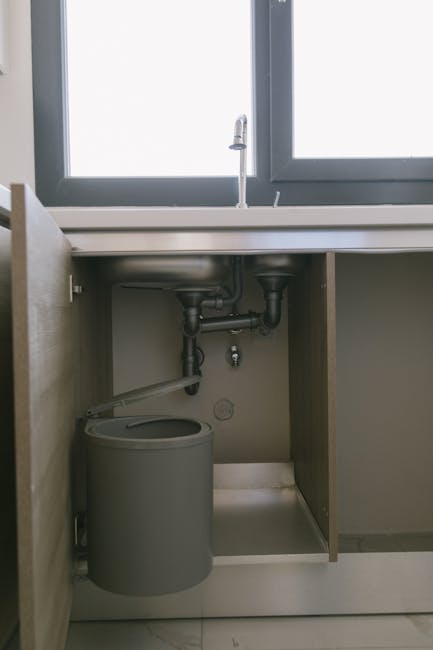
The space beneath your kitchen sink can feel like a maze of pipes, fittings, and mystery parts. When water pools where it shouldn't or the drain slows to a crawl, most homeowners feel a knot of dread. But here's the truth: understanding the basic layout of your kitchen sink plumbing is well within reach, and a clear plumbing under kitchen sink diagram turns confusion into confidence.
This guide walks you through every component you'll find under there, explains how they work together, and gives you practical steps to handle the most common problems yourself. No plumber's license required—just the right knowledge and a few basic tools.
Kitchen Sink Plumbing Basics
Every kitchen sink plumbing system has two separate networks running side by side: the supply side that brings fresh water in and the drain side that carries wastewater out. Understanding how these systems connect is the first step toward confident DIY repairs.
Main Components You'll Find
The parts under your sink fall into a handful of categories. Here's what each one does:
| Component | Purpose |
|---|---|
| Water supply lines | Deliver hot and cold water from shut-off valves to the faucet |
| Faucet | Controls water flow and temperature |
| Drain pipe | Carries wastewater from the sink basin to the main drain |
| P-trap | Curved pipe that holds water to block sewer gases from entering your home |
| Shut-off valves | Allow you to stop water flow to the faucet without turning off the whole house |
| Garbage disposal (if fitted) | Grinds food waste before it enters the drain system |
Common Materials and What They Mean for You
The pipes under your sink are likely one of three materials, and knowing which you have affects how you approach repairs:
- PVC or ABS plastic — Lightweight, inexpensive, and easy to cut. Most modern homes use plastic for drain lines. Connections are typically hand-tightened slip nuts.
- Copper — Durable and corrosion-resistant. Copper is common for older water supply lines. It requires soldering for permanent connections, though compression fittings offer a simpler alternative.
- Brass — Often used for shut-off valves and fittings. Brass resists rust and provides strong, reliable connections.
- Stainless steel braided supply lines — The standard in modern kitchens. These flexible hoses are far more durable than the old rubber ones and less likely to burst.
How Water Actually Flows
Understanding the flow path helps you trace problems. Cold and hot water travel through separate supply lines, each controlled by its own shut-off valve. When you open the faucet, water mixes to your desired temperature and flows into the sink basin. Gravity then pulls wastewater through the drain opening, down into the P-trap, and onward into your home's main drain line. The P-trap's curved shape constantly holds a small amount of water—typically about two inches deep—which forms a simple but effective gas barrier.
Reading a Plumbing under Kitchen Sink Diagram
A good diagram does more than label parts. It shows how those parts connect in practice. Whether you're looking at a simple sketch or a detailed schematic, knowing what each type offers helps you choose the right one for your task.
Simple Layouts
Basic diagrams use clean lines to show the main pipe paths. These are perfect for quick repairs—replacing a P-trap, clearing a clog, or tracing a leak. They highlight the drain, trap, and water supply lines without cluttering the view with measurements or fitting details.
Detailed Schematics
If you're tackling a full faucet replacement or rerouting pipes, a detailed schematic gives you pipe sizes, fitting types, and valve locations. These often include measurement callouts and material notes. They're the go-to choice for advanced DIYers and professionals alike.
Color-Coded Diagrams
Color coding separates hot and cold supply lines (red and blue) from drain pipes (often green or gray). This visual shortcut reduces mistakes during installation or troubleshooting. If you're a visual learner, this style will save you time.
Identifying Key Parts Under the Sink
Before you can fix anything, you need to know what you're looking at. Let's walk through each major component and its specific role.
The P-Trap and Its Role
The P-trap is the curved pipe you see directly below the sink drain. Its name comes from its shape, which resembles the letter P lying on its side. This simple curve performs two critical jobs: it traps water to seal against sewer gases, and it catches heavy debris that might otherwise clog your main drain.
In practice, the P-trap is where most clogs form. A common mistake is reaching for chemical drain cleaners when a slow drain appears. Instead, place a bucket under the trap, unscrew the slip nuts by hand (or gently with pliers), and clear out the blockage directly. You'll often find a surprising amount of grease, food particles, and even small objects. Check your P-trap and drain connections as your first diagnostic step for any drainage issue.
Drain Pipes
The drain pipes carry wastewater from the sink basin through the P-trap and into the wall or floor. These pipes are usually 1½ inches in diameter for kitchen sinks. Look for cracks or loose fittings, especially around the slip nuts. Even a slow drip can damage cabinet flooring and promote mold growth over time.
Shut-Off Valves
Every kitchen sink should have two shut-off valves—one for hot water, one for cold. These small valves sit where the supply lines connect to the wall or floor. Knowing their location and condition is critical. In an emergency, you want to be able to close them quickly. I recommend testing yours twice a year. If a valve feels stiff or won't fully close, replace it before you need it in a hurry. Learn about water valves under the kitchen sink to understand the different types and how to maintain them.
Garbage Disposal Connections
If your sink has a garbage disposal, you'll find an additional drain connection. The disposal unit sits between the sink drain and the P-trap. A dishwasher drain hose often connects to a small inlet on the disposal itself. Always disconnect power before inspecting disposal connections. If the unit hums but doesn't spin, use the hex key that came with it to manually rotate the motor from the underside.
Common Plumbing Issues and What Causes Them
Most problems under the kitchen sink fall into predictable categories. Recognizing the symptoms early prevents small headaches from turning into major repairs.
Leaks and Drips
Leaks occur at connection points—usually at the slip nuts on the P-trap, the compression rings on supply lines, or the mounting hardware of the faucet itself. A leak can also come from a cracked pipe, though that's less common with modern plastic or braided steel lines.
If you see water under the sink, dry everything thoroughly, then place a paper towel beneath each connection. Check back in a few hours. The wet spot will pinpoint the source. Most leaks are fixed by tightening a nut or replacing a rubber washer.
Clogs and Blockages
Kitchen sink clogs are almost always caused by grease, soap scum, and food particles building up inside the pipe. Coffee grounds and starchy foods like rice or pasta are especially problematic. Pouring grease down the drain is the single fastest way to create a stubborn clog—it cools and solidifies further down the pipe.
For minor clogs, try a plunger first. A cup plunger (not a toilet plunger) creates the seal you need. If that fails, disassemble the P-trap. Manual removal is always better than chemical drain cleaners, which can damage older pipes and create harmful fumes.
Loose Connections
Vibration from the garbage disposal, temperature changes, and normal use can loosen pipe connections over time. A loose slip nut may only drip when water is running, making it easy to miss. Run the faucet while watching each connection. If you see water escaping, tighten the nut a quarter-turn. Never overtighten—plastic nuts can crack.
Slow Drainage
A slow drain almost always means a partial clog. The water eventually goes down, but it takes its time. This is your early warning sign. Address it now with a drain snake or by cleaning the P-trap, and you'll avoid a fully blocked drain later. A simple combination of hot water and a natural enzyme cleaner can maintain good flow between more thorough cleanings.
Essential Tools for Repairs
You don't need a toolbox full of specialized equipment. A few well-chosen tools handle nearly every repair under the kitchen sink.
Wrenches and Pliers
- Adjustable wrench — Fits multiple sizes of nuts and compression fittings
- Slip-joint pliers — Offers strong grip on pipe fittings without damaging them
- Basin wrench — Reaches tight spaces behind the sink where faucet mounting nuts hide
A basin wrench is one of those tools you don't need often, but when you do, nothing else works. If you're planning a faucet replacement, borrow or buy one—it will save you an hour of frustration.
Pipe Sealants
- Teflon tape (PTFE tape) — Wraps around threaded pipe connections to fill gaps and prevent leaks. Wrap clockwise, three to four layers.
- Pipe joint compound — A paste applied to threaded fittings for a watertight seal. Works well on metal pipes.
Use these on threaded connections only. Slip joints and compression fittings rely on rubber gaskets and should not be taped.
Drain Snake
A manual drain snake—also called a plumber's snake—is a coiled cable that feeds into pipes to break up and retrieve clogs. For kitchen sinks, a 25-foot model with a bulbous head is sufficient. It reaches past the P-trap and into the wall drain.
Replacement Parts to Keep on Hand
- Rubber washers (assorted sizes for slip joints)
- Compression rings (ferrules) for supply line connections
- O-rings for faucet mounting hardware
- Slip nut washers (cone-shaped washers for drain pipe connections)
Having these in your drawer means you can fix a leak the moment you find it, rather than making a trip to the hardware store.
Step-by-Step Fixes with a Plumbing under Kitchen Sink Diagram
These instructions work with the diagram you've studied above. Each repair follows the same first step: shut off the water.
Fixing a Leak
- Close both shut-off valves under the sink.
- Dry all pipe surfaces with a rag.
- Turn the water back on briefly to identify the exact drip location.
- For a loose slip nut: tighten it gently with pliers (quarter-turn at a time).
- For a worn washer: disassemble the joint, replace the washer, and reassemble.
- For a threaded connection: wrap fresh Teflon tape clockwise before reassembly.
- Test by running water for two minutes and checking for drips.
Clearing a Clog
- Remove the drain stopper or strainer from the sink basin.
- Use a cup plunger over the drain opening. Push and pull firmly for 30 seconds.
- If water still drains slowly, place a bucket under the P-trap.
- Unscrew both slip nuts and remove the trap.
- Dump the trap contents into the bucket. Use a wire or brush to clear remaining debris.
- Reassemble and run hot water to confirm flow.
- If the clog remains, feed a drain snake through the pipe opening in the wall.
Replacing the P-Trap
- Turn off water supply valves.
- Place a bucket beneath the P-trap.
- Loosen both slip nuts with your hand or pliers.
- Slide the old trap out.
- Clean the pipe ends with a rag.
- Slide the new trap into position, ensuring the washers sit correctly.
- Tighten slip nuts hand-tight, then give each a gentle quarter-turn with pliers.
- Run water and check all joints.
If you need more detail on this process, see this straightforward guide on how to install a P-trap under the kitchen sink.
Installing a New Faucet
- Shut off both water supply valves and disconnect the supply lines.
- From below, unscrew the mounting nuts that hold the old faucet in place.
- Remove the old faucet and clean the sink surface around the mounting holes.
- Thread the new faucet's supply lines through the holes before securing it.
- Tighten the mounting nuts from below. A basin wrench makes this step much easier.
- Reconnect the supply lines to the shut-off valves.
- Turn the water back on slowly, checking each connection for leaks as you go.
Safety Tips and Precautions
Plumbing work involves water, pressure, and sometimes sharp metal edges. A few precautions make the job safer and cleaner.
Turning Off Water Supply
Always close the shut-off valves before loosening any pipe or fitting. Test them by turning on the faucet after closing the valves—if water still flows, the valves may be faulty, and you'll need to shut off the main water supply for the house. Know where your main shut-off is located before you start any work.
Using Protective Gear
Wear heavy-duty rubber gloves when handling drain pipes. The gunk inside a P-trap can contain bacteria and sharp debris. Safety glasses protect your eyes from spray if a pipe releases trapped water unexpectedly. A headlamp is also helpful—the space under the sink is dark, and holding a flashlight with one hand while working with the other is frustrating.
Handling Chemicals Safely
Avoid chemical drain cleaners whenever possible. They generate heat that can soften PVC pipes, and the fumes are dangerous in enclosed spaces. If you must use one, follow the manufacturer's instructions exactly, ventilate the area, and never mix different products. As a better alternative, the U.S. Environmental Protection Agency recommends mechanical cleaning methods like plungers and snakes for most household drain issues.
Maintenance Tips for Longevity
A few minutes of preventive care every month extends the life of your sink's plumbing dramatically.
Regular Inspections
Once a month, open the cabinet doors and look. Shine a light on every pipe and connection. Feel the cabinet floor for dampness. Smell for musty odors. Catching a slow drip early saves cabinet replacement costs and prevents mold growth.
Preventing Clogs
- Never pour cooking grease down the drain. Let it cool and dispose of it in the trash.
- Use a mesh drain strainer to catch food particles.
- Run hot water for 30 seconds after each use to flush debris.
- Pour a mixture of hot water and baking soda down the drain once a week to maintain flow.
Keeping Components Clean
Every three months, wipe down the P-trap and accessible pipes with a mild detergent. If you see mineral deposits, soak a cloth in white vinegar and wrap it around the affected area for an hour, then rinse. This simple habit keeps your kitchen pipes under the sink visible and easy to inspect.
When to Call a Professional
Some problems are best left to someone with a license and insurance. Recognizing the boundary saves you money and prevents damage.
Complex Repairs
If a pipe has cracked inside the wall, or you need to reroute drain lines, call a plumber. Similarly, if shut-off valves are stuck and won't close, a professional can replace them without risking a burst line. Attempting these repairs without experience often leads to water damage that costs far more than the plumber's fee.
Persistent Issues
If you've cleaned the P-trap and snaked the drain but the sink still drains slowly, the blockage may be in the main house drain. This requires professional equipment to diagnose and clear. Recurring leaks after replacing washers may indicate a pipe alignment problem or corrosion that needs expert attention.
Upgrading Plumbing Systems
When installing a new garbage disposal, adding a dishwasher drain connection, or replacing old galvanized pipes with modern materials, hire a licensed plumber. They ensure the work meets local building codes and that the system functions correctly with your home's existing plumbing. Attempting these upgrades yourself can lead to leaks, code violations, and failed inspections when you sell your home.
Frequently Asked Questions
What is the most common problem under a kitchen sink?
Leaks at connection points—specifically at the slip nuts on the P-trap and the compression fittings on supply lines—are the most frequent issue. These are almost always caused by loose connections or worn rubber washers.
How do I find where a leak is coming from?
Dry all surfaces completely, place paper towels under each connection point, and run the water for two minutes. The wet paper towel will show you exactly where the leak originates.
Can I use Drano in my kitchen sink?
Avoid chemical drain cleaners. They generate heat that can warp PVC pipes, create dangerous fumes in enclosed spaces, and damage garbage disposal components. Mechanical methods (plunger, snake, or manual trap cleaning) are safer and more effective for kitchen sink clogs.
Why does my kitchen sink smell even after cleaning?
The smell usually comes from the P-trap. If the trap isn't holding water—because of a partial clog or a venting issue—sewer gases can rise into your kitchen. Pour a gallon of water down the drain to refill the trap. If the smell returns quickly, check for a hidden leak or a blocked vent pipe.
How often should I replace the pipes under my kitchen sink?
PVC drain pipes can last 50+ years. Water supply lines, especially rubber hoses, should be replaced every 5 to 10 years. Modern braided stainless steel supply lines last longer and are worth upgrading to if your home still has rubber ones.
Conclusion
The plumbing under your kitchen sink follows a simple, logical layout. Fresh water comes in through supply lines, wastewater leaves through the drain and P-trap, and shut-off valves give you control over the whole system. A clear plumbing under kitchen sink diagram helps you see the connections, understand the flow, and identify problems before they escalate.
Start with monthly visual inspections. Keep a few basic tools and replacement washers on hand. Address slow drains immediately by cleaning the P-trap. And know when to step back and call a professional. These habits will keep your sink working reliably and save you from costly emergency repairs.
Take a look under your sink right now. Identify each part from this guide. Test your shut-off valves. The few minutes you spend today will pay off the next time you need to make a quick fix.
