
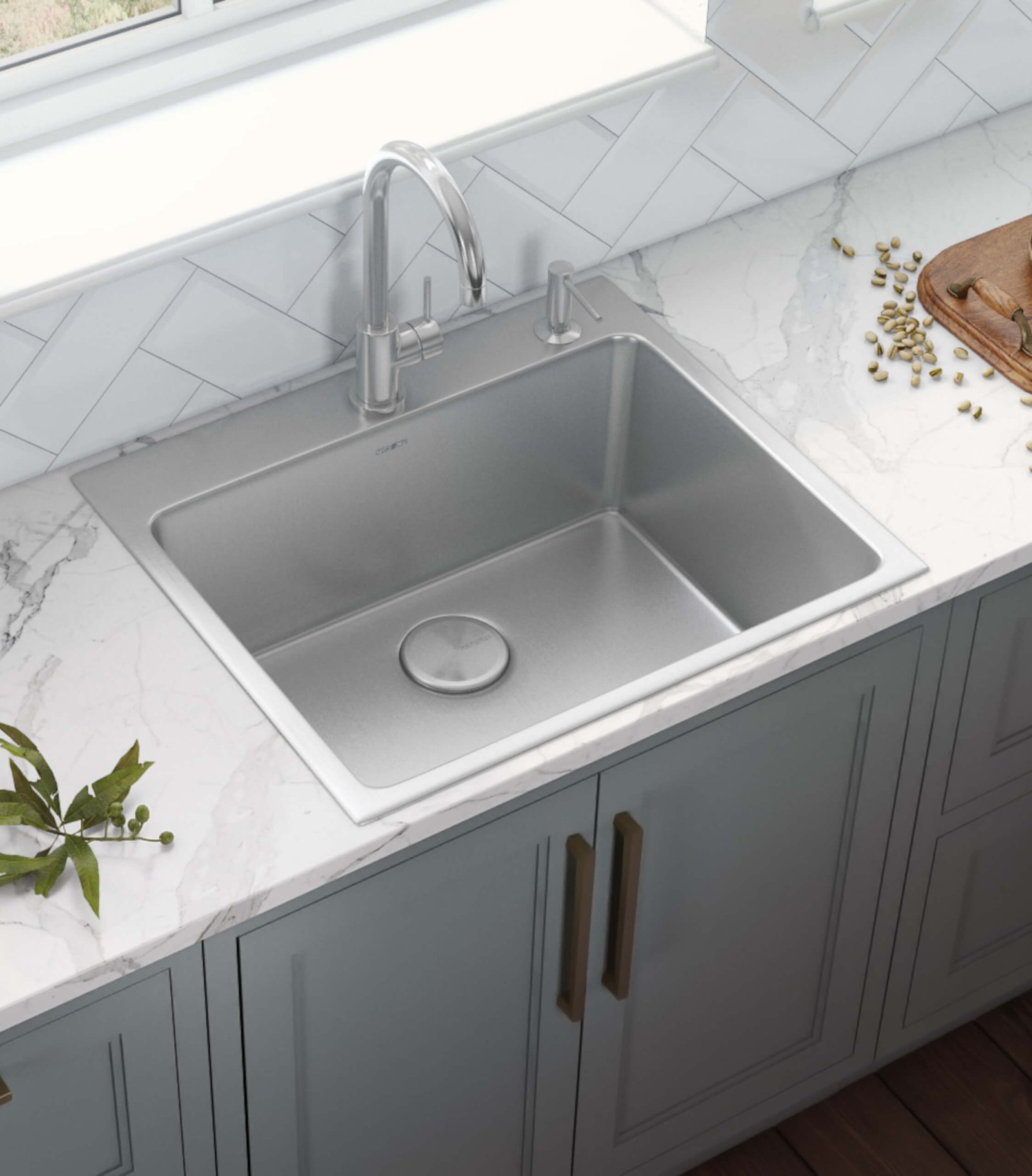
When selecting a stainless steel sink, the term "gauge" often appears. This number, far from being a mere technicality, directly influences your sink's resilience, its sound profile, and even its overall aesthetic. Understanding the optimal gauge for your stainless steel sink is the key to investing in a kitchen upgrade that endures, rather than one that leads to frustration. Imagine a sink that is not only visually appealing but also highly resistant to dents, scratches, and the rigors of daily use. This guide will demystify stainless steel sink gauges, empowering you to make a confident and informed choice that enhances your kitchen experience.
Understanding Stainless Steel Sink Gauges: Thickness Matters
The "gauge" of a stainless steel sink refers to the thickness of the metal itself. In this context, it's crucial to remember that a lower gauge number signifies thicker steel. This might seem counterintuitive, but it's a fundamental concept in understanding sink quality. For instance, a 16-gauge stainless steel sink is considerably thicker and more robust than an 18-gauge or 20-gauge sink. This difference in thickness has a profound impact on the sink's performance, durability, and even its acoustic properties.
Gauge Measurement Explained: The Inverse Relationship
The gauge system for stainless steel dates back to early manufacturing processes. It’s a standard used to define the thickness of sheet metal. For sinks, this number ranges typically from 14-gauge (very thick) to 22-gauge (relatively thin).
- Lower Gauge = Thicker Steel: A 16-gauge sink has a thickness of approximately 1.6mm.
- Higher Gauge = Thinner Steel: A 20-gauge sink has a thickness of approximately 0.9mm.
This inverse relationship is vital. When comparing sinks, always look for the lowest gauge number if you prioritize thickness and associated benefits.
Why Thicker Steel is Superior
The benefits of thicker stainless steel, indicated by lower gauge numbers, are significant:
- Enhanced Durability: Thicker steel is far more resistant to dents, scratches, and impacts. This is especially important in a busy kitchen where heavy pots, pans, and dropped utensils are common.
- Reduced Noise: Thinner gauge sinks are more prone to echoing the sound of running water and clattering dishes. Thicker steel acts as a natural sound dampener. If you've ever been startled by a loud clang from a pot hitting a thin sink, you'll appreciate the quiet performance of a lower gauge.
- Greater Rigidity: A thicker sink is less likely to flex or warp under stress, ensuring its structural integrity over time. This is particularly relevant for larger sink bowls.
Common Gauge Options and Their Implications
Most residential stainless steel sinks are found within the 18-gauge to 20-gauge range. However, commercial-grade and higher-end residential options extend into the 16-gauge and even 14-gauge territory.
- 14-Gauge: The thickest available for sinks, offering exceptional durability, superior sound dampening, and a premium feel. It’s often found in commercial kitchens and high-end residential installations.
- 16-Gauge: Excellent durability and noise reduction, making it a popular choice for busy family kitchens. It offers a significant upgrade over thinner gauges.
- 18-Gauge: A widely adopted standard that strikes a good balance between durability, performance, and cost. It's robust enough for most daily kitchen activities.
- 20-Gauge: Lighter and more budget-friendly. While suitable for light to moderate use, it is more susceptible to dents and can be noisier.
- 22-Gauge: The thinnest common gauge, typically found in very budget-oriented sinks. It is the most prone to dents and noise.
Choosing between these options involves weighing your usage habits against your budget. For instance, meticulously keeping the sink clean is important regardless of gauge, but maintaining a pristine appearance is slightly easier with a thicker sink.
Factors Influencing Your Gauge Choice
Selecting the ideal gauge for your stainless steel sinkinvolves careful consideration of several key aspects of your kitchen environment and lifestyle. Don't just pick a number; let these practical factors guide your decision for a sink that truly serves you well.
Kitchen Usage: From Home Chef to Occasional Cook
The intensity and nature of your kitchen activities are primary drivers for gauge selection.
- Heavy Use Kitchens: If you're an avid home cook or baker who frequently handles large pots, heavy pans, and a high volume of dishes, a lower gauge (16-gauge or even 14-gauge) is highly recommended. This thick, durable steel can withstand the constant impacts and weight without showing significant wear or denting. It reduces the stress on the material over years of intense use.
- Moderate Use Kitchens: For most families, an 18-gauge sink provides an excellent balance of durability and cost-effectiveness. It can handle daily dishwashing, food preparation, and the occasional heavy item with good resilience. This is often considered the sweet spot for residential applications.
- Light Use Kitchens: If your kitchen sees minimal use, perhaps in a guest house or a secondary prep area, a 20-gauge sink might suffice. While less robust, it can still offer a functional and aesthetically pleasing option for lighter demands. However, be mindful of its increased susceptibility to dents.
Budgetary Constraints: Investing for the Long Term
The gauge of a stainless steel sink directly correlates with its price. This is due to the increased material costs and sometimes more complex manufacturing processes associated with thicker metals.
- Higher Budget for Premium Durability: Sinks with lower gauges (14-gauge, 16-gauge) typically command higher prices. This is an upfront investment in a sink that is expected to last significantly longer, resist damage, and maintain its quiet operation, potentially saving money on replacements or repairs over the lifespan of your kitchen.
- Mid-Range Options for Value: 18-gauge sinks offer a compelling value proposition, providing nearly the durability of thicker options at a more accessible price point. They representa practical choice for many homeowners.
- Budget-Conscious Selections: 20-gauge and 22-gauge sinks are generally the most affordable. While they serve their purpose, potential buyers should be aware that the savings might come at the expense of longevity and resistance to wear and tear. It’s a trade-off between initial cost and long-term performance.
It's often wise to explore resources that detail the long-term cost of ownership for building materials. Understanding this can illuminate why a higher initial investment in a superior gauge might be more economical a decade down the line.
Aesthetics and Design: Matching Your Kitchen's Style
While gauge primarily relates to physical properties, it can subtly influence the perceived quality and style of a sink.
- Premium Look and Feel: Lower gauge sinks (16-gauge and below) often have a more substantial, solid feel. This can contribute to a higher-end, modern, or professional kitchen aesthetic. The slight sheen and weight of thicker steel can be visually appealing.
- Versatile Appearance: 18-gauge sinks provide a sleek, contemporary look that complements a wide range of kitchen designs, from minimalist to traditional. They offer a clean finish without an overtly "heavy" appearance.
- Simpler Design Lines: Thinner gauge sinks, due to their lighter weight and material properties, might lend themselves to simpler, more straightforward designs. They can integrate seamlessly into various decor styles where a less prominent sink is desired.
Consider how the sink will integrate with your countertops, cabinetry, and appliances. The overall visual harmony is as important as the sink’s functional capabilities. For ideas on kitchen aesthetics, checking out well-designed kitchen inspirations can be helpful.
Pros and Cons of Different Sink Gauges
Understanding the advantages and disadvantages of various stainless steel sink gauges is crucial for making an educated purchase. Each gauge offers a distinct set of benefits and drawbacks that cater to different user needs and priorities.
Thicker Gauges (14-16 Gauge)
- Pros:
- Exceptional Durability: Highly resistant to dents, scratches, and impacts from heavy cookware.
- Superior Noise Reduction: Significantly dampens the sound of running water and dishes clattering.
- Premium Feel & Aesthetics: Offers a substantial, high-quality appearance.
- Longer Lifespan: Built to withstand demanding use for many years.
- Cons:
- Higher Cost: Represents a significant upfront investment.
- Heavier Weight: Can require additional support during installation, potentially increasing labor costs if not factored in.
Mid-Range Gauges (18 Gauge)
- Pros:
- Excellent Balance: Offers a good compromise between durability, noise reduction, and affordability.
- Widely Available: A very common choice, offering a broad selection of styles and brands.
- Good for Most Homes: Suitable for the majority of residential kitchen uses.
- Cons:
- Less Resilient Than Lower Gauges: While durable, it can still dent or scratch with very heavy impacts over time.
- Moderate Noise: Quieter than thinner gauges, but not as silent as 16-gauge or thicker.
Thinner Gauges (20-22 Gauge)
- Pros:
- Most Affordable: Best option for those on a tight budget.
- Lighter Weight: Easier to handle and install.
- Cons:
- Prone to Dents & Scratches: Easily damaged by dropped items or heavy pots.
- Noisy: Amplifies the sound of water and dishes.
- Shorter Lifespan: May not withstand years of heavy use as well as thicker gauges.
Expert Recommendations for Gauge Selection
For professionals and seasoned home renovators, certain gauges consistently stand out for specific applications. These recommendations are based on practical experience and industry standards designed to ensure performance and longevity.
What is the Ideal Gauge for Residential Kitchens?
The consensus among experts and experienced kitchen designers for residential use leans towards 16-gauge or 18-gauge stainless steel sinks.
- 16-Gauge: This is often cited as the top choice for homeowners prioritizing top-tier durability and superior noise reduction. It's built to last and offers a quiet, robust kitchen experience, justifying its higher price for many.
- 18-Gauge: This gauge offers a fantastic balance of quality and value. It’s durable enough for most busy family kitchens, resists dents and scratches reasonably well, and is more budget-friendly than 16-gauge. It’s a safe and highly recommended choice for most households.
For those who might see articles mentioning 20-gauge as common, it's important to differentiate between what's widely available versus what's recommended for optimal performance and satisfaction. While 20-gauge sinks are prevalent, they often don't offer the same long-term satisfaction or resilience as their thicker counterparts.
What About Commercial or Heavy-Duty Applications?
In environments that demand extreme resilience, such as commercial kitchens, restaurants, or workshops, the recommendation shifts to even thicker steel.
- 14-Gauge: This is the gold standard for heavy-duty applications. Its incredible thickness and strength are essential for withstanding constant, high-impact use, frequent cleaning with aggressive agents, and the general wear-and-tear of a commercial setting. The longevity it provides significantly outweighs the initial cost in such high-demand scenarios.
Why Avoid Thinnest Gauges Without Specific Reason?
While 20-gauge and 22-gauge sinks fulfill a need in the market for affordability, experts generally advise against them for primary kitchen sinks unless budget is an absolute, overriding constraint. The drawbacks in noise, durability, and potential for damage often lead to dissatisfaction and premature replacement, negating any initial cost savings. If your budget is tight, an 18-gauge sink, even if slightly more expensive than a 20-gauge, will likely provide a far more satisfying and lasting kitchen experience.
Comparing Thickness: 18 vs. 20 Gauge
When browsing for a new sink, the choice between an 18-gauge and a 20-gauge often arises, particularly for those balancing budget with quality. Understanding the specific differences can help you make the right decision for your kitchen.
| Feature | 18-Gauge Stainless Steel Sink | 20-Gauge Stainless Steel Sink |
|---|---|---|
| Thickness | Thicker (approx. 1.2mm) | Thinner (approx. 0.9mm) |
| Durability | More resistant to dents, scratches, and impacts. | Less resistant; more prone to dings and minor damage. |
| Noise Level | Quieter; dampens running water and dish clatter. | Noisier; can be a source of echo and vibration. |
| Rigidity | More rigid; less prone to flexing. | Less rigid; may show slight flexing under heavy loads. |
| Cost | Mid-range; a good investment for performance. | Lower; more budget-friendly. |
| Installation | Slightly heavier, but manageable. | Lighter and easier to handle. |
| Lifespan | Generally longer due to superior material resilience. | May have a shorter lifespan under heavy daily use. |
Which is Better for You?
- **Choose
