
Corner cabinet organizer comparison starts with understanding the frustration of dead space in kitchens and bathrooms. These clever solutions turn awkward corners into functional storage, but not all organizers work the same. Standard base cabinets often waste 24 to 36 inches of depth, making it clear why so many homeowners seek better options.
Aggregate reviews report that the right system can reclaim up to 40% of unused corner space. The key is matching the organizer type to your cabinet dimensions and daily habits.
corner cabinet organizer comparison
Lazy Susans rotate for easy access. Pull-out shelves slide items to the front. Swing-out racks bring everything into view.
Each type fits different cabinet depths. Standard models handle 12 to 24 inch spaces.
Why Corner Cabinet Organizers Are a Game-Changer for Wasted Space
Kitchens and bathrooms often have deep corners that collect clutter. A well-chosen organizer turns these areas into usable storage for spices, cookware, or cleaning supplies.
Manufacturer specs confirm that rotating systems like Lazy Susans maximize accessibility in tight spaces. Pull-out designs work best for heavier items, as they distribute weight evenly. The average kitchen loses nearly 2 square feet of storage to blind corners, making these solutions a practical upgrade.
Lazy Susan vs. Pull-Out Shelves vs. Swing-Out Racks: How They Compare
Lazy Susans are the most common choice for corner cabinets. They spin 360 degrees, bringing items to the front with minimal effort. These work best for lightweight items like spices or small jars.
Pull-out shelves glide on tracks, making them ideal for heavier pots and pans. They require more clearance but offer full access to the cabinet’s depth.
Swing-out racks pivot outward, revealing all items at once. These are great for wide cabinets but need space to open fully.
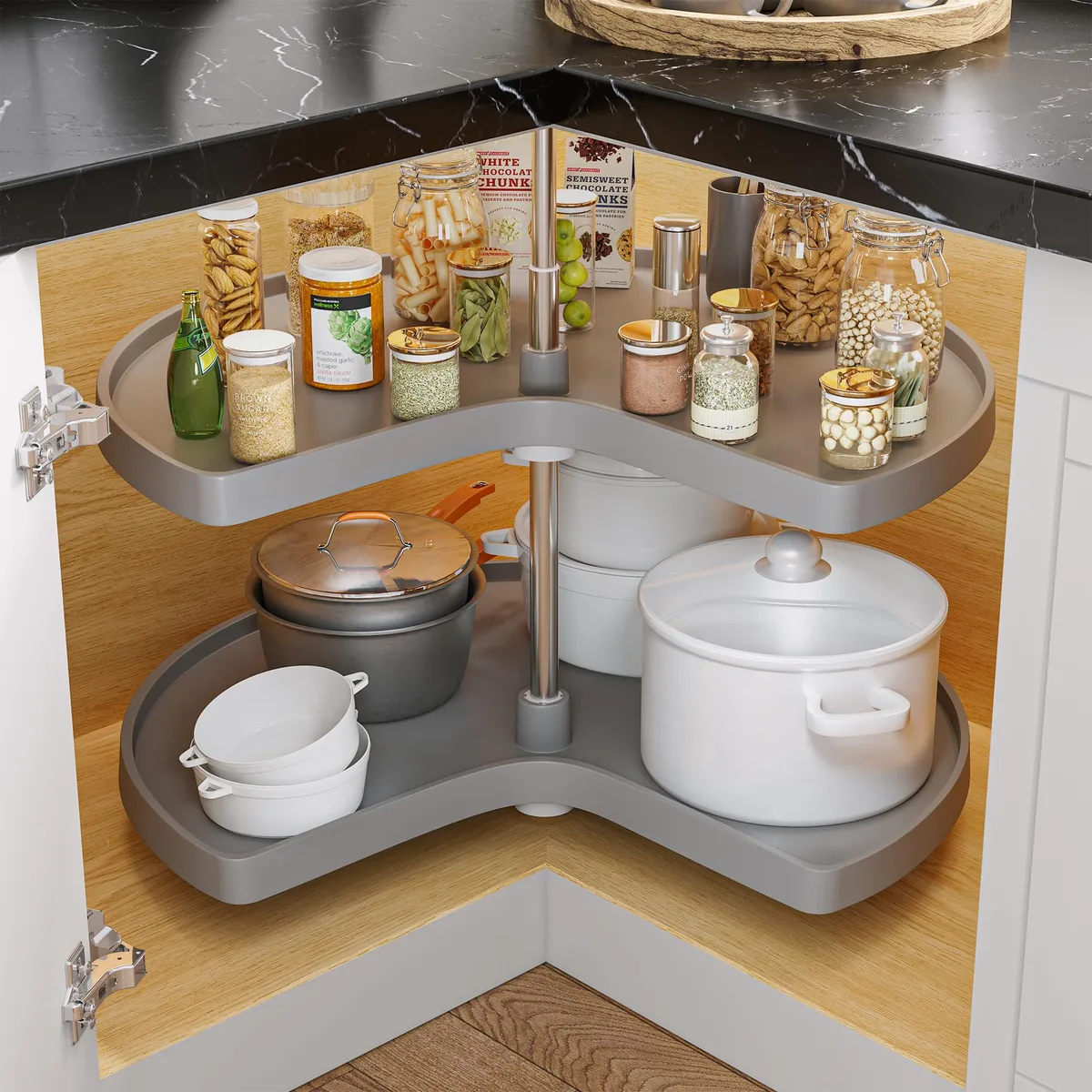
Image source: Web (Bing) / fity.club (Web image (fair-use with source credit))
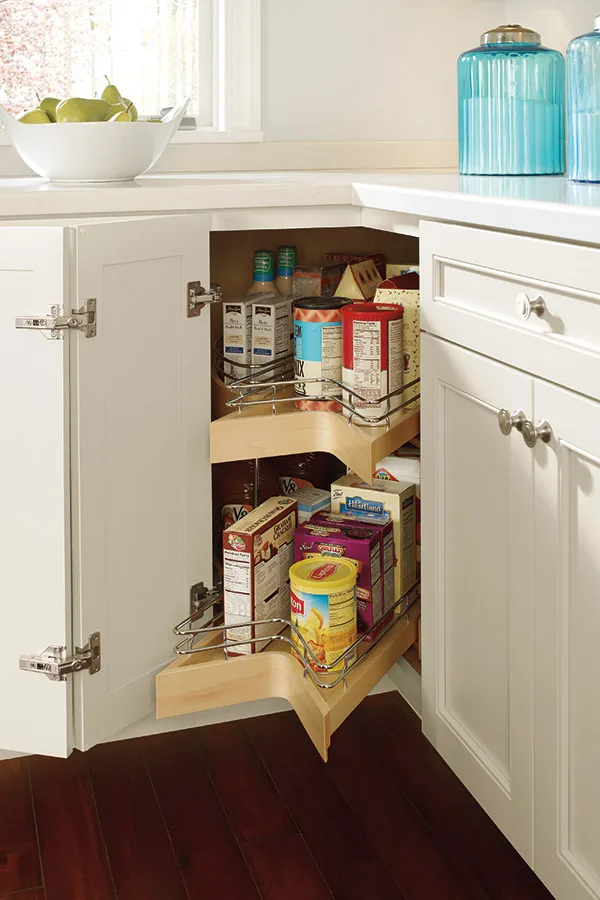
Image source: Bing (Web (fair-use with source credit))
Pull-out shelves handle more weight, often up to 50 lbs per US Cabinet Standards. Lazy Susans typically max out at 25 lbs for plastic models. Swing-out racks fall in the middle, supporting 30 to 40 lbs depending on the material.
Side-by-Side: Features, Pros, and Cons of Each Type
| Type | Best For | Pros | Cons | Weight Limit |
|---|---|---|---|---|
| Lazy Susan | Small items, spices | 360° access, easy to install | Limited weight capacity | 10–25 lbs |
| Pull-Out Shelves | Heavy cookware, pots | Full extension, sturdy | Needs more clearance | 40–50 lbs |
| Swing-Out Racks | Wide cabinets, bulk items | Full visibility, easy to clean | Requires space to open | 30–40 lbs |
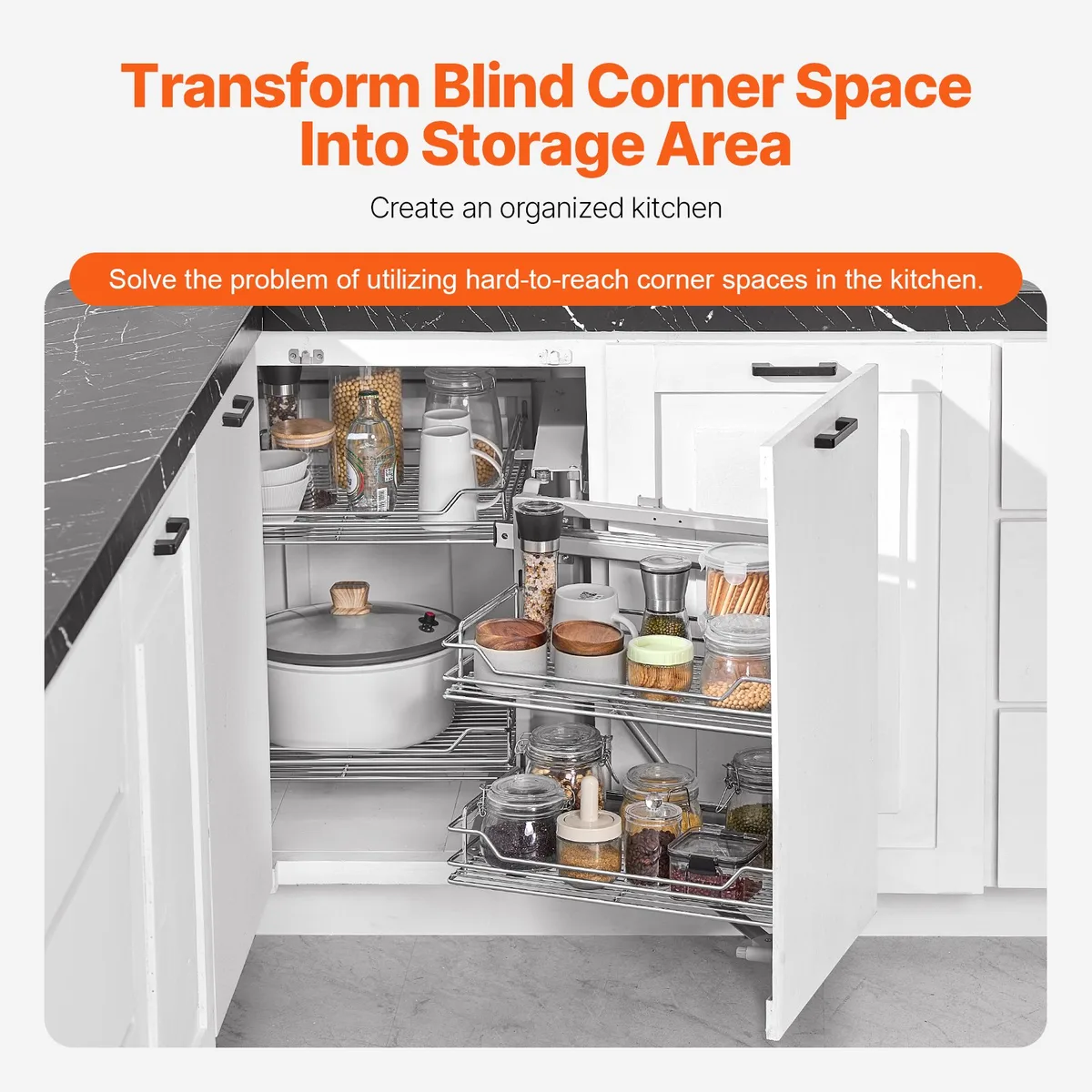
Image source: Web (Bing) / vevor.com (Web image (fair-use with source credit))
Lazy Susans are the most budget-friendly, with plastic models starting around $15. Pull-out shelves cost more due to their sturdy tracks, often $50 to $150. Swing-out racks fall in between, typically $30 to $100.
Which Corner Organizer Fits Your Space and Needs?
Measure your cabinet depth first. Lazy Susans fit shallow corners under 18 inches. Pull-out shelves need at least 24 inches of depth to extend fully.
Consider what you’re storing. Lightweight items like spices or snacks work well on a Lazy Susan. Heavy pots and pans belong on pull-out shelves.
Think about accessibility. Swing-out racks are great for users who need to see everything at once. Pull-out shelves are better for those with limited reach.
For small kitchens, a reliable machine can complement your storage solutions. If you’re organizing for a gift, consider a clogged intake for a thoughtful touch.
Cost, Installation, and Durability: What to Expect
Budget organizers start around $10 for basic plastic Lazy Susans. Mid-range wood or metal pull-out shelves run $50 to $100. Custom or heavy-duty systems can exceed $200.
Installation difficulty varies. Lazy Susans often require no tools, just adhesive or screws. Pull-out shelves need precise track alignment, which can take 30 to 60 minutes.
Swing-out racks fall in between, with moderate assembly required.
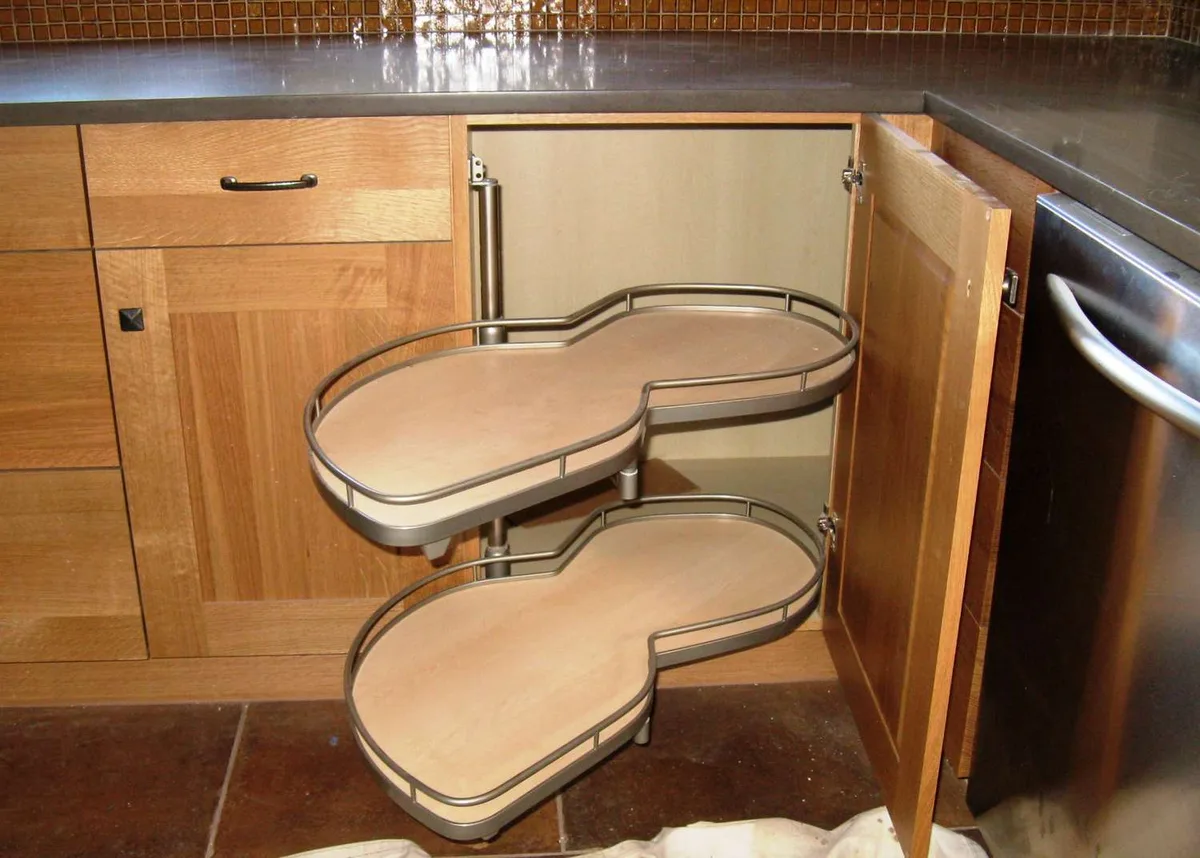
Image source: Web (Bing) / thespruce.com (Web image (fair-use with source credit))
Durability depends on materials. Plastic lasts 2 to 3 years with light use. Wood and metal can endure a decade or more.
Manufacturer specs confirm stainless steel handles moisture best for bathroom use.
Common Mistakes to Avoid When Choosing or Installing
Measuring wrong is the top error. Always check depth, width, and height before buying. A 24-inch cabinet needs a 24-inch organizer, not a 20-inch one.
Ignoring weight limits causes sagging or breakage. A 10-lb plastic Lazy Susan won’t hold a cast-iron skillet. Aggregate reviews show this is the most common failure point.
Skipping the pilot holes leads to crooked installations. Mark and pre-drill for pull-out shelves to ensure smooth gliding. For swing-out racks, test the pivot range before finalizing screws.
