
A foul odor under kitchen sink cabinets usually means something in the drain system has failed, not that your kitchen is dirty. You might smell rotten eggs, sour grease, or straight sewage. The fix depends on which branch of the plumbing is actually broken.
That water curve under the sink is called a P-trap. Plumbing code expects roughly two inches of standing water there to block sewer gas. If that seal fails, smells rise into the cabinet.
Start by reading three clues before you grab a wrench or pour cleaner down the drain.
Quick Answer
A foul odor under kitchen sink cabinets usually comes from a dry P-trap, disposal gunk, a hidden leak, or vent failure. Run water 30 to 60 seconds first. Sniff the drain opening and the back of the cabinet separately.
Check for damp wood, drip trails, or standing water. If the smell is strong sewage odor with gurgling from multiple fixtures, call a licensed plumber.
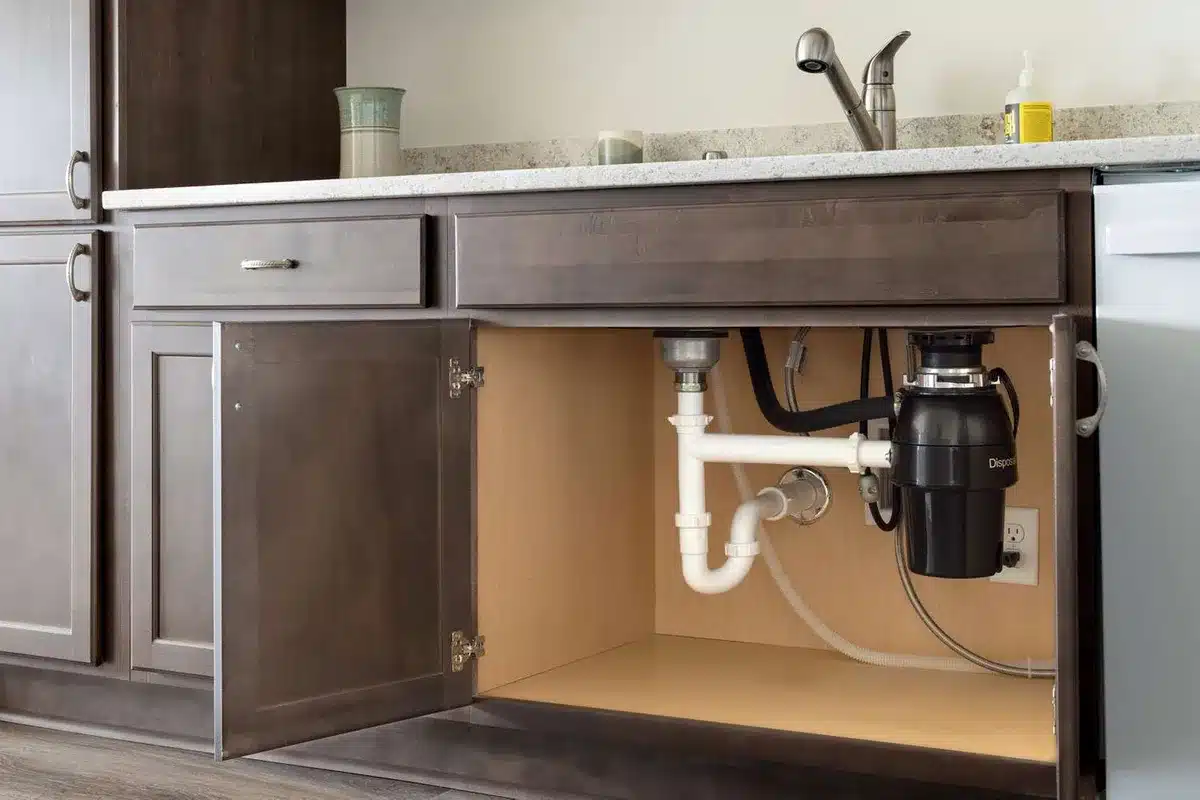
Image source: Web (Bing) / ar.inspiredpencil.com (Web image (fair-use with source credit))
Why a Foul Smell Under the Kitchen Sink Rarely Has One Obvious Cause
That stink under the cabinet is a symptom, not a diagnosis. Our research on common homeowner complaints shows four separate failure paths that all smell bad but need different fixes.
A dry P-trap lets sewer gas slip past a missing water seal. Biofilm in the trap or disposal grinds out a sour, rotten-egg smell. A slow leak under a slip-joint nut leaves stagnant water that turns musty fast.
A blocked vent can siphon the trap empty every time another fixture drains.
Pouring baking soda down the drain without checking first often masks the real problem for a day or two. You still have sewer gas, a leak, or rotting cabinet base underneath. The decision tree below walks you through one branch at a time so you fix the source, not the symptom.
| Smell type | Likely source | First check |
|---|---|---|
| Rotten egg / sulfur | Biofilm, disposal, dry trap | Run water, sniff drain vs. cabinet |
| Musty / damp | Hidden leak, standing water | Flashlight on cabinet floor and joints |
| Raw sewage | Broken trap seal, vent failure, main line | Gurgling, multiple fixtures affected |
| Sour grease | Disposal buildup, trap sludge | Smell with disposal off vs. on |
Start With Three Clues: What It Smells Like, When It Hits, and Whether the Cabinet Is Wet
Before you loosen a single nut, gather three clues. They tell you which branch to open first and save you from cleaning a disposal when the real issue is a leak at a slip joint.
What does the smell actually smell like?
Rotten egg or sulfur usually points to bacteria in biofilm or a dry trap. Musty or damp almost always means moisture somewhere in the cabinet. Raw sewage smell means the water seal is broken or sewer gas is entering through the drain system.
When does the odor show up?
Constant smell with a dry, unused sink often means evaporation in the P-trap. Smell only after the dishwasher runs suggests drain hose backflow or food residue in the line. Odor when the disposal spins but not when it sits idle means gunk on the splash guard or chamber walls.
Is anything wet under there?
Kneel down and shine a flashlight across the cabinet floor. Look for dark water stains, swollen particleboard, drip trails on pipes, or a small puddle that returns after you wipe it. Wet cabinet plus smell equals leak until proven otherwise.
The CDC notes that chronic moisture under sinks can support mold growth within weeks.
No visible water does not rule out a leak. Slow seeps evaporate before they pool. Sniff along each joint, the tailpiece, supply lines, and the dishwasher hose clamp.
How the P-Trap, Garbage Disposal, and Drain Vent Keep Sewer Gas Out of Your Kitchen
Every fixture under your sink plays a role in keeping sewer gas out of the kitchen. Once you know what each part does, the diagnostic branches make more sense.
The P-trap, also called a U-bend, holds a column of water that blocks sewer gas from rising into the cabinet. That water seal needs to stay intact. Manufacturer specs and plumbing code both target a minimum trap seal depth of about two inches.
The garbage disposal connects to the tailpiece or a dedicated drain branch. Food grease sticks to the splash guard baffle and chamber walls. That organic layer breeds bacteria that produce hydrogen sulfide, the classic rotten egg smell.
The drain vent lets air into the waste line so water flow does not siphon the trap empty. A failed studor vent or air admittance valve, or a blocked roof vent stack, can pull that two-inch water seal out of the trap during normal use.
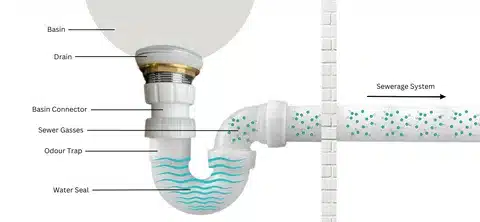
Image source: Web (Bing) / ar.inspiredpencil.com (Web image (fair-use with source credit))
Your dishwasher drain hose ties into this same system. A missing high loop or air gap can let dirty water and food backflow into the hose. That residue sits under the cabinet and smells sour within a day or two.
If dishwasher timing matches the odor, freshening the appliance itself is worth doing after you fix the drain connection.
Branch 1: Dry P-Trap or Missing Water Seal, Run Water, Restore the Seal, Rule Out Siphoning
If the sink sat unused for a week or more, start here. Vacation homes and guest sinks are the top dry-trap cases we see in aggregate homeowner reports as of 2026.
Run water and retest
Turn the faucet on for 30 to 60 seconds. Let the bowl fill and drain normally. Wait five minutes, then sniff the drain opening and the back of the cabinet again.
If the smell fades or disappears, evaporation was likely the cause.
Check for siphoning
If the smell returns within hours despite daily use, the trap may be siphoning empty. Listen for gurgling when the dishwasher, laundry sink, or upstairs toilet drains. Gurgling plus recurring odor points to a vent problem, not just a dry trap.
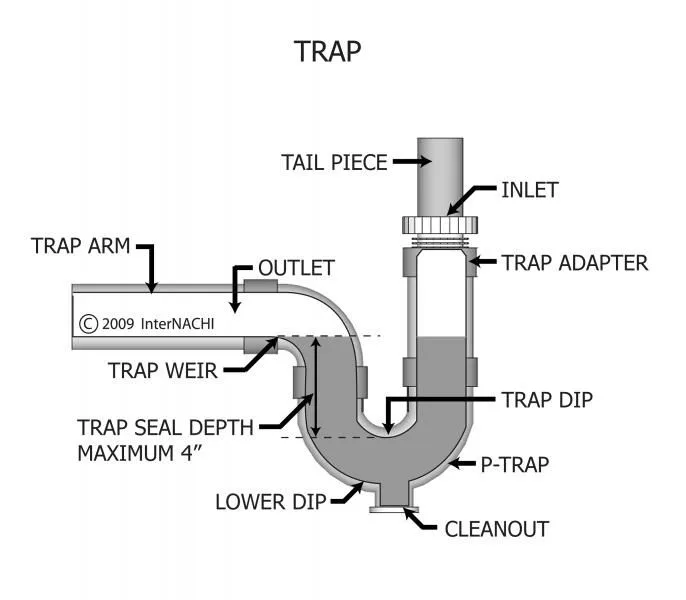
Image source: Web (Bing) / dk.pinterest.com (Web image (fair-use with source credit))
When to remove and inspect the trap
Still stinking after a good water flush? Place a bucket under the P-trap. Loosen the slip-joint nuts by hand plus a quarter turn with channel locks.
Look inside for sludge, a cracked washer, or a trap that never held water because it was installed wrong.
Reassemble with the trap arm sloped toward the main drain at roughly one-quarter inch per foot. Hand-tighten plastic nuts, then add one quarter turn. Over-tightening cracks PVC fittings fast.
Branch 2: Garbage Disposal and Trap Gunk, Splash Guard, Biofilm, and When a Trap Clean-Out Fixes It
If the smell spikes when you flip the disposal switch, the grinding chamber or splash guard is your branch. This is the most common cause in homes that run a disposal daily.
Clean the splash guard first
Turn the disposal off at the breaker before you reach near the opening. Pull the rubber baffle up and scrub the underside with a stiff brush and dish soap. That hidden lip collects grease and food film that standard flushing never touches.
Flush the chamber
Run cold water. Grind a tray of ice cubes to scour the chamber walls. Follow with an enzyme drain treatment and let it sit overnight per product label directions.
Avoid mixing bleach with other cleaners. The EPA warns that combining household chemicals can release harmful gases.
When a full trap clean-out beats flushing
If odor persists after splash guard and enzyme treatment, remove the P-trap as described in Branch 1. Scrape sludge from the trap bowl and horizontal drain run by hand. A hand snake helps for deeper biofilm beyond the trap arm.
For dishwasher-linked smells that overlap with disposal odor, a vinegar and baking soda flush through the appliance clears hose residue. Pair that with filter maintenance so food does not keep feeding the biofilm upstream.
Branch 3: Hidden Leaks and Dishwasher Drain Backflow, Slip Joints, Hoses, Air Gaps, and Standing Water in the Cabinet
Musty smell plus damp particleboard? Open Branch 3. Wet wood under the sink almost always beats a dry trap or disposal gunk as the root cause.
Where do slow leaks hide?
Start at slip-joint nuts on the tailpiece, P-trap, and waste arm. Shine a flashlight while someone runs the faucet. Look for fresh drip trails, green corrosion on compression rings, or a nut that spins loose by hand.
Supply line connections at the shutoff valves leak too, and that stagnant puddle smells sour within days.
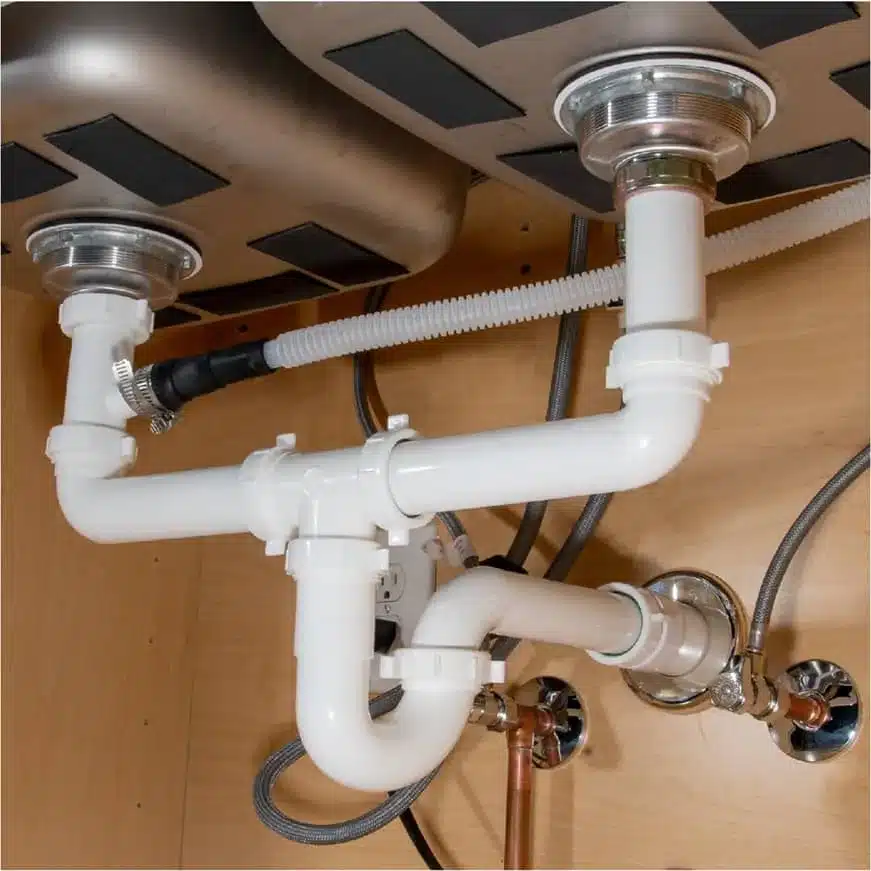
Image source: Web (Bing) / homedepot.com (Web image (fair-use with source credit))
Is the dishwasher feeding the smell?
Run an empty drain cycle and sniff under the cabinet as water pumps out. A hose clamp loose at the disposal knock-out or tailpiece lets food backflow sit in the line. The hose needs a high loop at least 20 inches above the floor, or a proper air gap if your local code requires one.
If the odor tracks with dishwasher use, cleaning the spray arms and the filter housing stops food from cycling back into the hose.
What if you tighten everything and it still drips?
Replace the rubber slip-joint washers instead of cranking plastic nuts tighter. Over-tightening cracks PVC fast. Swap washers, reassemble hand-tight plus one quarter turn, run water for two minutes, and recheck with a dry paper towel on each joint.
Branch 4: Vent Failure, Sewer Gas, and Main Line Issues, Gurgling, Multiple Fixtures, and When to Call a Plumber
Raw sewage smell that returns after a full trap flush points here. Sewer gas enters when the water seal breaks and nothing blocks it from the main waste line.
What does vent failure look like?
Listen when the upstairs toilet flushes or the laundry tub drains. Gurgling from the kitchen drain means negative pressure may be siphoning the trap empty. Check for a studor vent or air admittance valve under the sink if your home has one.
A stuck closed AAV blocks airflow and mimics a blocked roof vent.
When is it a main line problem?
Multiple fixtures smell bad at once. Water backs up in the tub when the kitchen drains. Or the odor hits every sink in the house.
That pattern sits beyond DIY trap cleaning. A partial main line clog or blocked stack vent needs a licensed plumber with a camera and snake.
Do not ignore a strong persistent sewage smell while running water normally. Sewer gas carries hydrogen sulfide and methane. Open a window, avoid open flames, and call a pro if Branches 1 through 3 checked out clean.
Mistakes That Mask the Smell, Safety Rules Worth Following, and Habits That Stop It Coming Back
The fastest way to waste a weekend is treating every under-sink stink like a disposal problem. These mistakes keep the odor alive.
What not to do
Do not pour bleach down the disposal while another cleaner sits in the trap. Mixing bleach with ammonia or acid-based products releases toxic gas. Do not rely on air fresheners or cabinet deodorizers.
They hide sewer gas or a slow leak while cabinet wood keeps rotting.
Do not remove the P-trap without a bucket underneath. One loose nut sends grey water across the floor. Do not crank plastic slip-joint nuts with massive force.
Hand-tight plus one quarter turn is the target.
Habits that prevent recurrence
Run water 30 seconds in rarely used sinks once a week. That keeps the trap seal full. Scrub the disposal splash guard monthly.
Flush with cold water and ice. Routine filter care on the dishwasher stops food from backing into the drain hose.
Peek under the cabinet every few months with a flashlight. Catching a weep at a washer early costs pennies. Ignoring it for six months can mean a full cabinet base replacement.
FAQs About Foul Odors Under the Kitchen Sink
Why does my kitchen sink smell like rotten eggs?
Rotten egg odor usually means hydrogen sulfide from bacteria in biofilm, a dry P-trap, or disposal buildup. Run water 30 to 60 seconds first. If the smell fades, the trap seal was likely empty.
If it stays sharp when the disposal runs, clean the splash guard and flush the chamber with an enzyme treatment overnight.
Can a dry P-trap cause a smell under the sink?
Yes. The P-trap holds about two inches of water that blocks sewer gas from rising into the cabinet. Unused sinks, guest baths, and vacation homes lose that seal through evaporation in one to four weeks.
Running water for 30 to 60 seconds usually restores it. Persistent return odor suggests siphoning from a vent issue.
Why does it smell worse after the dishwasher runs?
That timing usually means food residue or dirty water is sitting in the dishwasher drain hose. Check the hose clamp at the disposal or tailpiece. Confirm the high loop sits at least 20 inches above the floor.
Run an empty cycle while sniffing under the cabinet to confirm the source.
Is a foul smell under the sink always a plumbing leak?
No. Dry traps, disposal gunk, and vent failure all smell bad without dripping water. Musty damp odor with swollen cabinet floor or dark stains, though, almost always means moisture from a slip joint, supply line, or hose connection.
Treat wet wood as a leak until you prove otherwise.
When should I call a plumber instead of fixing it myself?
Call a licensed plumber if sewage odor persists after trap cleaning and leak checks, multiple fixtures gurgle or smell at once, water backs up in other drains, or you suspect a main line clog. Also call if supply or drain repairs need code-level vent or pipe changes you are not equipped to handle.
