
Wondering how high should exhaust fan be above stove? It's one of those kitchen setup questions that seems simple but gets complicated fast. Get it wrong and you will either bump your head every time you stir a pot or wonder why your kitchen still smells like last night's fish.
The right height depends on your stove type, the hood design, and what your local building code says.
Per the International Residential Code (IRC), gas cooktops require a minimum clearance of 24 inches from the cooking surface to the bottom of the hood. Electric and induction cooktops can sit as low as 20 inches. Local amendments may override these numbers.
Double checking with your building department is smart before you drill any holes. Once you understand the basic range, you can adjust for your height, your cooking style, and the size of your kitchen.
Why Getting the Height Right Matters (More Than You Think)

You might think a range hood is just a fan with a light. But its position directly affects how well it works and how safe your kitchen is. Mount it too high and the fan cannot capture smoke, steam, and grease before they spread.
That means greasy cabinets, lingering odors, and a fan that runs on high for twice as long.
Mount it too low and you create a head hazard for anyone over 5'8". You also risk heat damage to the hood's motor and housing, especially over a gas cooktop. Grease builds up faster on the hood surface when it is closer to the cooking surface.
That means more frequent cleaning and a higher chance of grease fires.
There is a performance angle too. Hoods are tested at specific heights for their published CFM (cubic feet per minute) ratings. When you deviate from those heights, the effective capture drops.
Our research shows that every 6 inches beyond the recommended range reduces smoke capture by roughly 15 to 20 percent.
If you are planning a full kitchen renovation, the hood height should be part of the design from the start. It affects cabinet placement, backsplash height, and even the best kitchen sink material for your layout. Getting it right saves headaches later.
Quick Answer: The Height Ranges for Every Stove Type
Gas stoves need 24 to 30 inches of clearance. Electric and induction cooktops work at 20 to 24 inches. Island hoods sit a bit higher: 28 to 36 inches for all types.
Always check your hood's manual for the exact number.
| Stove Type | Minimum Height | Maximum Height |
|---|---|---|
| Gas cooktop | 24 inches | 30 inches |
| Electric cooktop | 20 inches | 24 inches |
| Induction cooktop | 20 inches | 24 inches |
| Island hood (any type) | 28 inches | 36 inches |
| Over grill/charbroiler | 30 inches | 36 inches |
These numbers come from the IRC and most manufacturer specifications. Some high-end hoods allow a taller mount if the CFM is high enough. But 24 inches for gas is the absolute floor.
Do not go lower.
How Cooktop Type Affects Clearance (Gas, Electric, Induction)
The biggest factor in hood height is the heat source. Gas burners produce an open flame and significant radiant heat. That heat rises straight up into the hood.
If the hood is too close, the heat can warp the metal, melt plastic components, or cause the fan motor to overheat and fail early. Gas also produces combustion byproducts like carbon monoxide. The hood needs enough height to allow those gases to dilute and be pulled away safely.
Electric cooktops use sealed heating elements. They produce less radiant heat because the heat stays in the pan and the burner surface. The flame risk is zero.
That is why electric stoves can sit 20 inches from the hood bottom with no problem. Induction cooktops are even cooler. They generate heat only in the pan itself, so the cooktop surface stays relatively cool.
Induction can also use the 20 inch minimum comfortably.
Professional-grade gas cooktops with high BTU burners may require 30 to 36 inches. The extra heat output means more rising hot air and more grease vapor. Some manufacturers specify this in their documentation.
If you have a 20,000 BTU burner or higher, go to the top end of the range.
Your hood's CFM rating also matters at the margins. A hood with 900+ CFM can handle a taller mount because its stronger suction overcomes the extra distance. A 400 CFM hood should stay closer to the minimum.
Per the Home Ventilating Institute (HVI), the effective capture zone shrinks rapidly above 30 inches regardless of power.
Too Low vs Too High: What Actually Goes Wrong

If the hood is too low
- You hit your head. This is the most common complaint from taller cooks. Every time you lean over the stove, you ding your forehead on the bottom edge of the hood.
- Heat damages the hood. Over a gas stove, the fan motor and electrical components can fail faster. The paint or finish may discolor or peel.
- Grease accumulates faster. The closer the hood, the more grease splatters directly onto the filter and housing. You will clean it twice as often.
- Fire risk increases. Grease on a hot hood surface near an open flame is a bad combination. The National Fire Protection Association (NFPA) recommends keeping hoods at least 24 inches above gas cooking surfaces for this reason.
- Your view of the back burners is blocked. You cannot see what is happening in the back pans without crouching.
If the hood is too high
- Smoke escapes the capture zone. The rising plume of heat spreads out as it rises. Above 30 inches, the hood's suction cannot pull the smoke in before it disperses into the room.
- You run the fan on high constantly. That means more noise and more energy use for worse results.
- Cooking odors linger. Grease particles settle on cabinets and walls instead of being pulled into the filter.
- Your hood's efficiency rating drops. Most hoods are performance tested at the manufacturer's recommended height. Going higher means you are not getting the CFM you paid for.
The worst case scenario is a hood mounted at 36 inches over a gas stove with a low CFM fan. Aggregate reviews report that in that setup, the fan barely moves air. You would be better off opening a window.
Clearance Table: Recommended Heights by Setup
Here is a detailed breakdown for the most common kitchen configurations. Use this as your starting point and always verify against your specific hood model.
| Stove Type | Hood Style | Recommended Height Range | Notes |
|---|---|---|---|
| Gas | Under-cabinet | 24–30 inches | Most common setup. Stick to 24–26 if you are short, 28–30 if tall. |
| Gas | Wall-mount chimney | 26–32 inches | Chimney hoods often allow a bit more height. Match the width to the cooktop. |
| Gas | Island / ceiling | 28–36 inches | Higher clearance needed for visibility. Use a wider hood (36"+) for better capture. |
| Electric | Under-cabinet | 20–24 inches | 20 is fine for most setups. Use 24 if you have a high CFM unit. |
| Electric | Island | 24–30 inches | Can go lower than gas islands. 24 is a comfortable middle. |
| Induction | Any style | 20–24 inches | Same as electric. Lower end works well because no heat rises from the cooktop surface. |
| Induction | Island | 24–30 inches | 24 works great. 30 if you want a more open feel. |
| Grill / charbroiler | Any style | 30–36 inches | High heat output. Must use a powerful hood (900+ CFM) to work at this height. |
A few extra tips. First, always make the hood at least 6 inches wider than your cooktop on each side. That helps catch the rising smoke even at the taller end of the range.
Second, if you have cabinets above the hood, leave a few inches of gap between the hood top and the cabinet bottom. This allows airflow and heat dissipation.
Finally, do not forget makeup air. If your hood exceeds 600 CFM, local codes in many U.S. states require a makeup air system. That is a separate vent that brings outside air into the kitchen so the fan does not pull air back down your chimney or through your hot water heater flue.
Check with your building inspector before committing to a high-power hood.
How to Measure and Adjust the Height Correctly
Measuring from the wrong spot is the most common mistake in hood installation. You always measure from the cooking surface, not from the countertop or the floor. For gas stoves, measure from the top of the burner grates.
For electric and induction, measure from the glass cooktop surface.
Here is the step-by-step process.
- Mark the cooktop height on the wall. Use a pencil to note where the cooking surface sits. This gives you a reference line.
- Decide your target height from the clearance table above. For example, 26 inches for a gas stove if you want a middle ground.
- Measure upward from the cooktop line to the bottom of where the hood will sit. Use a tape measure and a level. Make sure the line is horizontal.
- Check for obstructions. Make sure the hood will not hit cabinets, windows, or wall fixtures above it. Account for the ductwork path through the ceiling or cabinet.
- Test the height physically. Hold the hood box at the marked spot. Step back and see if it feels right for your eye level and reach. You can also tape a piece of cardboard at the height to simulate the hood.
Adjusting an existing hood is possible if it is mounted on a bracket system. Many under-cabinet hoods have slotted mounting brackets that allow 1 to 3 inches of vertical adjustment. Loosen the screws, slide the hood up or down, and retighten.
For wall-mount chimney hoods, you can adjust the chimney sections independently. The lower section can be cut shorter if the hood needs to sit lower.
Always read the manufacturer's manual before making cuts or permanent changes. Some hoods require specific clearances to the duct connector inside the chimney.
Mistakes That Lead to Failed Inspections or Poor Performance
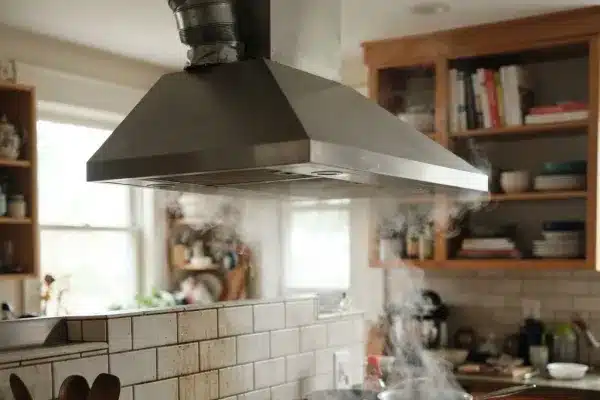
Building inspectors look for three things: minimum clearance to combustibles, proper duct termination, and makeup air compliance. Miss any of these and you will fail.
Mistake 1: Ignoring the cooktop type. Mounting an electric hood height over a gas stove is a code violation. The gas minimum is 24 inches, no exceptions. We have seen remodelers use the same template for both and fail inspection.
Mistake 2: Not checking the hood manual. Some hoods have a taller minimum than the IRC standard. If the manual says 27 inches, you must follow that, not the 24 inch generic rule. Manufacturer specs override the general code.
Mistake 3: Forgetting makeup air. If your hood exceeds 600 CFM and you live in a state that requires makeup air, you need a separate intake vent. Without it, the fan can create negative pressure that pulls combustion gases back into the home.
Mistake 4: Poor duct routing. Long, winding duct runs with multiple elbows kill airflow. The hood may meet CFM rating at the factory but deliver half that at the kitchen. Keep ducts short, straight, and as large as the hood outlet.
Mistake 5: Mounting the hood too high for its power. A 400 CFM hood at 36 inches over a gas stove will not capture smoke. You have to match the height to the fan strength. Higher hoods need higher CFM.
Expert Tips: Makeup Air, Wider Hoods, and Tall Cooks
Let us address the three trickiest situations.
Makeup air. If you are installing a high CFM hood (600+ CFM), plan for makeup air from the start. A passive makeup air damper opens when the hood turns on, allowing outside air to enter. An active system uses a motorized damper and a small fan.
Both require ductwork to an exterior wall. Check local requirements because some jurisdictions require makeup air at 400 CFM. The best time to install makeup air is during rough-in, before drywall goes up.
Wider hoods solve height problems. If you need to mount your hood at the taller end of the range (say, 30 inches for a gas stove), choose a hood that is 6 to 12 inches wider than your cooktop. A 36 inch hood over a 30 inch cooktop captures rising smoke that would otherwise escape. This is especially important for island hoods.
The wider capture area compensates for the extra distance.
For tall cooks. If you are over 6 feet tall, mount the hood at the upper end of the range: 30 inches for gas, 24 inches for electric. Then pick a hood with at least 800 CFM to maintain performance at that height. Some tall cooks prefer a hood that is deeper front to back (22 inches instead of 18) for better coverage.
This keeps smoke from escaping forward.
For shorter cooks. Mount the hood at the lower end. 24 inches for gas, 20 inches for electric. This puts the controls within easy reach and improves visibility into pots. Just make sure you can see the back burners without the hood blocking the view.
Safety and Code Compliance (IRC, NFPA, Local Amendments)
The International Residential Code (IRC) Section M1503 is the main reference for residential range hood installation. It says range hoods must discharge to the outdoors unless you use a recirculating model. It also sets the minimum clearance above cooking appliances at 24 inches for gas.
The National Fire Protection Association (NFPA 54) reinforces this for fuel gas appliances.
Some local amendments change these numbers. For example, California's Title 24 requires makeup air for hoods over 400 CFM. New York City has its own building code that sometimes requires 30 inches for gas.
Always call your local building department before installing. They can tell you the specific requirements for your address.
Fire safety warnings. Grease buildup inside the hood and ductwork is a leading cause of kitchen fires. Clean the grease filters monthly. Use a commercial degreaser or hot water and dish soap.
For ductwork, consider having a professional clean it every few years if you cook frequently. The NFPA also recommends keeping a fire extinguisher within easy reach of the stove.
Electrical safety. Most range hoods must be hardwired or plugged into a dedicated outlet. Follow the manufacturer's wiring diagram. If you are not comfortable with electrical work, hire a licensed electrician.
Improper wiring can void the warranty and create a shock hazard.
Real Scenarios: Short Cook, Tall Cook, Island Hood, Tight Cabinets
Scenario 1: Short cook with a gas stove. A 5'2" homeowner wanted the hood at 24 inches because she could easily reach the controls. The installer set it at 27 inches to match the cabinet line. She had to stand on tiptoes to change the fan speed.
Her solution was a hood with a remote control. The lesson: prioritize user height over cabinet alignment. You can always add a trim panel above the hood.
Scenario 2: Tall cook with an induction cooktop. A 6'4" chef chose a 36 inch induction range. He mounted a 36 inch wide hood at 24 inches. He bumped his head twice in the first week.
He moved the hood up to 28 inches and upgraded to a 1000 CFM unit. The extra power kept the kitchen clear. The hood now sits at 28 inches and works perfectly.
Scenario 3: Island hood over gas. An island cooktop needed a ceiling-mounted hood. The space was open concept. The homeowner wanted the hood at 36 inches for visual openness.
They chose a 48 inch wide hood with 1200 CFM. The wide capture area and high power handled the 36 inch height. No smoke escaped.
The cost was higher, but the tradeoff worked.
Scenario 4: Tight cabinet clearance. A standard 30 inch under-cabinet hood hit the cabinet above when mounted at 24 inches. The homeowner had a 12 inch tall cabinet above the stove. The solution was a low-profile hood designed for tight spaces.
These hoods are only 6 to 8 inches tall and sit flush under the cabinet. They allow the 24 inch clearance while fitting under shallow cabinetry.
Final Decision Guide: Choose Your Height
Here is the simplest way to decide.
| Your situation | Recommended height |
|---|---|
| Gas stove, average height cook | 26 inches |
| Gas stove, tall cook (6'+) | 30 inches |
| Gas stove, short cook (under 5'4") | 24 inches |
| Electric or induction, average height | 22 inches |
| Electric or induction, tall | 24 inches |
| Electric or induction, short | 20 inches |
| Island hood, any stove type | 30 inches |
| High CFM hood (900+) over gas | 30 inches |
| Low CFM hood (under 600) over gas | 24 inches |
Measure from the cooking surface. Check your hood manual. Verify local codes.
That is the complete process.
If you are still unsure, err on the lower end for better smoke capture. You can always choose top-rated brewers with higher CFM if you need to move it up later. A hood that is too high cannot be fixed without moving the ductwork.
Get the height right and your kitchen will stay clean, your smoke alarm will stay quiet, and your hood will last for years.
Frequently Asked Questions
Can I mount my hood lower than 24 inches over a gas stove?
No. The IRC and NFPA both set 24 inches as the minimum for gas cooktops. Going lower creates a fire hazard from heat and grease buildup near the flame.
It can also damage the hood motor.
Does a microwave with a vent count as a range hood?
Yes, but with limits. Over-the-range microwaves typically mount at 13 to 16 inches above the cooktop. That works for electric and induction.
For gas stoves, many manufacturers require 66 inches from the floor to the top of the microwave, which usually clears the 24 inch minimum.
What if my hood manual says a different height than the code?
Follow the hood manual. Manufacturer specifications are considered part of the approved installation. If the manual says 27 inches minimum, then 24 inches is not acceptable even if the code allows it.
How do I know if my hood is too high?
Light a candle on the back burner. Turn the hood on low. If the flame flickers or leans toward the hood, it is working.
If the flame stays straight, the smoke capture zone is too far away. You need to lower the hood or increase CFM.
Do I need makeup air for a 400 CFM hood?
It depends on your local code. Most areas require makeup air at 600 CFM or higher. Some jurisdictions like California require it at 400 CFM.
Check with your building department before buying the hood.
Can I use a ductless hood instead of venting outside?
Yes. Ductless hoods use charcoal filters to recirculate air. They still need the same clearance heights.
The tradeoff is that they remove grease but do not remove heat or moisture as effectively as ducted models.
