
Corner cabinet organizer common mistakes can turn a potential storage win into a daily frustration. These awkward spaces waste more room than they save if you pick the wrong system or install it poorly. Standard base corner cabinets run 36 to 42 inches wide but often have blind spots that swallow items whole.
Manufacturer specs confirm that most failures stem from ignoring depth, door swing, or weight limits. Let’s break down the biggest pitfalls and how to avoid them.
corner cabinet organizer common mistakes
They ignore the cabinet depth and buy a lazy Susan that’s too shallow.
They block the door swing with fixed shelves.
They overload pull-out trays past their 15 lb limit.
They waste vertical space with single-tier organizers.
They skip measuring for plumbing or hinges.
Why Corner Cabinets Are So Tricky to Organize
Corner cabinets look spacious until you try to use them. The 90-degree angle creates dead zones where items disappear behind doors or under deep shelves. Blind corners are the worst offenders, with up to 50% of the space effectively unusable without the right organizer.
The shape also forces compromises. You either sacrifice easy access or storage capacity, which is why so many people end up with a jumbled mess. Even a well-designed kitchen can fall short here without intentional planning.
The 7 Most Common Corner Cabinet Organizer Mistakes (And How to Fix Them)
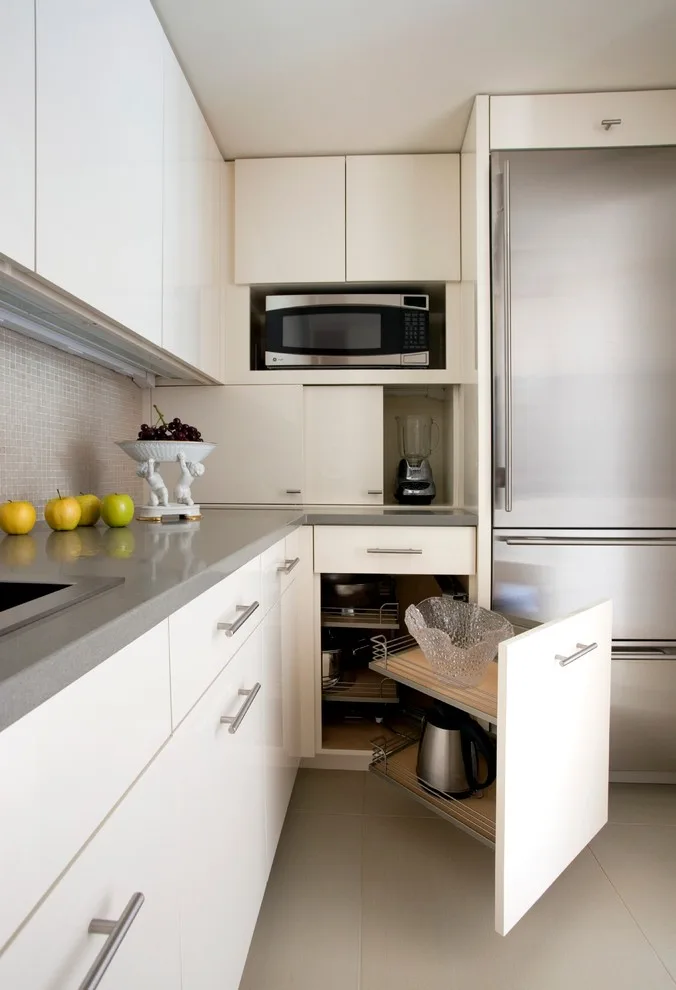
Image source: Web (Bing) / lilyanncabinets.com (Web image (fair-use with source credit))
Not measuring depth first is the top error. A lazy Susan that’s too shallow leaves the back half of the cabinet useless. Always measure the full depth from the door to the back wall before buying.
Choosing fixed shelves in deep corners guarantees frustration. You’ll end up digging for items or pulling everything out just to reach the back. Pull-out shelves or rotating trays solve this by bringing items to you.
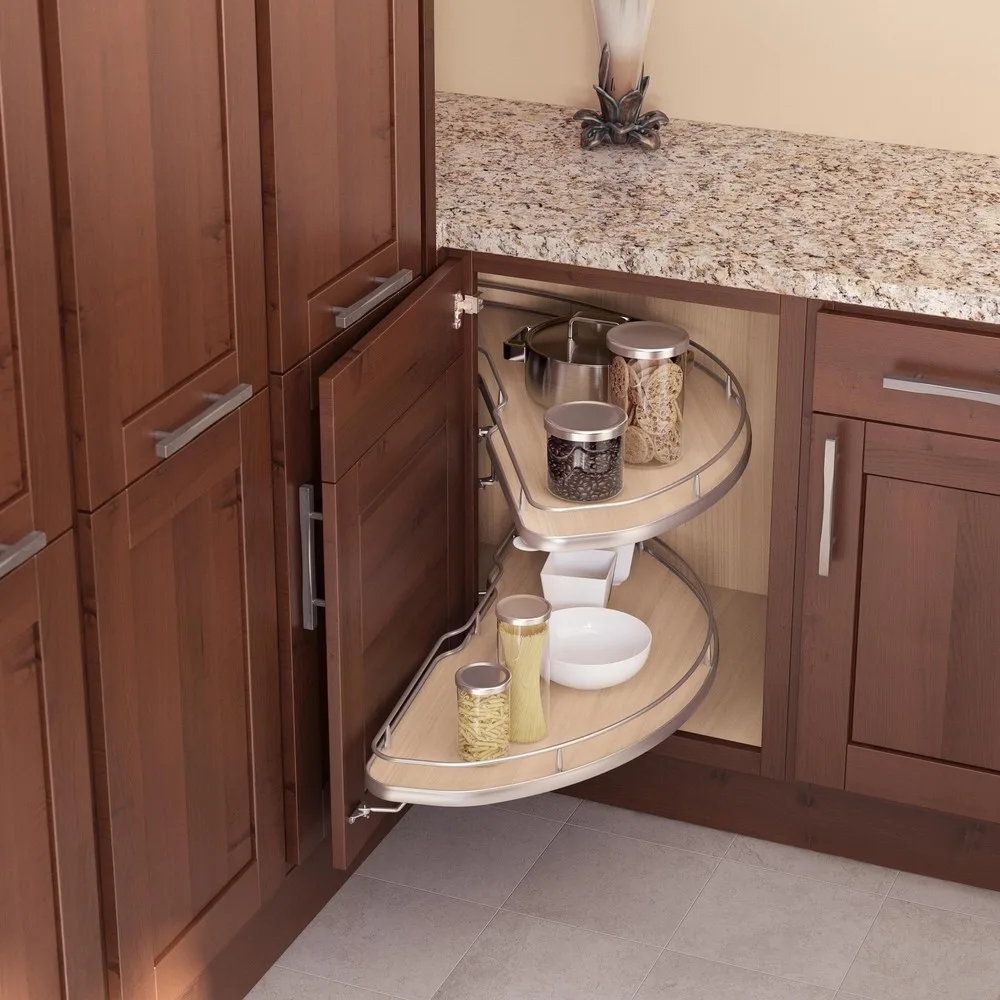
Image source: Bing (Web (fair-use with source credit))
Ignoring door swing is another classic mistake. If your organizer sticks out too far, the door won’t close properly. Check the hinge side and leave at least 1-2 inches of clearance for the door to swing freely.
Overloading is a silent killer of organizers. Wire shelves typically hold 10-15 lbs per tier, while heavy-duty pull-outs handle 25-50 lbs. Exceeding these limits causes sagging or jamming, which shortens the lifespan of your setup.
Wasting vertical space is a missed opportunity. Many people use single-tier organizers in tall cabinets, leaving 12-18 inches of unused height. Stackable or adjustable shelves double or triple your storage without adding footprint.
Forgetting about obstructions like plumbing or electrical outlets can derail your plans. Always check for pipes, wires, or hinges before installing. If you find obstructions, opt for modular systems that can be configured around them.
Using the wrong material for the job leads to early failure. Flimsy plastic trays can’t handle heavy cans or pots, while wood may warp in damp environments. Match the material to your storage needs: metal for durability, wood for aesthetics, and plastic for lightweight, temporary solutions.
How to Measure Your Corner Cabinet the Right Way
Start with the depth. Measure from the inside of the door to the back wall. Standard base corner cabinets are 24-28 inches deep, but always verify yours.
This determines whether you need a shallow or deep organizer.
Next, measure the width. Corner cabinets are typically 36-42 inches wide externally, but the internal usable width is smaller. Measure the opening where the organizer will sit, accounting for door hinges or frame obstructions.
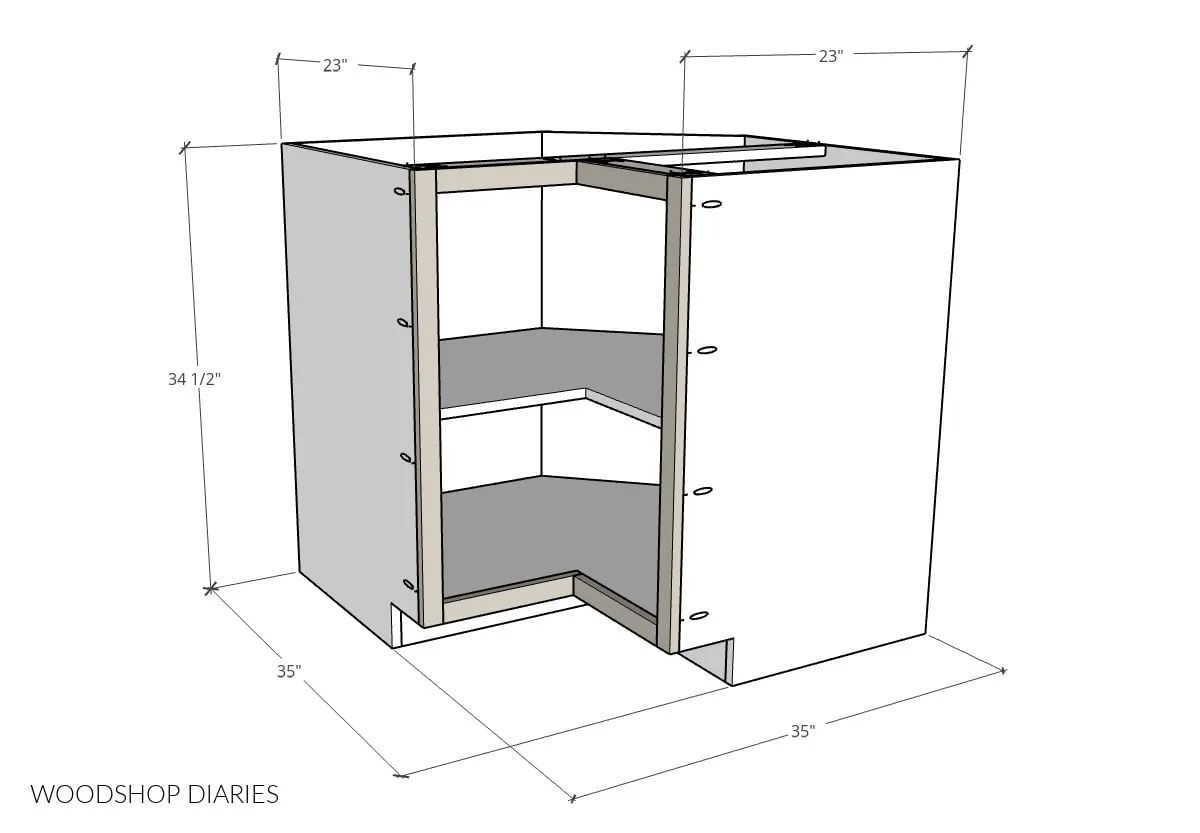
Image source: Web (Bing) / infoupdate.org (Web image (fair-use with source credit))
Height matters, especially for stackable solutions. Measure from the bottom of the cabinet to the top shelf or ceiling. If you’re using tiered organizers, ensure each level has enough clearance for your tallest items.
Check for obstructions. Note the location of any pipes, electrical outlets, or structural supports. These can limit where you place shelves or pull-out trays.
If obstructions are present, consider adjustable or modular systems that can be configured around them.
Finally, test the door swing. Open the cabinet door fully and measure how much space it occupies. Your organizer must not interfere with this range.
Leave at least 1-2 inches of clearance to ensure smooth operation.
Lazy Susan vs. Pull-Out Shelves: Which Solves Your Problem?
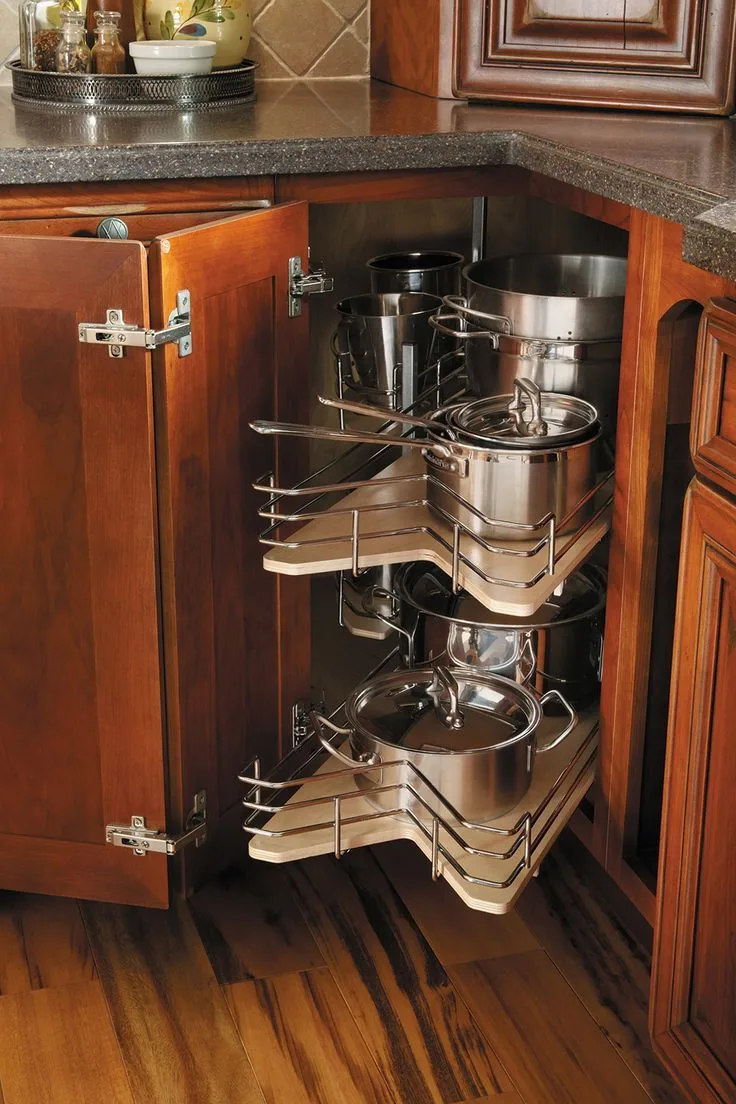
Image source: Web (Bing) / pinterest.com (Web image (fair-use with source credit))
Lazy Susans work best for wide, shallow corners. They provide 360-degree access, making them ideal for upper cabinets or pantries where you need to reach items quickly. However, they struggle in deep corners where the back half remains hard to access.
Pull-out shelves excel in deep, lower cabinets. They bring items to the front, eliminating the need to reach or bend. This makes them perfect for heavy items like pots, pans, or canned goods.
The trade-off is that they require more clearance for the sliding mechanism.
For blind corners, a half-moon lazy Susan or a pull-out tray with a rotating section offers the best of both worlds. These hybrid solutions maximize access while fitting the unique shape of blind corner cabinets.
Consider your storage needs. If you store lightweight, frequently used items, a lazy Susan may suffice. For heavier or bulkier items, pull-out shelves are the better choice.
Step-by-Step: Installing Organizers Without Regrets
Start by emptying the cabinet completely. This gives you a clear view of the space and any hidden obstructions like pipes or wiring. It also lets you clean the interior before installation.
Mark your measurements inside the cabinet. Use painter’s tape to outline where shelves or tracks will go. Double-check that your organizer fits within these lines before drilling or adhering anything.
For screw-in organizers, pre-drill pilot holes to prevent splitting wood or stripping metal. Use a level to ensure shelves or tracks are straight. Even a slight tilt can cause pull-out trays to jam or lazy Susans to spin unevenly.
Adhesive organizers need a clean, dry surface. Wipe down the cabinet interior with rubbing alcohol to remove grease or dust. Press the organizer firmly in place and avoid loading it for at least 24 hours to let the adhesive cure fully.
Test the mechanism before finalizing. For pull-out shelves, slide them in and out a few times to ensure smooth movement. For lazy Susans, spin them to confirm they don’t rub against the cabinet walls.
Pro Tips for Long-Term Corner Cabinet Success
Group items by frequency of use. Place everyday essentials like spices or cooking oils on the front or top tiers. Reserve the back or lower levels for rarely used items like specialty bakeware or seasonal dishes.
Use clear bins or labeled containers. This keeps small items from getting lost in deep corners. It also makes it easier to see what you have at a glance, reducing the need to pull everything out.
Reassess your layout every 6 to 12 months. As your storage needs change, so should your organizer setup. What worked for your baking phase might not suit your new meal-prep routine.
Clean tracks and rails periodically. Dust and debris can build up and cause pull-out shelves to stick. A quick wipe with a damp cloth keeps them gliding smoothly.
Consider modular systems for flexibility. These let you adjust shelf heights or add components as your needs evolve. They’re especially useful in kitchens where storage demands shift often.
Frequently Asked Questions
How do I know if my cabinet is a blind corner?
Blind corner cabinets have one side hidden behind another cabinet or wall. You can only access them from one side. Measure the opening to confirm if it’s a blind corner, which typically has a narrower access point.
What’s the maximum weight for a lazy Susan?
Most standard lazy Susans hold 10-15 lbs per tier. Heavy-duty models can support up to 25 lbs. Always check the manufacturer specs for your specific organizer to avoid overloading.
Can I install a pull-out shelf in an existing cabinet?
Yes, but you’ll need to measure carefully. Ensure the cabinet depth and width can accommodate the pull-out mechanism. Some systems require minimal modifications, like adding tracks or supports.
Are adhesive organizers reliable for heavy items?
Adhesive organizers work best for lightweight items under 5-10 lbs. For heavier loads, screw-in or track-based systems are more secure. Always follow the weight limits provided by the manufacturer.
How often should I clean my corner cabinet organizers?
Clean tracks and shelves every 3-6 months to prevent dust buildup. Wipe down surfaces with a damp cloth and mild cleaner. Regular maintenance keeps everything sliding or spinning smoothly.
