
Corner cabinet organizer common problems often stem from poor design or incorrect installation. These issues can turn a seemingly simple storage solution into a daily frustration. Standard base cabinets measure 24", 36" deep, yet many organizers fail to maximize this space efficiently.
Manufacturer specs confirm that most problems fall into a few predictable categories. Fixing them usually starts with identifying whether the issue is structural, functional, or related to fit.
corner cabinet organizer common problems
They wobble or spin unevenly. Items slide off or get stuck. Deep corners remain hard to reach.
Shelves collapse under weight. Adhesive or screw mounts fail over time.
The 5 Most Common Corner Cabinet Organizer Problems
Corner cabinets are notorious for wasted space. Even the best organizers can underperform if they don’t match the cabinet’s dimensions or the user’s needs.
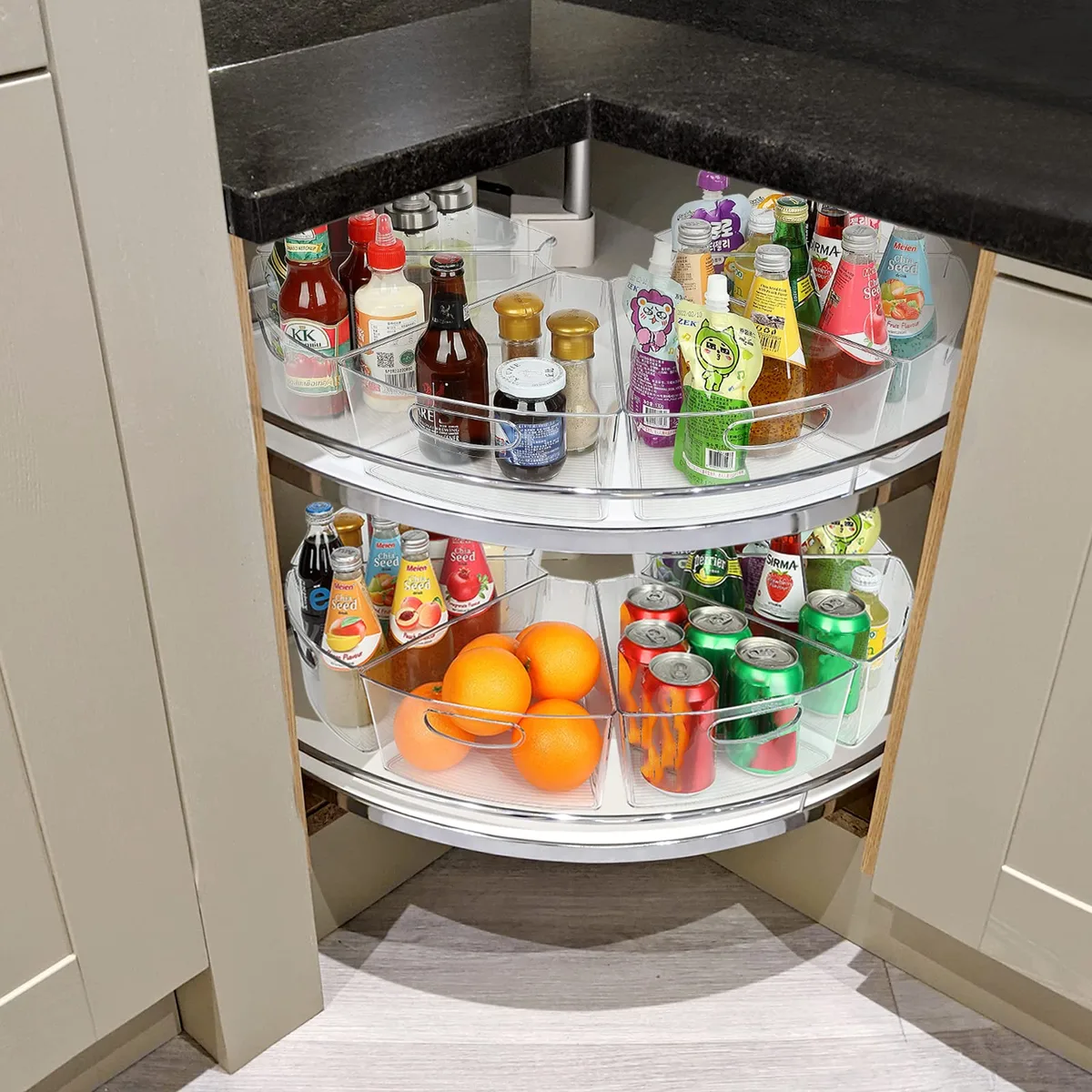
Image source: Web (Bing) / fity.club (Web image (fair-use with source credit))
Accessibility issues top the list. A lazy Susan might spin freely, but if it’s too shallow for a 24" deep cabinet, the back half remains out of reach. Pull-out shelves solve this for some, but only if the slides extend fully.
Full-extension slides require 1, 2" of clearance beyond the cabinet depth.
Wobbling or instability is another frequent frustration. A lazy Susan with loose bearings or an uneven base will tilt, sending items tumbling. This often happens when the turntable isn’t centered or the cabinet floor isn’t level.
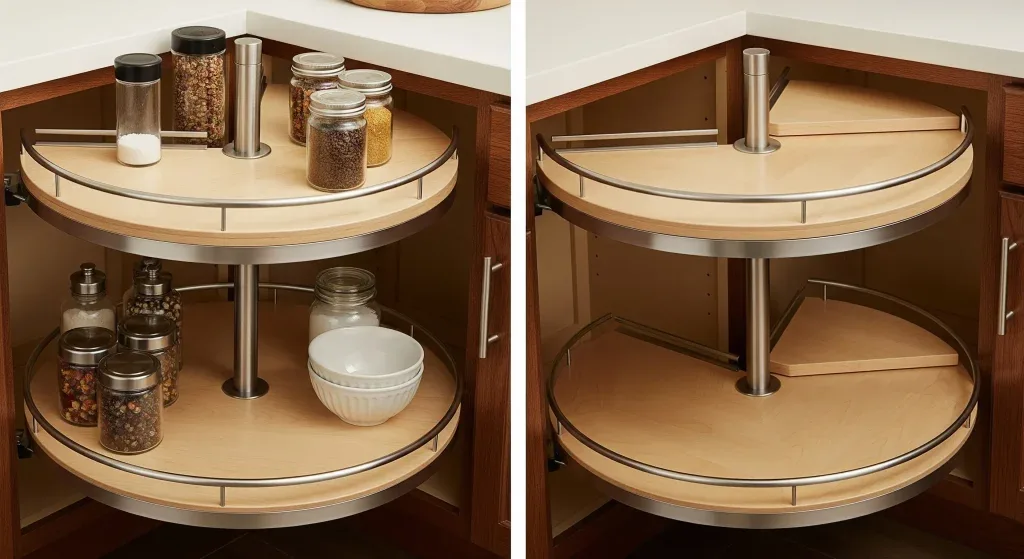
Image source: Web (Bing) / storage.googleapis.com (Web image (fair-use with source credit))
Durability failures show up as cracked plastic trays, warped wood, or rusted metal. Budget organizers often use thin materials that can’t handle the weight of cast-iron pots or stacked cans. High-quality wood or metal organizers typically support 30, 50 lbs, while plastic maxes out around 20 lbs.
Installation struggles range from misaligned screws to adhesive that peels off in humid environments. Under-sink cabinets add another layer of complexity, as plumbing can block standard mounting points. The National Kitchen & Bath Association recommends measuring twice and testing mounts with a light load before fully loading the organizer.
Poor fit is the silent killer of functionality. A 36" diagonal corner cabinet needs a different solution than a 24" one. Many users assume a one-size-fits-all lazy Susan will work, only to find it leaves gaps or doesn’t clear the cabinet frame.
How to Diagnose Your Specific Issue in 3 Steps
Start by measuring your cabinet’s usable depth, width, and height. Standard base cabinets are 24", 36" deep, but the door and hinges can reduce usable space by 2, 4".
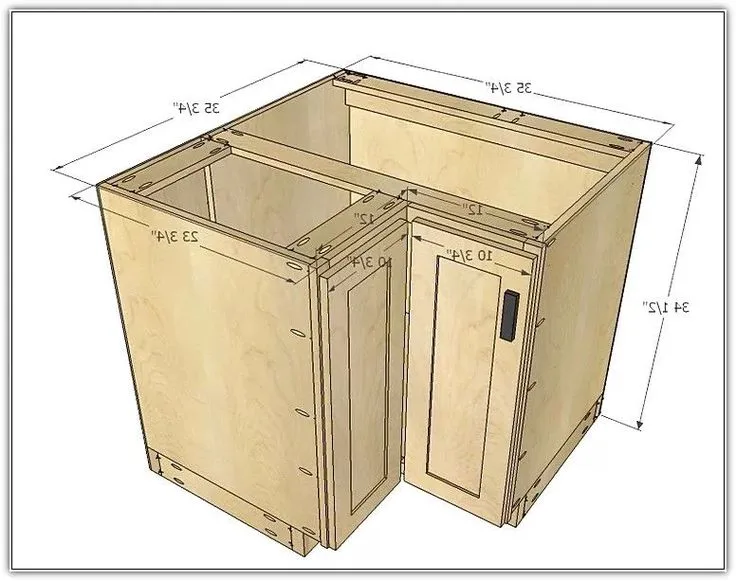
Image source: Bing (Web (fair-use with source credit))
Next, test the organizer’s movement. If it’s a lazy Susan, spin it empty to check for wobbling or resistance. For pull-out shelves, ensure the slides extend fully without binding.
Finally, load the organizer with your typical items and observe. If heavy pots cause sagging or tipping, the problem is load capacity. If lighter items slide around or fall off, the issue may be a lack of non-slip surfaces or dividers.
Problem-Solving Decision Tree: Which Fix Matches Your Setup?
If your organizer wobbles or spins unevenly, check the base for leveling. A lazy Susan with loose bearings may need tightening or replacement. For pull-out shelves, ensure the slides are securely mounted and aligned.
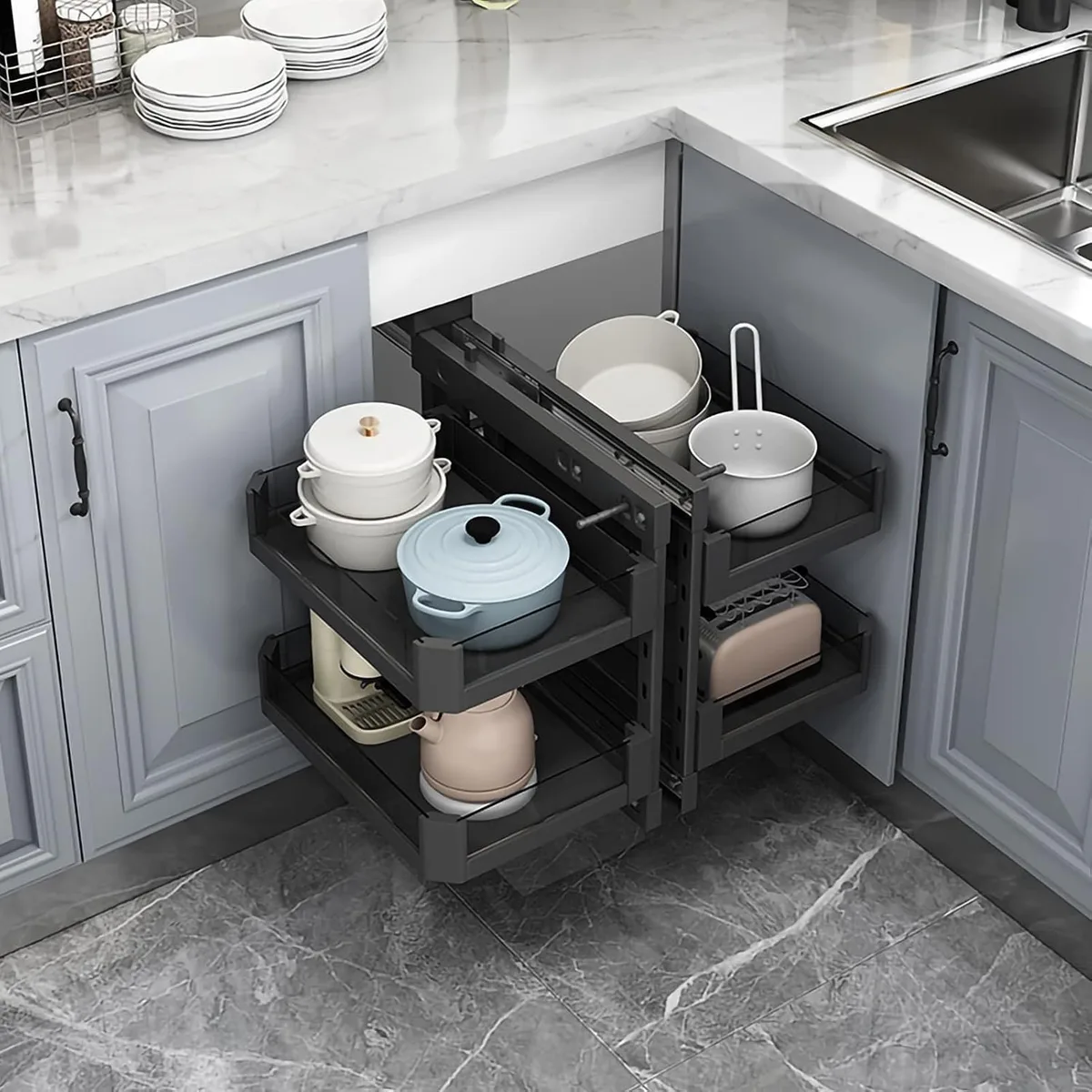
Image source: Web (Bing) / amazon.ca (Web image (fair-use with source credit))
If items slide off or get stuck, the organizer may be the wrong size or shape. A full-circle lazy Susan in a blind corner cabinet often leaves the back half inaccessible. Switching to a D-shaped or half-moon turntable can improve reach.
If shelves collapse under weight, upgrade to a heavier-duty material. Check the manufacturer’s load rating and distribute weight evenly. For under-sink storage, avoid overloading with heavy cleaning supplies.
If installation is the issue, double-check measurements and mounting points. Screw-mounted organizers need precise pilot holes to prevent stripping. Adhesive-backed options work best on clean, dry surfaces but may fail in humid environments.
If the fit is poor, measure again and compare to the organizer’s specs. For blind corners, a swing-out or pull-out organizer often works better than a fixed shelf.
Step-by-Step Fixes for Each Problem Type
For wobbling or instability, start by emptying the organizer. Check if the base is level and the bearings are tight. If the lazy Susan tilts, adjust the center post or add a non-slip mat underneath.
For pull-out shelves, tighten the slide screws and ensure the cabinet frame is square.
For accessibility issues, reassess the organizer type. If a lazy Susan leaves the back half unreachable, switch to a pull-out shelf or a tiered turntable. For deep cabinets, a full-extension slide is a must.
For durability failures, replace the organizer with a heavier-duty model. Look for wood or metal construction with a load rating that matches your needs. Avoid plastic for heavy items like pots and pans.
For installation struggles, remove the organizer and remeasure the cabinet. Mark mounting points carefully and use a level to ensure alignment. For adhesive mounts, clean the surface thoroughly and let the adhesive cure for the recommended time.
For poor fit, compare the organizer’s dimensions to your cabinet’s usable space. If there’s a gap, consider a custom-sized organizer or add filler strips to stabilize it. Always test the fit with the door closed to ensure clearance.
Pro Tips to Prevent Future Headaches
Start by choosing the right organizer for your cabinet type. Blind corner cabinets need specialized solutions like swing-out or pull-out designs. Lazy Susans work best in open corner spaces with full access.
Always measure twice before buying. Standard base cabinets are 24", 36" deep, but usable space can be less.
Check the weight rating before loading. Distribute heavy items evenly to prevent sagging or tipping.
Use non-slip mats or dividers to keep items in place. This prevents sliding on turntables or shifting on pull-out shelves.
For humid areas like under-sink cabinets, opt for waterproof materials. Stainless steel or coated metal resists rust, while plastic won’t warp.
Frequently Asked Questions
Why does my lazy Susan keep spinning unevenly?
The base may not be level or the bearings could be loose. Check the center post and ensure it’s securely attached. If the cabinet floor is uneven, add shims to stabilize the organizer.
How do I stop items from sliding off my turntable?
Add non-slip mats or use organizers with raised edges. Distribute weight evenly and avoid overloading one side.
What’s the best organizer for a deep blind corner cabinet?
A pull-out shelf or swing-out design works best for deep blind corners. These maximize reach and eliminate dead space. Lazy Susans can work if they’re D-shaped or half-moon to fit the angle.
Can I install a corner organizer in a rented apartment?
Yes, but choose non-permanent options. Adhesive-backed organizers or tension rods work without damaging cabinets. Always check with your landlord before making changes.
How much weight can a plastic corner organizer hold?
Most plastic organizers support 10, 20 lbs. For heavier items, upgrade to wood or metal. Check the manufacturer’s load rating before purchasing.
Why does my pull-out shelf stick?
The slides may be misaligned or need lubrication. Check for obstructions and ensure the cabinet frame is square. Silicone spray can help if the mechanism is dry.
