
Are you tired of cooking smells lingering in your kitchen long after dinner is over? If so, your range hood might not be doing its job effectively.
But don’t worry, there’s a solution! Understanding how to calculate the CFM (cubic feet per minute) for your range hood can make a big difference. This simple calculation ensures your kitchen stays fresh and free from unwanted odors. In this guide, you’ll discover how to determine the right CFM for your specific needs.
It’s not just about numbers it’s about creating a comfortable cooking environment that you and your family will love. You’ll learn how to match your range hood’s power to your cooking habits, keeping your kitchen air clean and enjoyable. Stick with us, and you’ll find that achieving the perfect kitchen atmosphere is easier than you think.
Importance Of Range Hood Ventilation
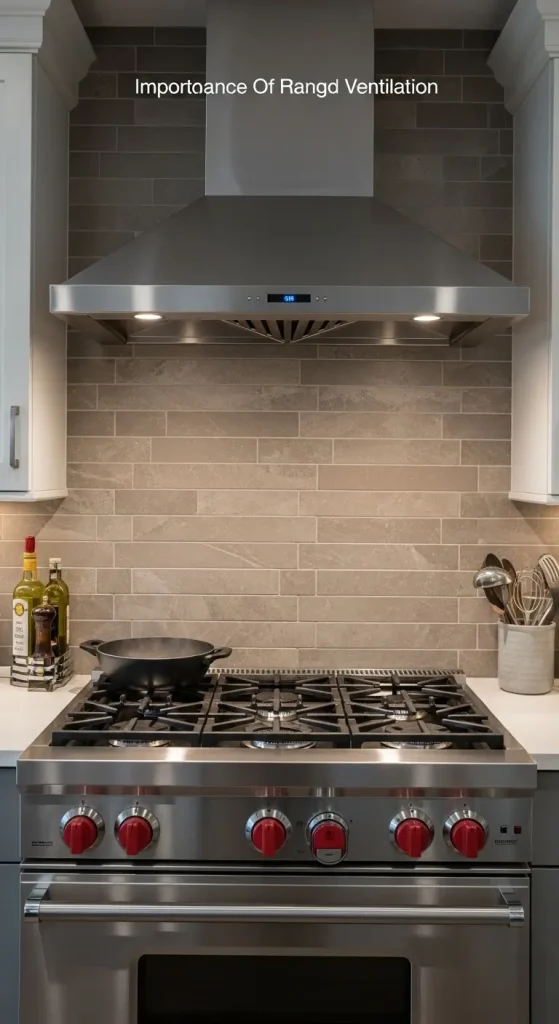
Have you ever cooked a meal only to find your kitchen lingering with unwanted odors and smoke? A properly ventilated range hood can be your kitchen’s unsung hero. It not only clears the air but also improves your cooking environment.
Imagine this scenario: You’re preparing a spicy stir-fry, and your kitchen fills with steam and aroma. Without effective ventilation, these can quickly become overwhelming.
Good range hood ventilation is crucial for maintaining air quality. It expels heat, smoke, and airborne grease, keeping your space fresh and clean.
Think about the long-term effects of poor ventilation. Lingering smoke can discolor walls, and grease buildup can attract dirt. This is why calculating the right CFM (Cubic Feet per Minute) for your range hood is essential.
Understanding Cfm
CFM measures the volume of air your range hood can vent per minute. It’s like the heartbeat of your kitchen’s ventilation system.
To determine the right CFM, consider your cooking habits. Do you frequently fry or grill? Higher CFM can help tackle intense smoke and odors.
Remember, a kitchen’s size also impacts CFM needs. A larger space may require a more powerful hood to ensure effective ventilation.
Calculating Cfm
Calculating CFM isn’t rocket science. Start by considering the size of your stove. Larger stoves typically need more powerful hoods.
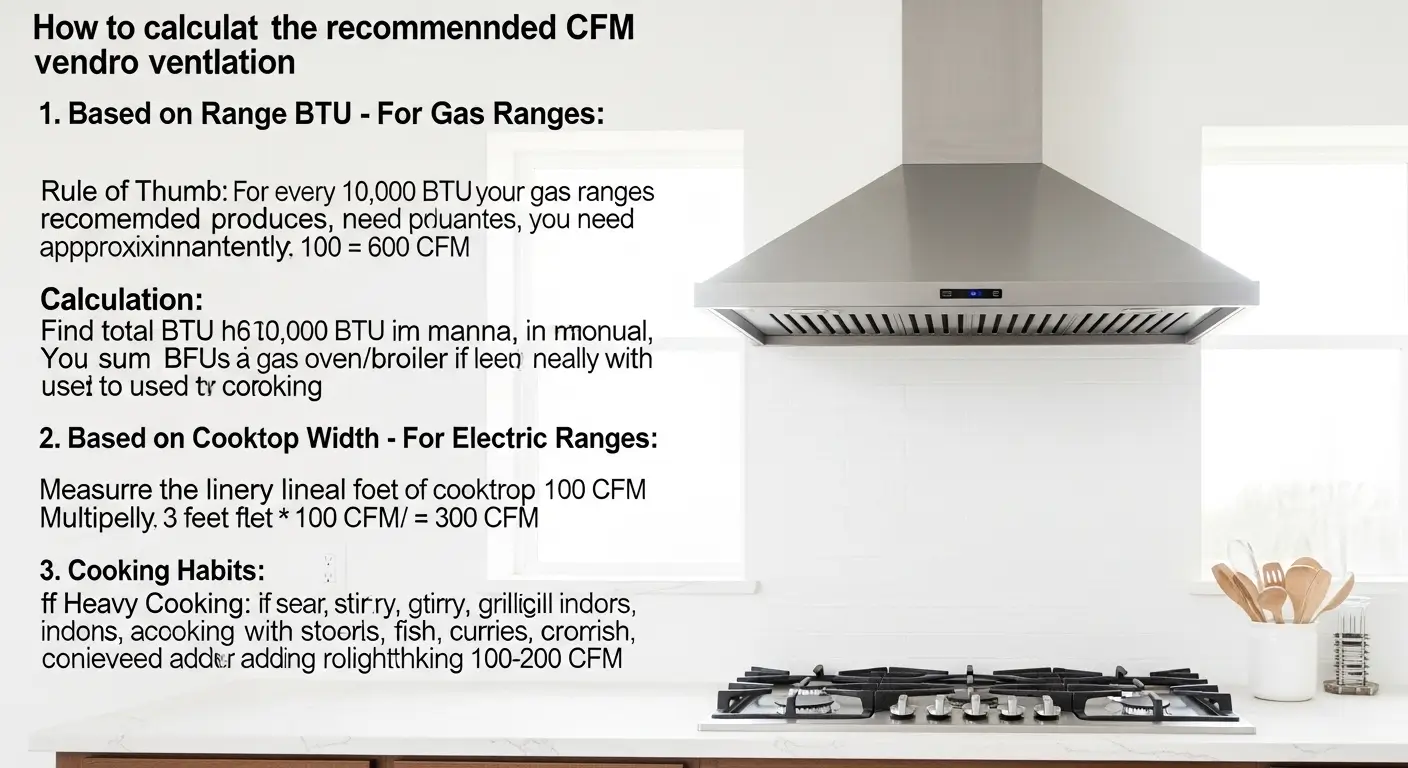
As a rule of thumb, for every linear foot of stove width, you need 100 CFM. So, a 30-inch stove would require at least 250 CFM.
Factor in your cooking style. If you use multiple burners or high-heat methods often, you might need to boost your CFM.
Choosing The Right Range Hood
Once you know your CFM needs, it’s time to choose the right range hood. Look for models that match your kitchen’s aesthetic but don’t compromise on functionality.
Consider noise levels. Some powerful models can be noisy, so check reviews before making a decision.
Think about the installation. Does your kitchen layout support the hood type you’ve chosen? Wall-mounted, island, and under-cabinet are common options.
Maintenance Tips
Even the best range hood needs regular maintenance. Clean filters monthly to ensure optimal performance.
Check for grease buildup and clean surfaces regularly to prevent blockages. This will extend the life of your hood and keep your kitchen fresh.
Don’t forget to inspect the fan and vent for any signs of wear or damage. Regular checks can prevent costly repairs down the line.
Are you prioritizing your kitchen’s air quality with the right range hood? Share your experiences or questions below!
Basics Of Cfm Measurement
Calculating CFM for a range hood involves measuring airflow capacity. Multiply kitchen area by height, then divide by four. This gives the minimum CFM needed for effective ventilation.
Calculating the CFM (Cubic Feet per Minute) for your range hood is essential for maintaining a clean and healthy kitchen environment. Understanding the basics of CFM measurement can simplify this process. The right CFM ensures your range hood efficiently removes smoke, steam, and odors, preventing them from lingering in your home.
What Is Cfm?
CFM stands for Cubic Feet per Minute, a measure of airflow. It tells you how much air your range hood can move in one minute. Imagine how crucial this is when you’re frying food or boiling water. Without adequate CFM, your kitchen can quickly become smoky and unpleasant.
Why Is Cfm Important?
CFM determines the effectiveness of your range hood. Think of it as the engine power of your kitchen’s ventilation system. Too low, and it won’t clear the air efficiently. Too high, and you might be wasting energy or causing unnecessary noise.
How To Measure Cfm For Your Kitchen?
Start by measuring the size of your kitchen. Calculate the total volume in cubic feet. Then, multiply this number by the recommended air changes per hour, typically between 8 and 12 for a kitchen. Divide this figure by 60 to convert it into CFM.
Range Hood Type And Cfm
The type of range hood also affects the CFM requirements. Wall-mounted hoods might need different CFM compared to island or under-cabinet hoods. Each type has its own set of challenges. Ensure you match the range hood type with the right CFM for optimal performance.
Personal Experience With Cfm
When I first installed a range hood, I underestimated the importance of CFM. After a few smoky dinners, I realized a higher CFM was necessary. Upgrading to a more powerful unit made all the difference. Have you ever found your range hood struggling to keep up? It might be time to evaluate your CFM needs.
One common mistake is not considering the stove’s BTU (British Thermal Unit) output. Higher BTU stoves require higher CFM. Another error is ignoring ductwork size. Make sure your ductwork can handle the airflow without restriction. Avoid these pitfalls to ensure your kitchen remains fresh and odor-free.
How Often Should You Reevaluate Cfm?
Consider reassessing your CFM needs whenever you make significant changes to your kitchen. New appliances, layout changes, or even lifestyle shifts can impact your ventilation needs. Regularly reevaluating ensures your range hood remains efficient and effective. What changes have you made in your kitchen recently? It might be time to check if your current CFM is still adequate.
Factors Affecting Cfm Requirements
Calculating the correct CFM for your range hood is vital. It ensures proper ventilation in your kitchen. Several factors affect CFM requirements. Understanding these factors helps in making the right choice.
Kitchen Size And Layout
The size of your kitchen plays a crucial role. Larger kitchens need more CFM for effective air circulation. Open layouts demand higher CFM to cover the extra space. Measure your kitchen dimensions. Consider ceiling height for accurate calculations.
Cooking Style And Frequency
Your cooking habits matter in determining CFM. Frequent cooking produces more smoke and odors. If you fry foods often, a higher CFM is needed. Boiling and steaming might need less ventilation. Think about your cooking style for better CFM estimation.
Range Hood Type And Efficiency
The type of range hood impacts CFM needs. Wall-mounted hoods usually require less CFM than island hoods. Efficiency of the hood also influences the CFM. High-efficiency models circulate air better. Choose a type that suits your kitchen design.
Calculating Cfm For Different Scenarios
Discovering the ideal CFM for a range hood ensures effective ventilation in your kitchen. Calculate it by multiplying the kitchen’s square footage by two. This simple method helps maintain fresh air and reduces cooking odors.
Calculating the CFM (cubic feet per minute) for range hoods varies. This depends on the kitchen setup and cooking style. It’s crucial to choose the right CFM. It ensures efficient air circulation and odor removal. Different scenarios require different calculations. Let’s explore how to calculate CFM for various kitchen setups.
Standard Kitchen Setup
Most homes have a standard kitchen setup. This includes regular cooking appliances. To calculate CFM, measure the size of your kitchen. Multiply the length, width, and height. Divide the total by four. This gives a general estimate of the required CFM. It ensures adequate ventilation during typical cooking activities.
High-performance Cooking
High-performance cooking involves grilling or frying. This generates more smoke and grease. Here, a higher CFM is necessary. Calculate CFM by considering the BTU output of your cooktop. For every 10,000 BTU, allocate 100 CFM. This method ensures quick removal of smoke and odors. It maintains a clean kitchen environment.
Outdoor Kitchens
Outdoor kitchens need special CFM calculations. They often face wind and open spaces. Consider the grill size and BTU output. Multiply the grill width by 15. This gives a rough estimate of the required CFM. It helps manage smoke effectively in open air settings. Proper ventilation is key in outdoor cooking areas.
Tools And Resources For Cfm Calculation
Calculating the cubic feet per minute (CFM) for a range hood is crucial. It ensures your kitchen is ventilated efficiently. Various tools and resources simplify this calculation. These tools help determine the right CFM for your kitchen’s needs.
Online Cfm Calculators
Online calculators make CFM calculations easy. Simply input your kitchen’s size and range type. They provide accurate CFM recommendations. These calculators are user-friendly. They eliminate the guesswork involved in manual calculations.
Manufacturer Guidelines
Manufacturers often provide CFM guidelines. Check the product manual or website. These guidelines consider the range hood’s design. They ensure you choose the best CFM for optimal performance. Always refer to these resources for accurate information.
Expert Consultations
Consulting an expert offers valuable insights. Professionals have the knowledge to assess your kitchen’s needs. They recommend the best CFM based on your cooking habits. Expert advice ensures you make informed decisions.
Measuring Tools
Measuring tools help gather necessary data. Use a tape measure to calculate kitchen dimensions. A calculator helps with quick calculations. These tools are essential for accurate CFM determination. They provide the foundation for choosing a range hood.
Energy Efficiency Guides
Energy efficiency guides offer useful tips. They help you select a CFM that conserves energy. These guides focus on balancing ventilation and energy use. Follow these tips to maintain a sustainable kitchen environment.
Common Mistakes To Avoid
When calculating the CFM (cubic feet per minute) for your range hood, mistakes can lead to inefficient ventilation and wasted energy. Understanding common errors helps you make informed decisions and ensures your kitchen remains fresh and safe. Here are some pitfalls to avoid when calculating the CFM for your range hood.
1. Using the Wrong Formula
Many people mistakenly apply generic formulas that don’t account for their specific cooking needs. A powerful range hood isn’t always necessary for smaller kitchens or less intense cooking styles. Assess your cooking habits, kitchen size, and stove type before settling on a formula.
2. Ignoring Stove Type
Different stoves require different ventilation. A gas stove generally needs more CFM than an electric one due to the combustion process. Consider the size and type of stove when deciding the CFM to avoid underestimating your ventilation needs.
3. Overlooking Kitchen Size
Kitchen size is crucial in determining the right CFM. A smaller kitchen may not require the same power as a larger space. Measure your kitchen’s square footage and use it as a factor in your calculations. This ensures your range hood efficiently circulates air.
4. Neglecting Cooking Frequency
How often you cook impacts the necessary CFM. Frequent cooking, especially with high heat or strong odors, demands a more powerful range hood. Consider your cooking habits when deciding on the CFM to ensure adequate ventilation.
5. Disregarding Ventilation Requirements
Local building codes and regulations may dictate specific ventilation requirements. Ignoring these can lead to compliance issues. Check with local authorities to ensure your range hood meets all necessary standards.
6. Overestimating CFM Needs
While it’s tempting to choose the most powerful option, an overly strong range hood can be noisy and unnecessary. Evaluate your actual needs and choose a range hood that balances power with practicality. An example is a friend who installed a high-CFM hood only to be annoyed by the constant noise.
7. Not Considering Installation Factors
Installation complexity can affect performance. Improper installation might lead to inadequate airflow. Ensure your range hood is installed correctly to maximize its efficiency. You don’t want to invest in a top-tier range hood only to lose its benefits due to installation errors.
Are you taking these factors into account when choosing your range hood? Reflect on how these common mistakes might be affecting your current setup and take steps to optimize your kitchen ventilation today.
Professional Insights
Understanding how to calculate CFM for a range hood can be tricky. Professional insights can simplify this complex task. Experts in the field often share valuable tips. These insights help homeowners make informed decisions. They ensure a kitchen remains fresh and odor-free.
The right range hood is crucial for kitchen ventilation. It keeps the air clean and healthy. By learning from professionals, you can choose the right hood with ease. Let’s explore some expert advice on calculating CFM.
Understanding Cfm Requirements
Professionals often stress the importance of kitchen size. Kitchen size determines the CFM needed for proper ventilation. A larger kitchen needs a higher CFM for effective air circulation. Measure your kitchen to get an accurate size.
Consideration Of Cooking Habits
Your cooking habits play a vital role. More frequent cooking means higher CFM requirements. Frying and grilling release more smoke and odors. Thus, they need stronger ventilation. A professional would suggest higher CFM in such cases.
Stove Type And Configuration
The type and number of burners matter. Gas stoves usually produce more heat and fumes. This requires a higher CFM than electric stoves. Professionals recommend considering stove configuration for accurate CFM calculation.
Importance Of Ductwork
Ductwork impacts the efficiency of a range hood. Longer or more complex ducts may reduce airflow. Professionals often suggest considering duct length in your CFM calculation. Short, straight ducts perform better.
Consulting With A Professional
Sometimes, expert help is necessary. Professionals can provide precise calculations and suggestions. They ensure your range hood operates efficiently. Consulting a professional saves time and prevents costly mistakes.
Maintenance For Optimal Performance
Maintaining your range hood is vital for optimal performance. Regular upkeep ensures efficiency. A clean range hood enhances air quality and safety. Dirty hoods can lead to poor ventilation and unpleasant odors. Proper maintenance extends the lifespan of your range hood. It also saves on energy costs.
Cleaning The Filters
Filters trap grease and particles. Cleaning them regularly is crucial. Remove the filters carefully. Use warm, soapy water to wash them. Rinse thoroughly and let them dry completely. This process should be done every month.
Checking The Fan Motor
The fan motor is the heart of your range hood. Ensure it runs smoothly. Listen for unusual noises. Strange sounds indicate problems. Dust and grease can affect its performance. Clean the motor area with a soft brush. This helps maintain efficiency.
Inspecting The Ventilation System
Proper ventilation is key. Check for blockages in the ductwork. Ensure the air flows freely. Blocked ducts hinder performance. Inspect the exterior vent cap. Ensure it is free from debris. Clean it regularly for optimal airflow.
Replacing Worn Parts
Parts can wear out over time. Inspect for any signs of wear. Replace damaged parts promptly. This includes knobs, lights, and switches. Timely replacement prevents further damage. It also ensures the hood works efficiently.
Professional Servicing
Consider professional servicing annually. Experts can spot issues early. They ensure all components are in good condition. Professional maintenance enhances performance and safety. It also prolongs the life of your range hood.
Future Trends In Range Hood Technology
Range hood technology is evolving rapidly. Manufacturers are introducing advanced features to enhance kitchen ventilation. These innovations aim to improve efficiency and user experience.
Smart Connectivity
Smart range hoods connect to Wi-Fi networks. Users can control them via smartphone apps. This allows remote operation and monitoring.
Energy Efficiency
New models focus on energy-saving designs. They use advanced motors and filters. This reduces electricity consumption, benefiting both the environment and your wallet.
Quiet Operation
Noise reduction is a priority in modern range hoods. Manufacturers are using quieter motors. This makes kitchen spaces more pleasant during cooking.
Improved Filtration Systems
Filtration technology is becoming more efficient. Enhanced filters capture more grease and odors. This keeps the air cleaner and fresher.
Integration With Kitchen Design
Range hoods are now part of kitchen aesthetics. Sleek designs and customizable options are available. This ensures harmony with other kitchen elements.
Advanced Sensing Technology
Some range hoods have built-in sensors. They detect air quality and adjust fan speed automatically. This optimizes performance without user intervention.
Frequently Asked Questions
Is 300 Cfm Or 400 Cfm Better?
Choose 400 CFM for more power and better ventilation in larger spaces. Opt for 300 CFM in smaller areas with less cooking activity. Consider your kitchen size and cooking habits to decide the best fit. Proper ventilation enhances air quality and cooking efficiency.
How Many Cfm For A Range Hood Is Best?
The ideal CFM for a range hood depends on kitchen size and cooking style. Typically, 300 to 600 CFM suits residential kitchens. For heavy cooking, larger kitchens, or gas stoves, consider 600+ CFM. Ensure proper ventilation for effective smoke and odor removal.
Always match CFM with duct size for optimal performance.
What’s The Formula For Calculating Cfm?
Calculate CFM using the formula: CFM = (Volume in cubic feet) / (Time in minutes). Measure the space’s volume first. Divide this volume by the desired ventilation time. This gives the airflow rate in cubic feet per minute (CFM). Adjust as needed based on specific requirements.
Is 900 Cfm Too Much For A Range Hood?
A 900 CFM range hood might be excessive for small kitchens but ideal for larger spaces or heavy cooking. Consider kitchen size and cooking habits. Higher CFM ensures better ventilation but can be noisier. Proper installation and ductwork are crucial for efficiency.
Always match hood power to your needs.
Conclusion
Calculating CFM for your range hood is essential for a smoke-free kitchen. Follow the simple steps to ensure the right airflow. Measure your kitchen space accurately. Choose a hood that matches your cooking needs. Remember, proper ventilation enhances your cooking experience.
A correctly sized range hood keeps air fresh. It also eliminates odors effectively. Always prioritize your kitchen’s safety and comfort. By understanding CFM, you make informed decisions. This knowledge helps maintain a clean, healthy home environment. Enjoy a pleasant and odor-free cooking space with the right range hood.
