
If your LG dishwasher is leaving grit on glasses, running longer than normal, or giving off a musty smell, the problem is almost certainly a clogged filter. The filter traps food scraps and grease, but when it fills up, water can't circulate properly. The fix takes about 15 minutes, requires no special tools, and costs nothing. You don't need to call a technician or buy a new machine. This guide walks you through exactly how to clean the filter in an LG dishwasher—from locating the component to reinstalling it correctly. Follow these steps monthly, and your dishwasher will deliver spotless results for years.
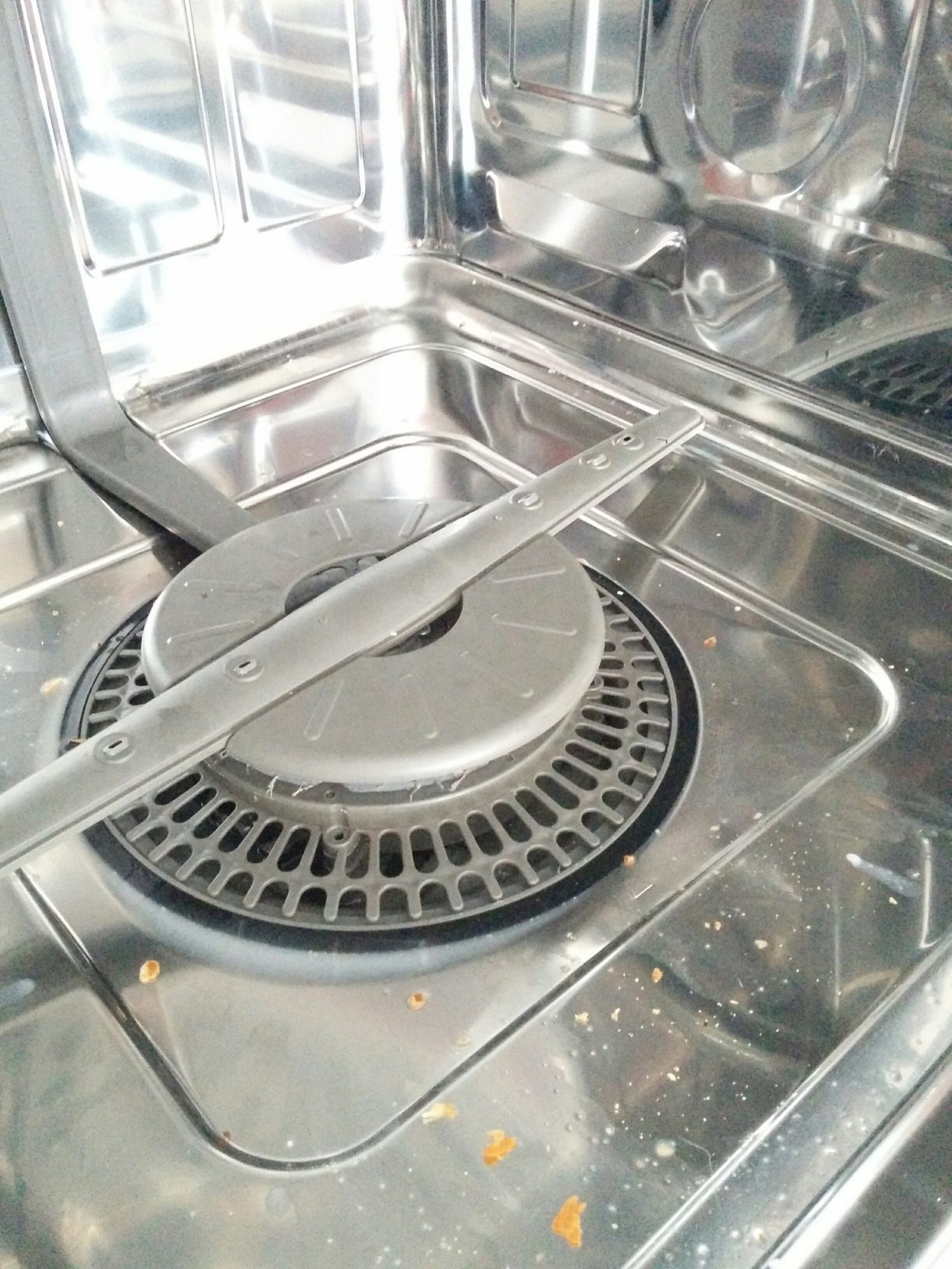
 The filter assembly at the bottom of your LG dishwasher before cleaning.
Understanding the LG Dishwasher Filter System
Most LG dishwashers manufactured since 2015 use a two-part filter system instead of a self-cleaning grinder. The coarse cylindrical filter catches larger food particles, while the flat fine mesh plate traps smaller debris. Together they prevent anything from reaching the wash pump. This design is efficient but requires manual cleaning—it is not self-cleaning.
As of 2026, every current LG dishwasher model (from the LDP series to the LDT series) includes this removable filter. If you have an older model with a built-in grinder, check your owner's manual; you may not have a cleanable filter.
How the Filter Becomes Clogged
Each wash cycle sends food scraps, grease, and detergent residue toward the drain. The filter intercepts these particles. Over time, oils harden and debris compacts into a sludge that blocks the mesh. A clogged filter forces the dishwasher to run longer, leaves dishes dirty, and can trigger error codes such as "OE" (drain issue) or "nE" (no error but poor performance). The official LG support page explains that regular filter cleaning is essential for proper operation.
Signs Your Filter Needs Cleaning
Look for these warning signs before you start the cleaning process:
- Dishes come out with visible food particles or a gritty film
- Glasses have a cloudy or spotted residue
- The dishwasher takes noticeably longer than usual
- Water pools at the bottom after a cycle finishes
- A musty, sour smell when you open the door
- The dishwasher displays an error code related to drainage
If you notice any of these, the filter is the first place to check. In many cases, cleaning it resolves the issue completely.
What You'll Need
Gather these items before you start. Having everything ready makes the job quick and frustration-free.
- Soft-bristle brush (an old toothbrush works perfectly)
- Mild dish soap or gentle liquid detergent
- Clean microfiber cloth or sponge
- Small bowl or container to hold loose debris
- Rubber gloves (protect hands from sharp food fragments and hot water residue)
- White vinegar (optional, for dissolving stubborn grease)
Do not use steel wool, abrasive scrub pads, or harsh chemical cleaners. These can scratch the plastic mesh, creating rough surfaces where bacteria grow and food clings more easily.
Finding the Filter in Your LG Dishwasher
Locating the filter takes less than a minute once you know what to look for.
Step 1: Remove the Lower Rack
Pull the lower dish rack straight out and set it aside. This gives you clear access to the bottom of the tub. You may see standing water—that is normal. If the water looks murky or has visible food chunks, your filter definitely needs cleaning.
Step 2: Identify the Filter Assembly
Look at the center of the dishwasher floor. You will see a cylindrical or slightly domed component, usually gray or black. This is the coarse filter. Surrounding it is a fine mesh screen that catches smaller particles. Together these two parts form the complete filter system.
Step 3: Understand the Layout
The filter sits directly above the wash pump intake. The lower spray arm rotates above the filter. In some models, a small plastic cap sits on top of the cylinder. If your dishwasher has been running poorly, you may notice food debris packed around this area.
Removing the Filter Safely
Once you've located the filter, removal is straightforward but requires care. The plastic components are durable but can crack if forced.
Unlatching the Mechanism
Grip the cylindrical filter with both hands. Turn it counterclockwise (left) about a quarter turn. You will feel resistance, then a slight release as it unlatches. Do not yank upward yet—most LG filters need to be twisted before they lift out.
Extracting Both Components
Lift the cylindrical filter straight up. It may have coarse prongs or a mesh basket. Below it, you will find the flat, disc-shaped fine mesh plate. Use your fingers to lift this plate out as well. Some models have a single assembled unit that separates into two parts once removed.
Place both components in your bowl or directly in the sink. Inspect the opening where the filter sat. You may see grit, stringy food, or small objects like broken glass or olive pits lodged around the drain intake. Use your fingers (gloved) to clear this area.
If you notice unusual odors coming from the filter area, this typically means organic matter has started decomposing. Cleaning the filter thoroughly solves this, but you may also want to check for musty odors from under the sink that could indicate a separate drainage issue.
The two-part filter system removed and separated for cleaning.
Cleaning the Filter Thoroughly
This is the step where most people cut corners—but spending three extra minutes here makes the difference between average results and a truly clean filter.
Rinse Under Warm Running Water
Hold the coarse filter under a stream of warm tap water. Rotate it as you rinse, allowing water to push debris out of the mesh holes. For the fine mesh plate, rinse both sides until the water runs clear. Use your fingertip or a soft brush to dislodge particles stuck in the mesh.
Scrub with a Soft Brush
Dip your toothbrush in warm, soapy water. Gently scrub the cylindrical filter's exterior and interior surfaces. Pay special attention to the small holes—grease tends to form a film that water alone cannot remove. For the flat mesh plate, brush in a circular motion to lift any embedded grit.
Soak Stubborn Grease (If Needed)
If you still see greasy residue after scrubbing, soak both parts in a mixture of warm water and white vinegar (one part vinegar to three parts water) for ten minutes. The vinegar breaks down fat and mineral deposits without damaging plastic. After soaking, rinse thoroughly under running water.
Inspect Before Reinstalling
Hold the filter components up to the light. You should see clean, unobstructed openings. If any mesh holes remain blocked, repeat the scrubbing step. A partially clogged filter performs almost as poorly as a totally blocked one.
For a deeper clean of your dishwasher's interior, consider deep-cleaning the interior of your dishwasher with baking soda and vinegar to remove any lingering odors and residue.
Reinstalling the Filter Correctly
Putting the filter back is simple, but doing it wrong can cause leaks, loud noises, or error codes.
Align the Fine Mesh Plate First
Place the flat fine mesh plate back into its recess at the bottom of the tub. Press down gently until it sits flush. It should not wobble or rock.
Insert and Lock the Cylindrical Filter
Lower the cylindrical filter into place over the fine mesh plate. Press down firmly. Turn it clockwise (right) until you hear a click or feel it lock. Give it a light tug—if it lifts, it is not locked. Rotate slightly more until secure.
Test the Fit
Spin the lower spray arm by hand. It should rotate freely without hitting the filter. If the arm catches or scrapes, the filter is misaligned. Remove and reposition.
A properly installed filter prevents food particles from recirculating and keeps your pump running efficiently. The same principles apply to other brands—you can find a similar cleaning procedure for a Kenmore model or filter maintenance on a Frigidaire unit if you have multiple appliances.
Post-Cleaning Maintenance Schedule
Cleaning the filter is not a one-time fix. Regular maintenance keeps your LG dishwasher performing at its best.
Monthly Cleaning Routine
Mark your calendar to clean the filter every 30 days. Households that run the dishwasher daily may need to do it every two to three weeks. Signs that cleaning is overdue include visible food on dishes, slow draining, or a musty smell when you open the door.
What You Can Do Between Cleanings
- Scrape plates before loading—do not rinse unless food is baked on
- Run the hot water tap at the sink before starting the dishwasher (this ensures the first fill is hot)
- Check the spray arm holes monthly for clogs—use a toothpick to clear them
- Wipe the door gasket with a damp cloth to prevent mold
If you ever need to work on the plumbing connections, know how to reach the water valve by shutting off the water supply before disconnecting any hoses.
Common Mistakes to Avoid
Even experienced DIYers make these errors. Avoid them to protect your dishwasher.
Using Harsh Chemicals
Bleach, oven cleaner, and industrial degreasers can warp or discolor the plastic filter. Stick to mild dish soap and vinegar.
Forgetting the Fine Mesh Plate
Some people clean only the visible cylindrical filter and leave the flat mesh plate untouched. Always remove and clean both components. The fine plate catches the smallest particles that cause recirculation issues.
Overtightening the Filter
The filter locks with a quarter turn. Do not force it past the click. Overtightening can crack the plastic housing, requiring a costly replacement part.
Running the Dishwasher Without the Filter
Never operate the dishwasher with the filter removed. Food particles will enter the pump and potentially damage it. Replacement pumps cost more than a new set of filters.
When to Call a Professional
While most filter issues are DIY-friendly, some problems require a technician:
- You cleaned the filter but the dishwasher still shows an error code
- Water pools at the bottom after every cycle
- The dishwasher leaks from the bottom during operation
- You notice burning smells or unusual grinding noises
These symptoms may indicate a failing pump motor, a clogged drain hose, or a faulty water inlet valve. Before calling a repair person, check your dishwasher's drain line connections to ensure no simple plumbing issue is causing the problem.
What to Do If Problems Persist After Cleaning
If your dishwasher still acts up after a thorough filter cleaning, try these steps:
- Check the drain hose – A kinked or clogged drain hose can block water flow. Remove the hose and inspect for blockages.
- Run a cleaning cycle – Use a dishwasher cleaner tablet or a cup of white vinegar in an empty cycle to remove grease buildup inside the machine.
- Inspect the spray arms – Food debris can clog the spray arm holes. Remove the arms and rinse them under running water.
- Reset the dishwasher – Unplug it for 5 minutes or flip the circuit breaker off and on to clear temporary error codes.
If none of these work, it's time to call a professional.
Frequently Asked Questions
How often should I clean my LG dishwasher filter?
Clean the filter every 30 days for best results. If you run the dishwasher more than once daily, clean it every two to three weeks. Heavy grease or frequent large meals also increase the cleaning frequency.
What happens if I never clean the filter?
Food particles accumulate and block water flow. Dishes come out dirty, cycles run longer, and the dishwasher may eventually display error codes or stop draining. Long-term neglect can damage the pump, leading to expensive repairs.
Can I put the filter in the dishwasher to clean it?
No. The filter is designed to be hand-washed. Dishwasher heat and water pressure can warp the plastic mesh, reducing its effectiveness. Always clean by hand.
My LG dishwasher has no visible filter—does it still need cleaning?
Some older LG models have a self-cleaning grinder rather than a removable filter. Check your owner's manual. If you have a newer model (2015 or later), it almost certainly has a manual-clean filter. The official LG support page confirms this design across most current lines.
What if the filter is cracked or damaged?
Replace it immediately. A cracked filter allows food particles to bypass the cleaning system. LG sells genuine replacement filters online, or you can order through an authorized parts dealer. Using a damaged filter voids your warranty and risks pump damage.
Conclusion
Cleaning the filter in your LG dishwasher is a simple 15-minute task that solves the majority of performance problems. By removing trapped food particles and grease, you restore water flow, eliminate odors, and prevent costly breakdowns. The process—locate, remove, clean with a soft brush and mild soap, rinse, and reinstall—requires no special skills or tools.
Make filter cleaning a monthly habit. Your dishwasher will run quieter, clean more effectively, and last years longer. Few appliance maintenance tasks deliver this much benefit for so little effort. Set a recurring reminder on your phone, and you will never have to deal with a clogged, smelly dishwasher again. Start today—your next load will come out sparkling clean.
