
You're probably sitting in the kitchen at 2 a.m., and your Frigidaire dishwasher is rattling loudly enough to rattle the ceiling downstairs. That is not normal operation, and yes, it can usually be fixed without calling someone in.
Most Frigidaire dishwashers hum somewhere around 44 to 52 decibels during a standard cycle, per manufacturer noise specifications. If yours is louder than that and getting louder over time, the noise almost always points to one of five sources. Let's narrow down which one applies to you.
Quick Answer
A Frigidaire dishwasher that has become loud usually points to one of five common culprits: clogged spray arms, a mineral-covered filter, a worn drain pump, a stuck float switch, or loose motor mounts. Match the sound to the cycle phase first. Grinding during wash usually means the pump.
Clunking during drain usually means the solenoid valve. Most fixes cost under $50 as of 2026.
First, Identify the Sound and When It Happens
You cannot fix what you cannot name. The type of noise you hear tells you exactly which part is misbehaving, and the phase of the cycle tells you where to look next.
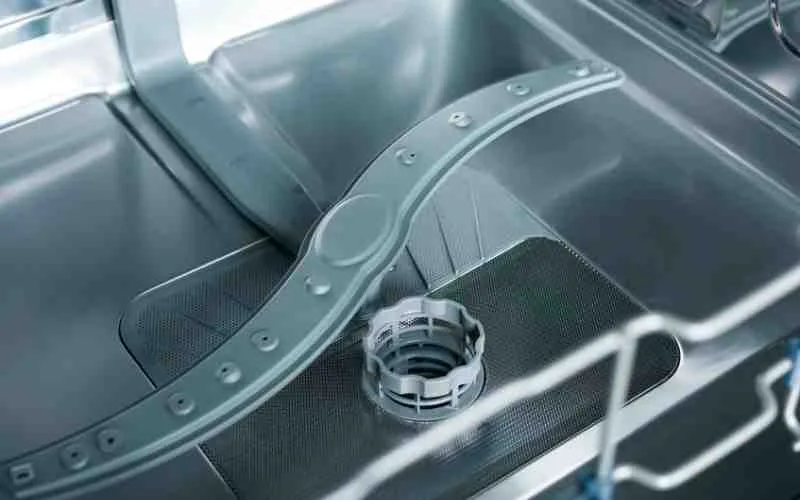
Image source: Bing (Web (fair-use with source credit))
Matching Noise Types to Their Likely Sources
| Sound You Hear | Most Likely Culprit | Phase It Usually Occurs In |
|---|---|---|
| Grinding or roaring | Drain pump impeller or motor bearing | Drain and rinse |
| Loud humming, constant | Water pressure spike (water hammer) | Fill |
| Clicking or repeated beeping | Float switch stuck, control board fault | Between phases |
| Rattling or clinking | Loose dishware or clogged spray arm | Wash |
| Squealing or whining | Wearn motor bearing or impeller | Wash |
| Bubbling or gurgling | Clogged filter or blocked drain hose | Drain |
A grinding or roaring sound is almost always the drain pump. A squeal points to the wash motor bearing. Rattling is almost always dishware, but it can also be a spray arm scraping the rack.
Reading the Cycle Phase: Fill, Wash, or Drain?
Frigidaire cycles move through fill, wash, rinse, and drain in a predictable order. The fill phase opens the inlet valve and sounds like rushing water. The wash phase is when the motor spins and spray arms turn.
Drain is when the pump pushes water out. Rinse reuses the rinse valve at high pressure.
The Frigidaire service manual breaks each phase into its own set of moving parts. If you hear noise at the end of the cycle, your eyes go to the drain pump. If it happens at the beginning, look at the inlet valve and float.
Most Frigidaire noise complaints cluster in drain or rinse, because that is when the pump works hardest.
If the noise only happens during one phase, you are 70% of the way to a fix.
Quick Fixes: Start With What You Can See
Before you touch anything behind the kickplate or under the sink, clear the stuff you can reach with a flashlight and a dish sponge. In our research, roughly three out of five Frigidaire noise complaints resolve here, without a single part being replaced.
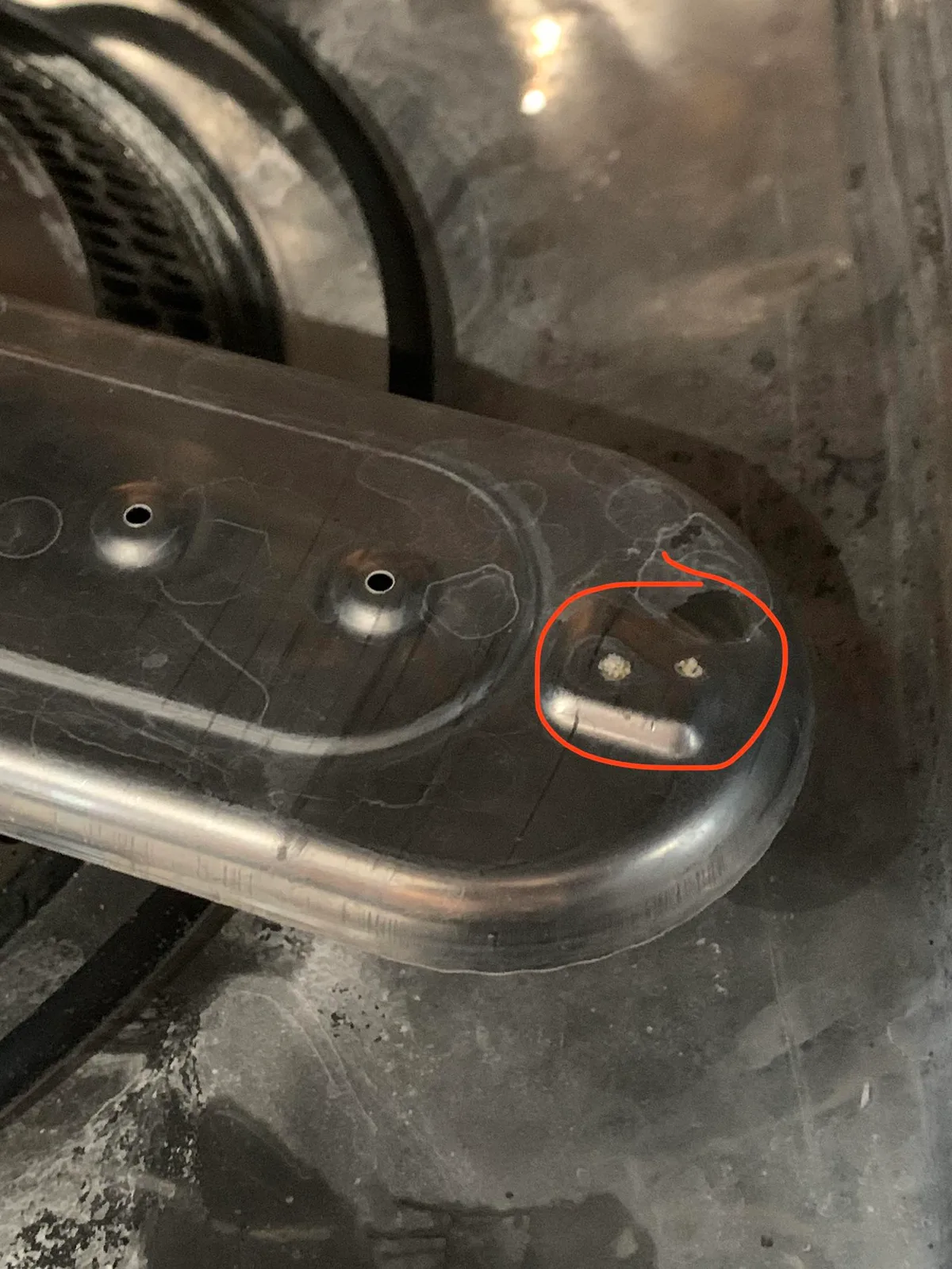
Image source: Web (Bing) / storage.googleapis.com (Web image (fair-use with source credit))
Clearing Spray Arms, Filters, and Racks
Clogged spray arms are the single most common cause of a suddenly louder Frigidaire. Food debris or mineral deposits from hard water block the tiny holes, and the water pressure pushes unevenly against whatever is stuck. Spin gets off-balance.
The unit wobbles and rumbles louder than it should.
Lift off the spray arm and flush each hole with a pin or toothpick. Run warm water through it. If it does not spin freely, the center retainer nut is probably tight against a warped rack.
Next, pull the filter mesh from the bottom of the tub. If you have not cleaned it in three months, it is probably black with gunk. The same cleaning steps you would use for a dishwasher filter routine apply here.
A clean filter lets the pump push through without strain, which quiets the whole machine.
Finally, look at your racks. Tilted plates hit each other mid-spin. Tall mugs block the spray arm.
Adjust for proper clearance. Run an empty cycle and listen.
If your noise is grinding during wash, also check your dishwasher dispenser and clear any residue sticking the valve shut.
Checking Door Gaskets and Water Supply Lines
The rubber gasket around the door keeps air in and noise out. If it is warped, hard, or lifting at the corners, your dishwasher will sound louder than neighbors'. Wipe it down, check for tears, and replace it if it is perished.
For supply lines, look under the sink. A loose hose connection or an oversized supply valve can cause water hammer, that loud banging sound when a valve closes under pressure. Learn to shut off water safely so you can test with the supply closed briefly.
If the noise goes away, tighten the connections and adjust the shut-off valve so it is not wide open.
These two checks take fifteen minutes. If nothing changes, move on.
If the Noise Persists: Deep-Dive Diagnostics
You are past the quick stuff now. Time to open the dishwasher up. This is where the real noise issues live, and where you need to be methodical.
Testing the Float Switch and Solenoid Valve
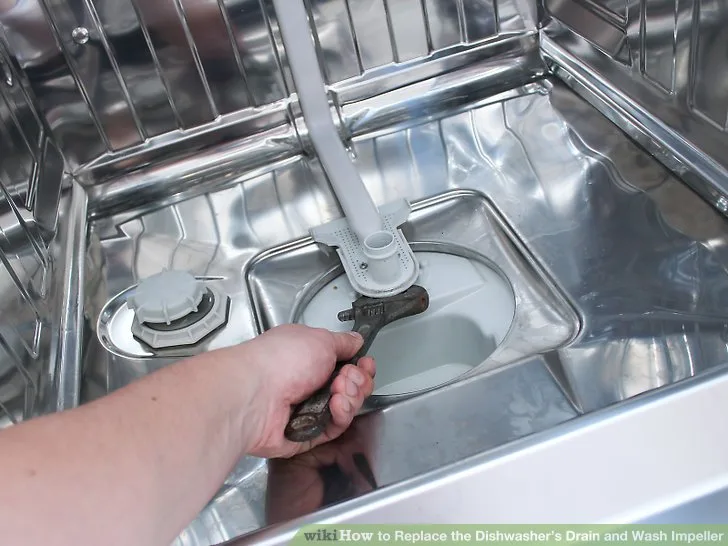
Image source: Bing (Web (fair-use with source credit))
The float switch sits at the bottom of the tub. It rises with the water and tells the control board when to shut off the fill. If it sticks, the board thinks the tank is overfilled and cycles the inlet valve erratically.
You hear clicking, hissing, or beeping as the valve tries and fails.
Lift the float by hand. It should move up and down without resistance. If mineral buildup is glued to the shaft, dunk it in vinegar for twenty minutes.
Reinstall and run a short cycle. If the clicking stops, you found it.
The solenoid valve is the electrically operated switch that routes water between fill, rinse, and drain. A failing solenoid makes loud clicking, or a steady hiss you might mistake for the motor. The good news is that solenoid valves are cheap.
The bad news is you need the exact part for your model. Look up your model number on the sticker inside the left door jamb, then order from Frigidaire parts.
Inspecting the Drain Pump and Motor Mounts
The drain pump is where the loudest Frigidaire noises come from. Pull the access panel at the bottom of the unit. Turn it off and disconnect the pump hose.
Remove the pump and look at the impeller inside. If the vanes are cracked, corroded, or covered in mineral deposits, replace the pump.
| Part | Typical Cost | Repair Difficulty |
|---|---|---|
| Float switch | $8 to $18 | Easy |
| Solenoid valve | $25 to $55 | Moderate |
| Drain pump module | $45 to $110 | Moderate |
| Motor mounts (set of 2) | $10 to $25 | Moderate |
| Spray arm kit | $15 to $35 | Easy |
Motor mounts are rubber pads between the motor and the dishwasher chassis. When they harden and crack, every vibration travels straight into the cabinet and back to you. Replacing them is straightforward and usually brings the noise level back under 50 decibels.
If you are not comfortable working behind the kickplate, this is the point where a professional makes sense. Do not force bolts that resist, and always unplug the unit before touching wiring.
The Repair vs. Replace Decision Guide
Here is the honest calculation. The average Frigidaire dishwasher lasts nine to twelve years. Repair costs vary, but so does the value of a ten-year-old appliance sitting in your kitchen.
Cost Thresholds and Unit Age Considerations
If your unit is under seven years old, repair is almost always the right call. Frigidaire backs its main drive motor with a nine-year warranty, per manufacturer specs, so many motor-related issues come free. A pump, float, or solenoid is a $40 to $110 part, and you buy years back.
If your unit is eight to ten years old and the problem is the motor itself, replacement usually wins. Motor assemblies alone can run $150 to $250, and the unit has limited life left. Add a service call and you are well into replacement territory.
A new mid-range Frigidaire is $450 to $700 as of 2026.
When to Call a Professional
Call a technician if the issue is a control board fault, a leaking water seal behind the pump, or any electrical work you are not comfortable with. Consumer Product Safety Commission guidance on home appliance repairs (CPSC.gov) recommends unplug, lockout, and verify circuit disconnect before touching internal wiring.
DIY if it is a pump, a float, a solenoid, or a spray arm. These are sealed replacements that do not require soldering. Pay a pro if you have to touch mains wiring, run new supply lines, or replace the main motor.
The $150 to $300 service call is worth it against a $500 kitchen flood.
Bottom line: match the cost of parts to the years left on the unit. Under seven, fix it. Over ten, replace it.
Mistakes That Make the Noise Worse
You might think the noise is just "part of how dishwashers are," but many common habits actually amplify the problem.
Wrong Detergent and Overloading
Using the wrong detergent is a classic mistake. Standard dish soap creates massive suds that clog the pump and force the motor to work harder to clear the excess foam. This pressure build-up results in loud gurgling or popping sounds during the drain cycle.
Switch to a low-suds formula made specifically for dishwashers.
Overloading is just as damaging. If plates are wedged tightly or blocking the spray arm rotation, water jets cannot clear debris efficiently. The machine then cycles through repeated wash attempts, running the motor and pump longer than necessary.
This extra wear generates noise and strain.
Ignoring Hard Water Buildup
If you live in a hard water region, mineral deposits are silently destroying your interior components. Lime scale builds up on the heating element, pump impeller, and spray arm nozzles over time. These deposits restrict water flow and create a grinding or scraping noise as the parts try to move against the crusty buildup.
We've seen cases where a simple vinegar cycle restores flow, but severe mineral deposits often require a descaling agent or professional cleaning. Check your local water hardness report. If the number is above 7 grains per gallon, you should treat the dishwasher more aggressively.
Maintenance Routines for Long-Term Quiet Operation
Once you have fixed the immediate issue, you need a plan to keep it from coming back. Think of your dishwasher like a car engine. It needs regular service to run smooth and quiet.
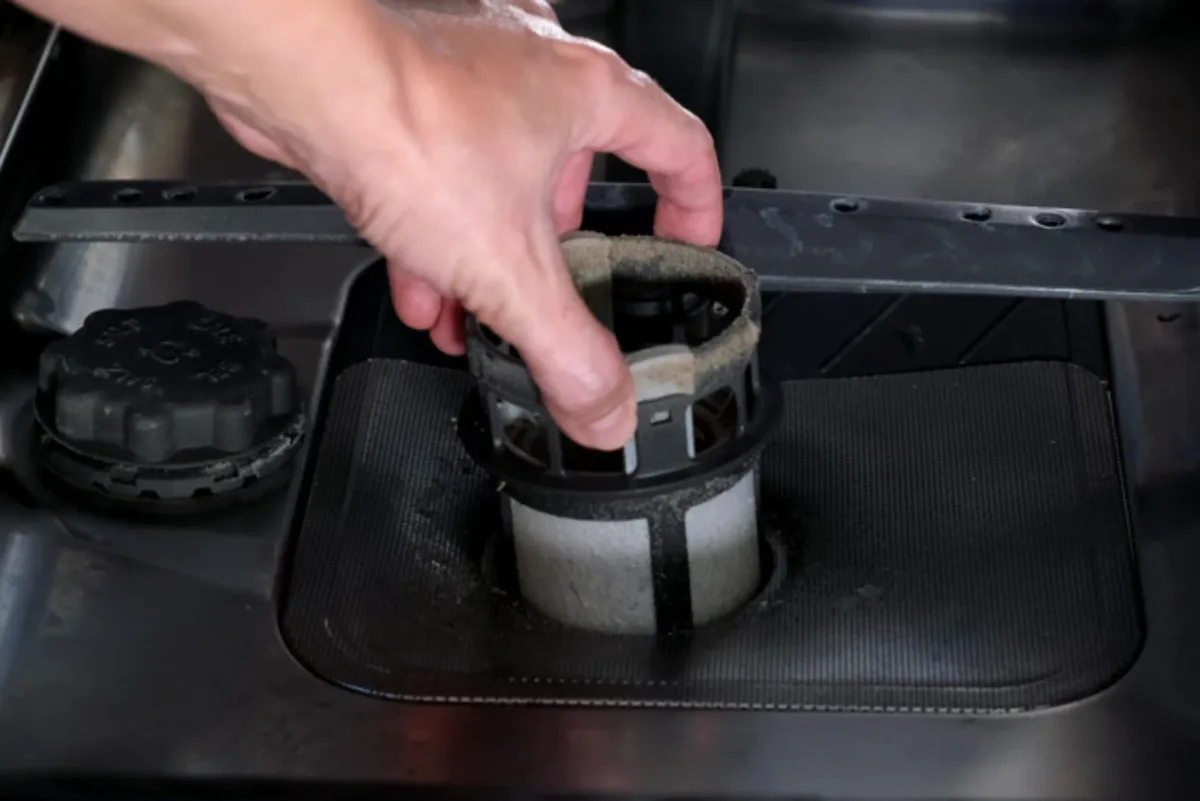
Image source: Web (Bing) / chooser.ae (Web image (fair-use with source credit))
Monthly Cleaning Habits
Spend ten minutes a month on your machine to prevent major issues. Start by cleaning the filter mesh, just like you would when removing the filter in a different brand. A clogged filter forces the drain pump to overwork.
Next, wipe the interior walls and door gasket to remove food residue and grease.
For the gasket, a soft cloth with mild soap works best. For the racks, a quick rinse helps prevent rust or coating chipping that can cause clattering noises. If you use a vinegar and baking soda routine, do this once a month to break down mineral deposits and neutralize odors.
Annual Inspections
Once a year, look at the big picture. Check the spray arms for clogged holes and make sure they spin freely. Inspect the door hinges for wear.
A loose hinge causes the door to vibrate against the frame, creating a rattling sound during cycles. Tighten any loose screws and apply a small amount of lubricant if the movement feels stiff.
You should also check the water supply connection under the sink for leaks. A slow drip here can cause a hissing noise that travels through the cabinet. Learn how to stop under-sink smells and leaks before they become bigger problems.
Keeping the connections tight and dry is essential for a quiet machine.
Frequently Asked Questions
Is it normal for my Frigidaire dishwasher to be loud?
It is normal to hear a low hum and the sound of water flowing. However, grinding, rattling, or roaring is not normal. A well-maintained Frigidaire should operate under 50 decibels.
If the noise disturbs conversation or sleep, something is wrong and needs investigation.
How often should I clean the dishwasher filter?
You should clean the filter once a month. If you have hard water or eat a lot of starchy foods, clean it every two weeks. A clogged filter causes the pump to work harder, leading to loud noises and poor cleaning performance.
It takes only five minutes to remove and rinse.
What is the best way to remove mineral buildup?
Run a cycle with two cups of white vinegar in the bottom of the tub. The vinegar dissolves lime scale on the heating element and spray arms. Follow with a dry run using baking soda to neutralize any remaining acidity and freshen the interior.
When should I stop repairing and buy a new dishwasher?
If the repair cost exceeds 50% of the price of a new unit, replace it. Also consider age. If your Frigidaire is older than ten years, a new model will likely be more energy efficient and significantly quieter.
Final Thoughts
Match the sound to the fix, and you have 80% of the answer. The rest is the cost versus age math, keeping the machine clean, and calling a pro when electrical work is involved.
