
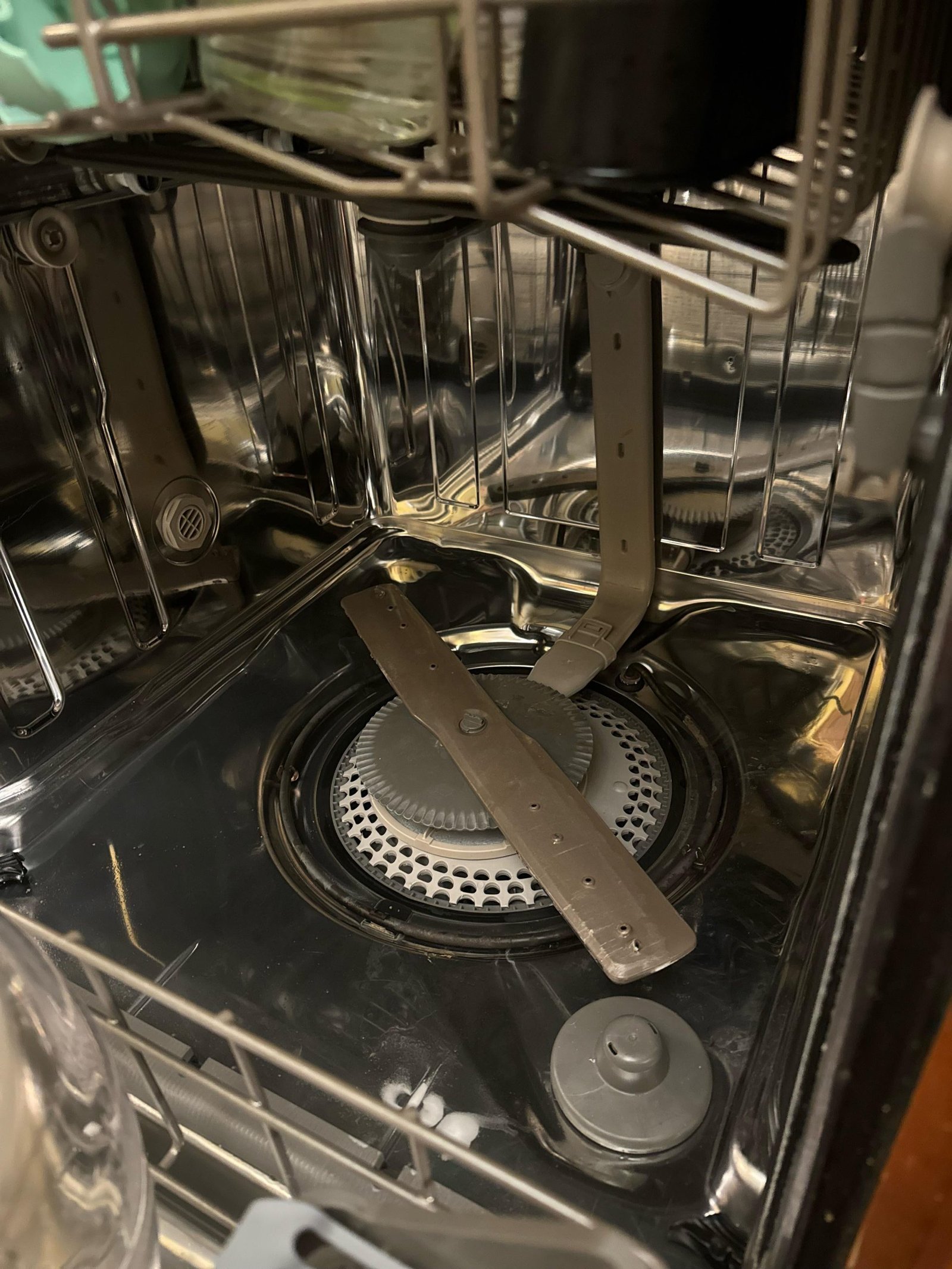
Are your dishes emerging from your Maytag dishwasher looking worse than they went in? Cloudy glassware, gritty plates, and a musty odor that lingers long after the cycle ends are all classic signs of a neglected filter. Before you blame the detergent or call a repair service, look at the one part of the machine most owners overlook: the filter assembly at the bottom of the tub.
This small component traps everything from rice grains to grease. When it becomes clogged, your dishwasher cannot drain properly, spray arms struggle to spin, and food particles get redeposited onto your supposedly clean dishes. The fix is often simpler than you think. In this fully updated 2026 guide, we cover everything from locating your specific model’s filter to deep cleaning the surrounding sump area. By the end, you will know exactly how to restore your dishwasher’s peak performance.
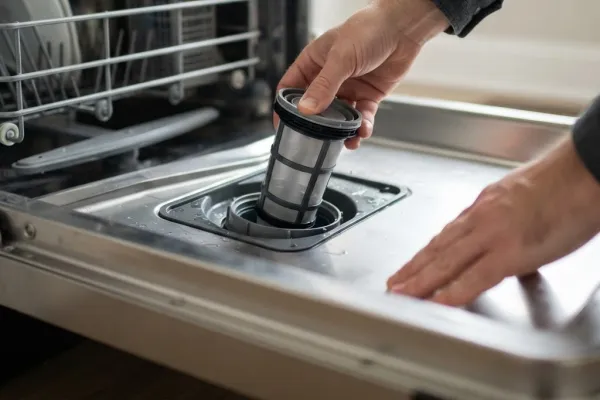
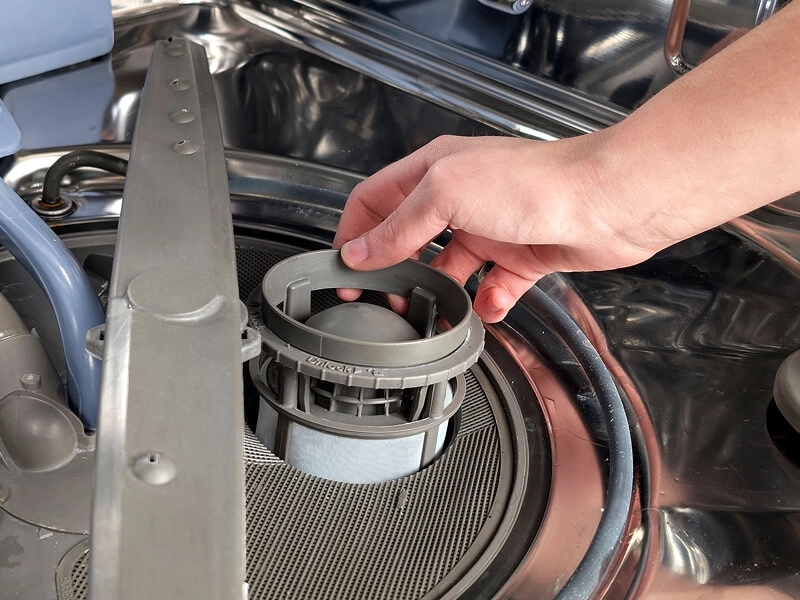 Carefully unlocking the filter assembly at the base of the tub before removal.
Why Your Maytag Dishwasher Filter Deserves Regular Attention
The filter’s job is simple: catch food solids before they reach the wash pump and recirculation system. When it is clean, water flows freely, detergent dissolves correctly, and dishes come out spotless. When it is dirty, everything suffers. A clogged filter forces the pump to work harder, leading to longer cycle times and potential mechanical failure. It also traps rotting food, which is the number one source of dishwasher odors.
Rinsing the filter under a tap takes less than one minute. Taking five minutes to give it a proper scrub once a month prevents the vast majority of common dishwasher problems. It is the single highest-impact maintenance task you can perform.
Preparing to Clean: Safety and Tools
Before you reach into the machine, take two critical safety steps. First, turn off the power to your dishwasher at the circuit breaker. This prevents the machine from accidentally startling you or engaging the pump while your hands are working near the sump. Second, wear rubber gloves. The filter housing can contain sharp debris (broken glass, bones) and residual hot water.
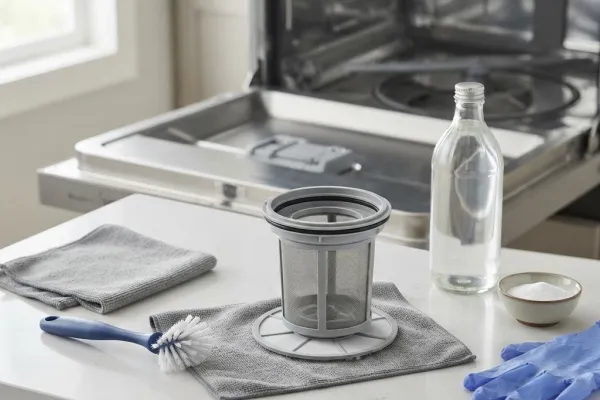 A toothbrush, mild dish soap, and warm water are all you need.
The tools required are purely household items:
- Soft bristle brush: An old toothbrush is ideal for scrubbing the fine mesh without damaging it.
- Mild dish soap: Avoid harsh detergents or bleach.
- Warm water: For rinsing and soaking.
- Microfiber cloth: For drying the filter and wiping out the sump cavity.
- White vinegar: Essential for dissolving grease and hard water scale during a deep clean.
 Disconnect power and wear gloves before starting any dishwasher maintenance.
What not to use: Never use steel wool, abrasive scouring pads, wire brushes, or harsh chemical drain cleaners. These will permanently scratch the plastic housing and tear the fine mesh, ruining the filter’s ability to trap debris.
Locating Your Maytag Filter: Two-Piece vs. Flat Screen Systems
In virtually every modern Maytag dishwasher — including the popular MH, MDB, and MMC series manufactured over the last decade — the filter is located at the bottom center of the tub, underneath the lower spray arm.
Most models use a two-piece filter system:
- Outer coarse strainer basket: Catches large food chunks and prevents them from grinding up against the pump.
- Inner fine mesh cup: Traps smaller particles that would otherwise recirculate onto your dishes.
Older Maytag dishwashers may use a single flat mesh screen that slides out rather than twisting. To confirm your exact setup, consult your user manual. If you have misplaced it, you can download a digital copy from the manufacturer’s official online portal.
Step-by-Step: How to Remove the Filter
Removing the filter takes about thirty seconds once you know the technique.
Step 1: Slide out the lower dish rack completely to give yourself clear access to the bottom of the tub.
Step 2: Locate the filter assembly. It sits directly in the center of the sump well. You will see a cylindrical handle or flat tab, depending on your model.
Step 3: Grip the filter handle firmly and twist it counterclockwise. Most Maytag filters require roughly a quarter turn before they release. You should feel a distinct click or give as the lock disengages.
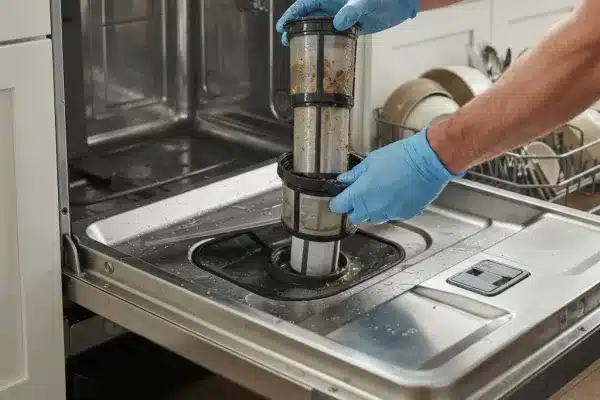
Step 4: Lift the filter straight up and out. Be prepared for a small amount of dirty water to pool in the housing as you lift — keep a towel or bowl nearby.
 A heavily soiled two-piece filter assembly lifted from the dishwasher sump.
If the filter feels stuck: Do not force it with tools. A piece of flatware or a bone fragment is likely jamming the mechanism. Gently rock the filter back and forth while pulling upward. If it remains locked, check your manual for model-specific release tabs.
How to Clean the Filter: Quick Rinse vs. Deep Clean
Quick weekly rinse: If you run heavy loads daily, simply rinsing the filter under warm running water and swishing it to dislodge loose particles can keep it functioning between deep cleans.
Thorough monthly deep clean: For best results, a deep clean should happen at least once per month.
- Separate the outer strainer from the inner fine mesh cup (if your model has two pieces).
- Rinse both components under warm water to remove loose debris.
- Fill a sink or bowl with warm water and a few drops of mild dish soap.
- Scrub every surface — especially the fine mesh — with your soft bristle brush using small circular motions. Pay special attention to the crevices where grease and particles embed themselves.
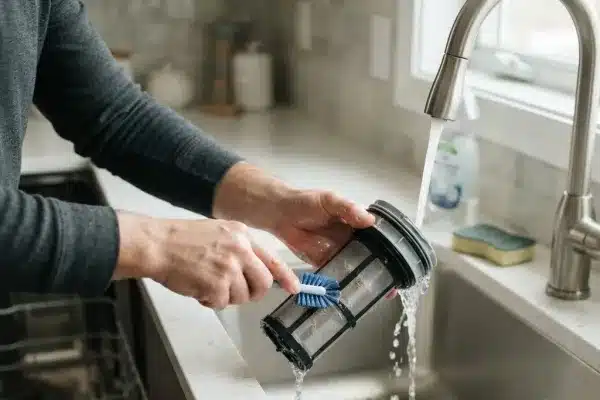 Gently work the brush into the mesh to dislodge embedded grime and grease.
Vinegar Soak for Tough Grease and Hard Water Scale
If the filter feels slippery with grease or shows white, chalky mineral deposits (common in hard water areas), soak it in a 50/50 solution of white vinegar and warm water for 15 to 30 minutes. Vinegar is a natural degreaser and descaler that breaks down buildup without damaging the plastic or mesh. After soaking, rinse thoroughly and give it a final scrub.
If you want to minimize mineral buildup going forward, selecting a detergent formulated for your water type can dramatically extend the time between deep cleans.
Clean the Sump Housing (The Step Most Guides Skip)
Your work is not done once the filter is clean. The cavity it sits in — the sump — collects standing water, food sludge, and grease. A clean filter dropped into a dirty sump will quickly become soiled again.
- Use a spray bottle to rinse the sump cavity thoroughly.
- Wipe it down with a damp microfiber cloth.
- Inspect the opening for any broken plastic or debris that could prevent the filter from seating correctly.
For a truly complete refresh, combine this with a full tub-cleaning cycle. Running a dishwasher cleaner tablet or a cup of white vinegar on the top rack will scour the internal plumbing. If you want to go even further, deep cleaning the entire dishwasher interior will leave your appliance in factory-fresh condition.
Correct Reinstallation
Reinstalling the filter incorrectly can cause rattling noises, poor water flow, and debris bypassing the filter entirely.
- Ensure the sump cavity is clean and dry.
- Place the outer strainer and inner mesh cup back together as one assembly.
- Lower the assembly into the sump, aligning the notch or arrow with the corresponding guide in the housing.
- Press down firmly and twist clockwise until you feel a solid lock. You should hear a click or feel the mechanism seat fully.
- Give the filter a gentle tug. If it lifts up easily, it is not locked. Twist it a little further until it is snug.
 Aligning the filter with the housing guide before twisting it into the locked position.
- Slide the lower dish rack back into place. Ensure it glides freely without scraping the filter.
- Run a short rinse cycle. Listen for any grinding or rattling, which indicates the filter is loose. Confirm the tub drains completely and the spray arms rotate freely.
When to Replace the Filter Instead of Just Cleaning
Filters are durable but not immortal. Inspect your filter closely every time you clean it. Replace it immediately if you see:
- Tears or holes in the fine mesh
- Cracks in the plastic housing
- Broken or worn locking tabs
- Warped shape that prevents it from seating tightly
- Persistent odors that return immediately after cleaning
Replacement filters for Maytag dishwashers typically cost between $20 and $40. This is a trivial investment compared to a service call for a pump damaged by debris traveling past a broken filter. The process is similar for Kenmore units and other major brands, so you can quickly apply the same routine to different appliances in your home.
Maintaining Your Filter and Dishwasher
| Task | Recommended Frequency |
|---|---|
| Quick filter rinse | Weekly (after heavy loads) |
| Deep filter scrub + sump wipe | Monthly |
| Run dishwasher cleaner / vinegar cycle | Every 1–3 months |
| Inspect spray arms for blockages | Every 3 months |
| Replace filter | Every 1–3 years or if damaged |
Establishing this schedule prevents the vast majority of performance complaints. It also protects your drain pump, which is one of the most expensive components to replace.
Troubleshooting Common Maytag Dishwasher Problems
 Water pooling in the tub after a cycle often points to a blocked filter or drain path.
Persistent bad odors: If smells linger after thoroughly cleaning the filter and sump, the drain hose or the area around the door gasket may be harboring bacteria. Running a tub cleaner helps, but preventing bad smells from returning requires addressing the entire water pathway. Shared plumbing can sometimes be the root cause, so checking the under-sink area for mold is a worthwhile next step.
Food particles on dishes after a cycle: A dirty filter is the most common cause. If the filter is clean, check the spray arms next. Food or mineral deposits can block the tiny spray holes. Clear them with a toothpick or a small wire.
Dishwasher not draining or taking too long: A severely clogged filter is the number one reason for standing water. Clean the filter first. If water still sits at the bottom, check the drain hose for kinks under the kitchen sink. For related plumbing issues, our comprehensive guide on handling other filter types shares the same fundamental concepts.
Unusual noises: A rattling sound often means the filter is not locked in place. A grinding noise can indicate debris has bypassed a damaged filter and is hitting the pump. Inspect and reseat the filter immediately.
Frequently Asked Questions (FAQ)

Can I run my Maytag dishwasher without the filter?
No. The filter protects the wash pump from large food particles. Running the dishwasher without it can cause immediate and costly damage to the pump and drain system.
Why is my Maytag filter turning black or smelling bad?
Black discoloration is typically mildew or mineral staining. A thorough scrub with soap and a vinegar soak usually restores it. If the odor remains heavy after cleaning, replace the filter — the material can absorb odors over time.
My filter is very hard to twist. How can I loosen it?
Try wearing rubber gloves for better grip. If it remains stuck, check for a piece of cutlery or a bone fragment jamming the mechanism. Never use pliers or a wrench on the filter housing, as you will crack the plastic.
How do I know if my filter is damaged?
Look for torn mesh, cracks in the plastic, or broken locking tabs. If the filter does not lock securely into place with a positive click, it is worn out and needs replacing.
Is a vinegar soak safe for my dishwasher filter?
Yes. White vinegar is a mild acid that safely dissolves grease and mineral scale without harming the plastic or stainless steel mesh. Rinse thoroughly after soaking to remove the vinegar smell.
Conclusion
Cleaning your Maytag dishwasher filter is a five-minute task that delivers disproportionate rewards. It eliminates odors, prevents food residue on dishes, shortens cycle times, and protects your machine from expensive pump damage. Make it a non-negotiable part of your monthly kitchen routine.
For more hands-on appliance care and home maintenance tips, browse our full library of kitchen maintenance advice. Extending this habit to other kitchen components — such as cleaning your range hood’s grease filter — keeps your entire ventilation system running efficiently. A few minutes of regular upkeep today saves you hours of frustration tomorrow.
Happy dishwashing!
