
You're staring at a cookie sheet that looks like it's been through a war. Burnt-on grease, dark spots, sticky residue from that batch of caramel that went sideways last week. You've tried scrubbing, maybe even soaked it overnight, but that stubborn layer just won't budge.
Here's the truth about how to clean metal cookie sheets: it depends entirely on what your sheet is made of and how bad the mess is. Aluminum sheets, the most common type, are lightweight but prone to pitting from acidic cleaners. Stainless steel is tougher and can handle more aggressive methods.
Non-stick coatings require gentle handling to avoid damage. Manufacturer specifications from brands like Nordic Ware and USA Pan confirm that using the wrong method can permanently damage the surface. So before you grab any cleaner, you need to know what you're working with.
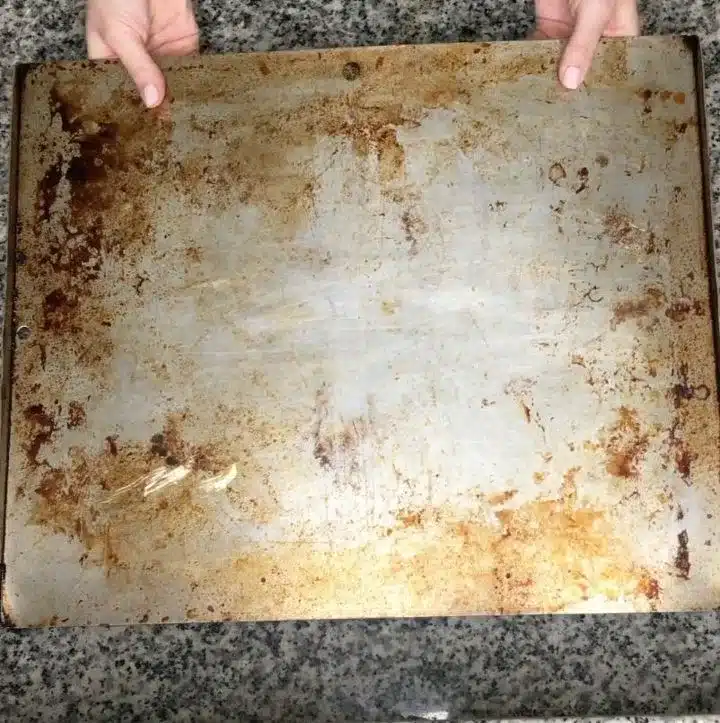
Image source: Web (Bing) / hometalk.com (Web image (fair-use with source credit))
When Your Cookie Sheet Looks Like a War Zone
The problem is simple. You bake. Things stick.
Grease burns on. Over time, that layer of carbonized food builds up until your once-shiny sheet looks like a relic from a dumpster fire.
But not all messes are the same. A light dusting of baked-on flour is nothing compared to a sheet that's been through a dozen batches of sticky barbecue wings. The method you choose depends on two variables.
First, the sheet material. Aluminum is reactive. It can pit and discolor if you use the wrong chemical.
Stainless steel is non-reactive and much more forgiving. Non-stick coatings are delicate and can be destroyed by abrasives or harsh chemicals like oven cleaner.
Second, the severity of the mess. Light grease and food residue can be handled with a simple baking soda paste. Heavy carbonized buildup might need oven cleaner.
Discoloration from oxidation requires an acid like cream of tartar.
If you're not sure what your sheet is made of, flip it over. Look for a stamp or engraving on the underside. "Aluminum" usually means bare aluminum.
"Stainless steel" or "18/10" means stainless. A dark, slick surface means non-stick.
Quick Answer: Which Cleaning Method for Your Sheet?
Pick your situation. The answer is right here.
| Your Sheet Type | Light Mess | Moderate Mess | Heavy Burnt-On |
|---|---|---|---|
| Aluminum | Baking soda paste | Hydrogen peroxide + baking soda | Oven cleaner (with caution) |
| Stainless steel | Baking soda paste | Bar Keepers Friend or hydrogen peroxide | Oven cleaner |
| Non-stick | Warm soapy water + soft sponge | Baking soda paste (gentle) | Replace the sheet |
For aluminum sheets with light grease, use a baking soda paste. For heavy carbon on stainless steel, oven cleaner works best. For non-stick coatings, never use abrasives or harsh chemicals.
If the coating is peeling or flaking, throw the sheet away and buy a new one.
How Each Cleaning Method Actually Works (The Chemistry)
Understanding why each method works helps you choose the right one. You don't need a chemistry degree. Just a simple breakdown.
Baking soda is a mild alkali. It reacts with grease and food acids to break them down. It's also a gentle abrasive, so it scrubs without scratching most metals.
The American Cleaning Institute confirms that baking soda is safe for food-contact surfaces when rinsed properly.
Hydrogen peroxide (3% solution) is a strong oxidizer. When mixed with baking soda, it creates a fizzing reaction that lifts burnt-on carbon. This combo is a powerhouse for aluminum and stainless steel.
But it's too aggressive for non-stick coatings.
Cream of tartar is an acid (tartaric acid). It reacts with the aluminum oxide layer that forms on old aluminum sheets. That's what causes the brownish discoloration.
The acid dissolves the oxide layer, restoring the original shine.
Oven cleaner contains sodium hydroxide (lye), a caustic chemical. It dissolves carbonized food by breaking down the organic bonds. It's extremely effective on aluminum and stainless steel.
But it will destroy non-stick coatings and can damage anodized aluminum.
Bar Keepers Friend uses oxalic acid. It's a mild acid that removes stains and oxidation without harsh abrasion. It's best for stainless steel and can be used on aluminum with care.
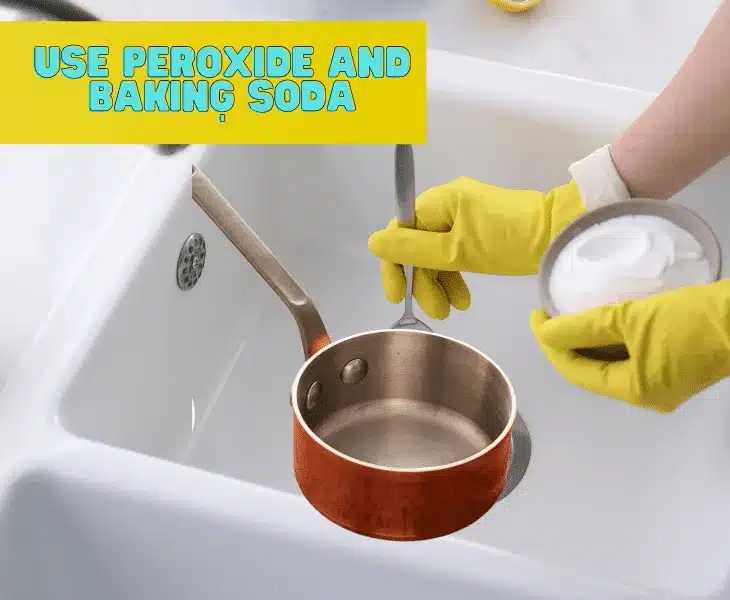
Image source: Bing (Web (fair-use with source credit))
Step-by-Step: The Baking Soda Method for Light Messes
This is your go-to for most everyday cleaning. It works on aluminum, stainless steel, and non-stick (with a soft sponge). Here's how to do it.
What you need:
- Baking soda (a box costs about a dollar)
- Water
- Soft sponge or non-abrasive scrub brush
- Paper towels
The steps:
Mix the paste. Combine 3 parts baking soda with 1 part water. You want a thick, spreadable paste. Not too runny, not too dry.
Apply to the sheet. Use your fingers or a sponge to spread the paste over the stained areas. Focus on the spots with the most buildup.
Let it sit. Give it 10 to 15 minutes. The baking soda needs time to react with the grease and food residue.
Scrub gently. Use a soft sponge in circular motions. You don't need to press hard. The paste does the work.
Rinse thoroughly. Use warm water. Make sure no baking soda residue remains. It can leave a white film if you don't rinse well.
Dry completely. Use a towel or let it air dry. Don't stack wet sheets. They can trap moisture and cause rust or discoloration.
This method is safe for non-stick coatings as long as you use a soft sponge. Never use steel wool or abrasive pads on non-stick. They'll scratch the coating, and it'll start flaking into your food.
Step-by-Step: The Hydrogen Peroxide Method for Burnt-On Carbon
When baking soda alone isn't enough, this is your next step. It's perfect for aluminum and stainless steel sheets with heavy burnt-on residue. It's not safe for non-stick.
What you need:
- 3% hydrogen peroxide (standard household strength)
- Baking soda
- Spray bottle
- Soft sponge or scrub brush
- Rubber gloves (optional, but recommended)
The steps:
Sprinkle baking soda. Cover the burnt areas with a thin layer of baking soda. Don't be shy. Use enough to coat the surface.
Spray with hydrogen peroxide. Fill a spray bottle with hydrogen peroxide. Spray it directly over the baking soda. You'll see it start to fizz immediately.
Let it react. The fizzing action lifts the carbonized food. Let it sit for 30 minutes. If the fizzing stops early, spray a little more hydrogen peroxide.
Scrub gently. Use a soft sponge. The residue should come off easily. If it's still stubborn, let the mixture sit longer.
Rinse thoroughly. Use warm water. Make sure all the hydrogen peroxide and baking soda are gone.
Dry completely. Towel dry or air dry. Stacking wet sheets can cause rust on stainless steel.
This method is much more effective than baking soda alone for burnt-on messes. The chemical reaction creates oxygen bubbles that physically lift the carbon from the metal surface. It's a safe, non-toxic alternative to oven cleaner for most situations.
Step-by-Step: The Oven Cleaner Method for Extreme Cases
Some cookie sheets cross a line. The carbon layer is thick enough to scrape off with a knife. Nothing else has worked.
This is when you bring out the heavy artillery.
What you need:
- Oven cleaner spray (sodium hydroxide based)
- Heavy-duty trash bag
- Rubber gloves
- Safety goggles
- Ventilated area (outdoors is best)
The steps:
Prepare your workspace. Take the sheet outside or open every window. Oven cleaner fumes are caustic. You do not want to breathe them in.
Put on gloves and goggles. This stuff burns skin on contact. Do not skip the safety gear.
Spray the sheet. Apply a thick, even layer of oven cleaner over the entire surface. Focus on the burnt areas. Do not spray the underside unless it is also dirty.
Seal it in the bag. Place the sheet inside the trash bag. Tie it closed. This traps the fumes and keeps the cleaner active. Let it sit overnight. Eight to twelve hours is the sweet spot.
Rinse thoroughly. Wear gloves for this step. Rinse the sheet with hot water. Scrub off any remaining residue with a soft sponge. Rinse again. Then rinse one more time. Any leftover oven cleaner will contaminate your next batch of cookies.
Wash with soap and water. Give it a final wash with dish soap and hot water. This removes any chemical residue. Dry completely.
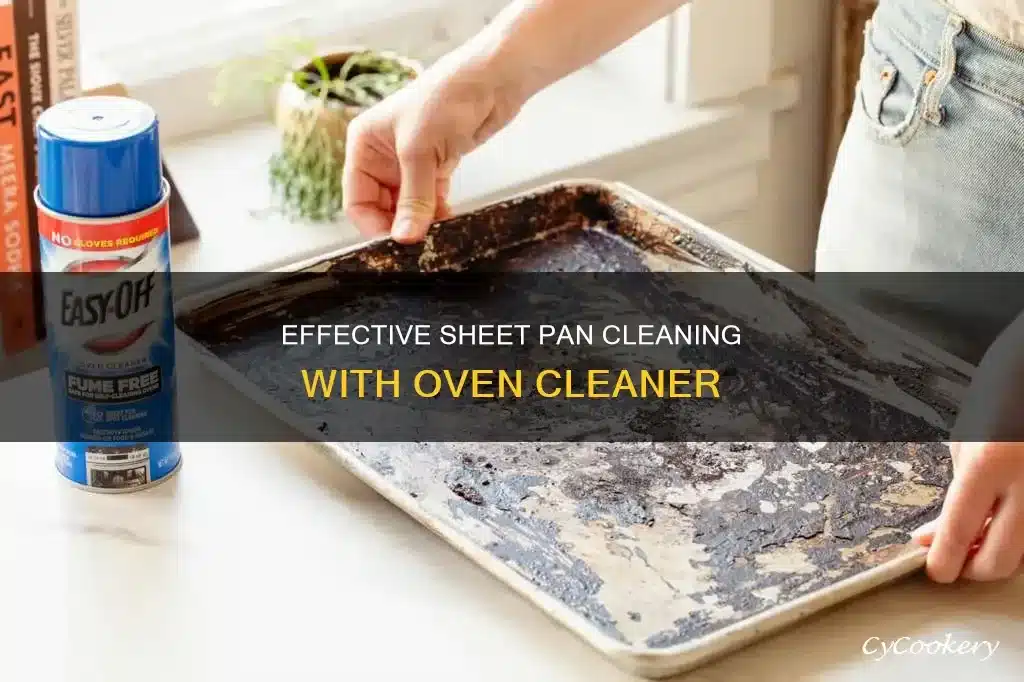
Image source: Bing (Web (fair-use with source credit))
This method works on aluminum and stainless steel. It does not work on non-stick. The caustic chemicals will strip the coating.
If your non-stick sheet is this bad, just replace it.
A word of caution: oven cleaner can also damage anodized aluminum. If your sheet has a dark, hard-anodized finish, check the manufacturer's instructions first. Some brands like Nordic Ware explicitly warn against oven cleaner on their anodized pans.
Step-by-Step: Restoring Discolored Aluminum with Cream of Tartar
Aluminum sheets develop a brownish discoloration over time. It looks like a stain, but it is actually oxidation. The aluminum reacts with air and food acids, forming a thin layer of aluminum oxide.
This layer is harmless, but it makes your sheets look old and dingy.
Cream of tartar fixes this. It is a mild acid (tartaric acid) that dissolves the oxidation layer. The result is a sheet that looks almost new.
What you need:
- Cream of tartar (found in the spice aisle)
- Water
- Soft sponge or cloth
- Paper towels
The steps:
Mix the paste. Combine 2 tablespoons of cream of tartar with a few drops of water. You want a thick paste, not a liquid.
Apply to the discolored areas. Rub the paste onto the brown spots. Cover them completely.
Let it sit. Give it 10 to 15 minutes. The acid needs time to react with the oxide layer.
Scrub gently. Use a soft sponge in circular motions. The discoloration should start to lift off. You might see a yellowish residue on the sponge. That is the oxide layer coming off.
Rinse thoroughly. Use warm water. Make sure no cream of tartar remains.
Dry completely. Towel dry or air dry. Your sheet should look noticeably brighter.
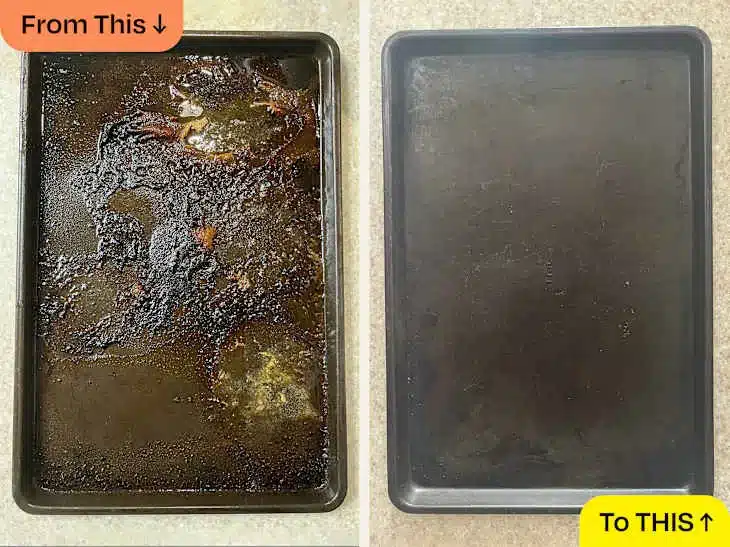
Image source: Bing (Web (fair-use with source credit))
This method is only for bare aluminum sheets. It will not work on stainless steel or non-stick. It also will not remove heavy carbon buildup.
For that, use the hydrogen peroxide method or oven cleaner first. Then use cream of tartar to restore the shine.
Cleaning Method Comparison: When to Use Each
You have four main methods. Each one has a specific job. Here is how they stack up.
| Method | Best For | Effort | Time | Safe for Non-Stick |
|---|---|---|---|---|
| Baking soda paste | Light grease, everyday messes | Low | 10-15 min | Yes (soft sponge) |
| Hydrogen peroxide + baking soda | Burnt-on carbon, moderate messes | Medium | 30 min | No |
| Oven cleaner | Extreme carbon buildup | High | 8-12 hours | No |
| Cream of tartar | Discoloration on aluminum | Low | 15 min | No (not needed) |
When to choose baking soda paste. Use this for 90% of your cleaning. It is safe, cheap, and effective. If you only want to remember one method, this is it.
When to choose hydrogen peroxide. Use this when baking soda alone is not enough. The fizzing action lifts burnt-on food that a paste cannot reach. It is still non-toxic, so it is a good middle ground.
When to choose oven cleaner. Use this only when the sheet has a thick, layered carbon crust. It is the nuclear option. It works, but it requires safety precautions.
When to choose cream of tartar. Use this only for cosmetic restoration. It removes oxidation, not food residue. Do it after you have cleaned the sheet with another method.
For everyday maintenance, you can also use the dishwasher. Sprinkle a little baking soda on the sheet before the cycle. The high heat and detergent help break down grease.
But this only works for light messes. It will not remove burnt-on carbon.
Common Mistakes That Ruin Cookie Sheets (And How to Avoid Them)
Most damage happens because people use the wrong method for their sheet type. Here are the biggest mistakes our research identified.
Using vinegar on aluminum. This is the most common mistake. Vinegar is acidic. It reacts with aluminum and causes pitting.
Small holes form on the surface. These holes trap food and make cleaning even harder. Never use vinegar on aluminum sheets.
Using steel wool on non-stick. Steel wool scratches the coating. Those scratches become places where food sticks. Eventually, the coating flakes off into your food.
Use only soft sponges on non-stick.
Soaking aluminum for too long. Prolonged soaking in water causes oxidation and discoloration. It can also cause pitting if your water is hard. Thirty minutes is plenty.
An hour is the absolute maximum.
Using oven cleaner on non-stick. The caustic chemicals dissolve the coating. Your sheet will be ruined. If your non-stick sheet is heavily burnt, throw it away and buy a new one.
Not rinsing thoroughly. Leftover cleaner residue can affect the taste of your food. It can also react with the metal during baking. Rinse at least twice.
Then wash with soap and water.
Stacking wet sheets. Trapped moisture can cause rust on stainless steel and discoloration on aluminum. Dry each sheet completely before stacking. If you must stack them, place a paper towel between each sheet.
Putting non-stick sheets in the dishwasher. The high heat and strong detergents degrade the coating over time. Hand wash only. The same applies to anodized aluminum sheets.
Safety Warnings: Oven Cleaner, Aluminum, and Non-Stick Coating
Some cleaning methods carry real risks. Here is what you need to know.
Oven cleaner safety. Sodium hydroxide is caustic. It can cause chemical burns on skin and permanent eye damage. Always wear rubber gloves and safety goggles.
Work in a ventilated area. If you use it indoors, open windows and turn on a fan. Keep children and pets away.
Aluminum reactivity. Aluminum reacts with acidic and alkaline cleaners. Vinegar, lemon juice, and oven cleaner can all cause pitting. Stick to baking soda and hydrogen peroxide for regular cleaning.
If you use oven cleaner, rinse thoroughly and do not let it sit longer than recommended.
Non-stick coating hazards. Non-stick coatings (PTFE) are safe at normal baking temperatures. But they can release fumes if overheated above 500°F. The USDA and FDA consider PTFE safe for food contact when used properly.
Never use metal utensils or abrasive cleaners on non-stick surfaces. If the coating is peeling or flaking, replace the sheet immediately.
Hydrogen peroxide precautions. Household 3% hydrogen peroxide is generally safe. But it can irritate skin and eyes. Wear gloves if you have sensitive skin.
Rinse thoroughly after use.
General kitchen safety. The FDA provides guidelines for cleaning food-contact surfaces. Always use food-safe cleaning methods. Rinse all chemicals completely.
If you are unsure about a method, check the manufacturer's website for their specific cleaning instructions.
Maintenance: How to Keep Sheets Clean Between Bakes
The best way to clean a cookie sheet is to not let it get filthy in the first place. A little maintenance saves you from hours of scrubbing later.
Use parchment paper or a silicone baking mat. This is the single most effective prevention method. The paper catches all the drips and spills. Your sheet stays clean underneath.
Unbleached parchment sheets are safe for oven use up to 425°F.
Wipe the sheet while it is still warm. After you remove your cookies, let the sheet cool for a few minutes. Then wipe it with a paper towel. The grease is still liquid and comes off easily.
This takes ten seconds.
Wash after each use. A quick scrub with hot soapy water and a soft sponge is enough for most bakes. Do not let grease sit overnight. It hardens and becomes much harder to remove.
Avoid the dishwasher for non-stick and anodized sheets. The high heat and harsh detergents degrade the coating. Hand wash only. For aluminum and stainless steel, the dishwasher is fine with a sprinkle of baking soda.
Store sheets with a barrier. If you stack your sheets, place a paper towel or a piece of parchment between each one. This prevents scratching and keeps them looking new longer.
Real Scenarios: Decision Matrix for 12 Common Situations
Here is a quick reference for the most common messes you will face.
| Your Situation | Sheet Type | Best Method |
|---|---|---|
| Light grease after baking cookies | Any | Baking soda paste |
| Burnt cheese from pizza | Aluminum or stainless | Hydrogen peroxide + baking soda |
| Burnt sugar from caramel | Aluminum or stainless | Boiling water + baking soda soak |
| Thick carbon crust | Aluminum or stainless | Oven cleaner (overnight) |
| Brown discoloration | Aluminum only | Cream of tartar |
| Sticky residue from labels | Any | Rubbing alcohol or cooking oil |
| Light grease, non-stick | Non-stick | Warm soapy water + soft sponge |
| Burnt-on food, non-stick | Non-stick | Baking soda paste (gentle) |
| Heavy carbon, non-stick | Non-stick | Replace the sheet |
| General maintenance | Any | Dishwasher + baking soda |
| Rust spots | Stainless steel | Bar Keepers Friend |
| Odor from stored sheets | Any | Baking soda paste + air dry |
Frequently Asked Questions
Can I use vinegar to clean my cookie sheet?
No. Vinegar is acidic and will pit aluminum sheets. It is safe for stainless steel, but baking soda works better and has no risk.
Stick to baking soda for all metal types.
How often should I deep clean my cookie sheets?
Deep clean every three to six months depending on use. If you bake weekly, do a hydrogen peroxide treatment every three months. If you bake daily, use oven cleaner twice a year.
Is it safe to use oven cleaner on aluminum sheets?
Yes, but with caution. Oven cleaner contains sodium hydroxide, which can react with aluminum if left too long. Follow the instructions exactly.
Rinse thoroughly. Do not use it on anodized aluminum.
Why do my cookie sheets smell after washing?
Trapped grease in the metal pores causes odors. The smell comes out when the sheet heats up. Fix it by scrubbing with a baking soda paste and letting the sheet air dry completely before storing.
Can I put my cookie sheets in the dishwasher?
It depends on the material. Aluminum and stainless steel are dishwasher safe. Non-stick and anodized aluminum are not.
The high heat and detergents will damage the coating over time.
What is the best method for non-stick cookie sheets?
Warm soapy water and a soft sponge. That is it. For stubborn residue, use a baking soda paste with a soft sponge.
Never use abrasives, steel wool, or oven cleaner on non-stick coatings.
Final Verdict: Your Decision Guide by Sheet Type and Mess Level
You now have everything you need to clean any cookie sheet. Here is the one-sentence summary.
For aluminum: Use baking soda paste for light messes, hydrogen peroxide for burnt-on carbon, oven cleaner for extreme cases, and cream of tartar for discoloration.
For stainless steel: Use baking soda paste or Bar Keepers Friend for most messes, and oven cleaner for heavy carbon buildup.
For non-stick: Use warm soapy water and a soft sponge. If that does not work, use a gentle baking soda paste. If the coating is damaged, replace the sheet.
The golden rule is simple. Know your sheet material. Match the method to the mess.
Rinse thoroughly. Dry completely. Your sheets will last for years and look good doing it.
If you are dealing with other kitchen cleaning challenges, you might find our guides on cleaning a flat top stove or maintaining the dishwasher filter useful for keeping your whole kitchen in top shape.
