
Can anything return full luster to a cloudy cooktop? Yes, but only when the haze sits on top of the glass. If the cloudiness comes from etching or scratches, no cleaner brings the shine back.
So start with diagnosis, not scrubbing.
In our research, manufacturer specs for glass-ceramic put surface hardness around 5.5 to 6.5 on the Mohs scale. That's hard enough to survive mild acids and soft pads. It's soft enough for steel wool to ruin.
Here's how to tell which problem you have, and what actually works.

Image source: Web (Bing) / tipsbulletin.com (Web image (fair-use with source credit))
Quick Answer: Can Anything Return Full Luster to a Cloudy Cooktop?
Yes, if the cloudiness is a removable film. Hard water, cleaner residue, and burnt grease usually wipe away. Etching, scratches, and heat tint are permanent.
Polish can soften minor scratches. It won't restore full luster. Deep damage means replacement.
Identify Your Cloudy Cooktop Problem: Film, Etching, Scratches, or Heat Tint
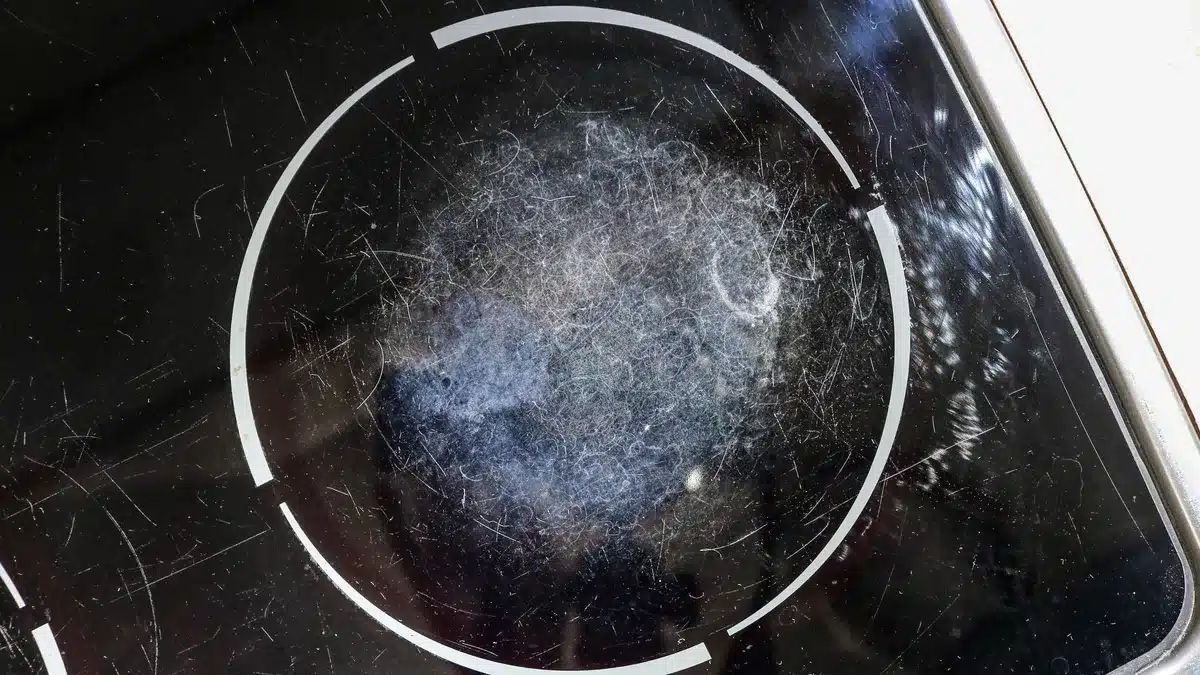
Image source: Bing (Web (fair-use with source credit))
Not all cloudiness is the same. Some sits on the glass like a coat of dust. Some eats into the surface itself.
Your first job is telling them apart.
Removable Haze vs Permanent Surface Damage
Removable haze feels slightly rough or sticky. It often shows streaks and fingerprints. Permanent damage feels smooth.
It can look like a rainbow, a white shadow, or fine lines.
| Damage Type | Appearance | Removable? |
|---|---|---|
| Mineral film | White, chalky haze | Yes |
| Cleaner residue | Streaky, dull film | Yes |
| Burnt-on residue | Brown or black crust | Yes |
| Etching | Gray or white shadow | No |
| Micro-scratches | Fine lines, dull spots | Partly |
| Heat tint | Rainbow or blue-gray | No |
How to Test If the Cloudiness Is on Top or In the Glass
Wipe a small area with warm soapy water. If the haze lifts, it's sitting on top. If it stays, the glass itself is damaged.
Run a fingernail across the spot. A film catches slightly. A scratch or etch won't catch at all.
If the surface feels smooth but still looks cloudy, you're likely dealing with etching or heat tint.
The Decision Tree: Which Fix Matches Your Cooktop's Cloudiness
Use this tree. Start with the gentlest method. Move up only if the haze stays.
Removable White Film or Hard Water Haze
If the film is white and chalky, it's minerals. Mix equal parts white vinegar and water. Spray it on, wait five minutes, then wipe.
Heavy scale responds better to a citric acid solution.
Burnt-On Residue, Melted Plastic, Foil, or Copper Marks
If you see crust or a metal streak, grab a razor scraper. Hold it at 45 degrees. Scrape gently in one direction.
Then apply an approved cooktop cleaner.
Cleaner Residue and Streaky Cloudiness
If the surface looks dull right after cleaning, you used too much product. Rinse with clear water. Buff dry with microfiber.
Paper towels leave lint behind.
Etching, Micro-Scratches, and Heat Tint
If the haze survives scraping and cleaning, it's permanent. Etching comes from acidic foods like lemon juice sitting too long. Heat tint comes from high heat or dry pots.
Polish can reduce micro-scratches. It won't fix etching.
Rainbow Discoloration and Heat-Related Tint
Rainbow rings mean heat damage. No cleaner removes them. Mild cases sometimes improve with cerium oxide polish.
Deep tint means replacement.
For daily habits that stop buildup in the first place, our notes on cleaning an electric stovetop are worth a look. If you cook with cast iron, seasoning cast iron properly also cuts down on metal transfer onto the glass.
Step-by-Step Workflow for Restorable Haze and Residue
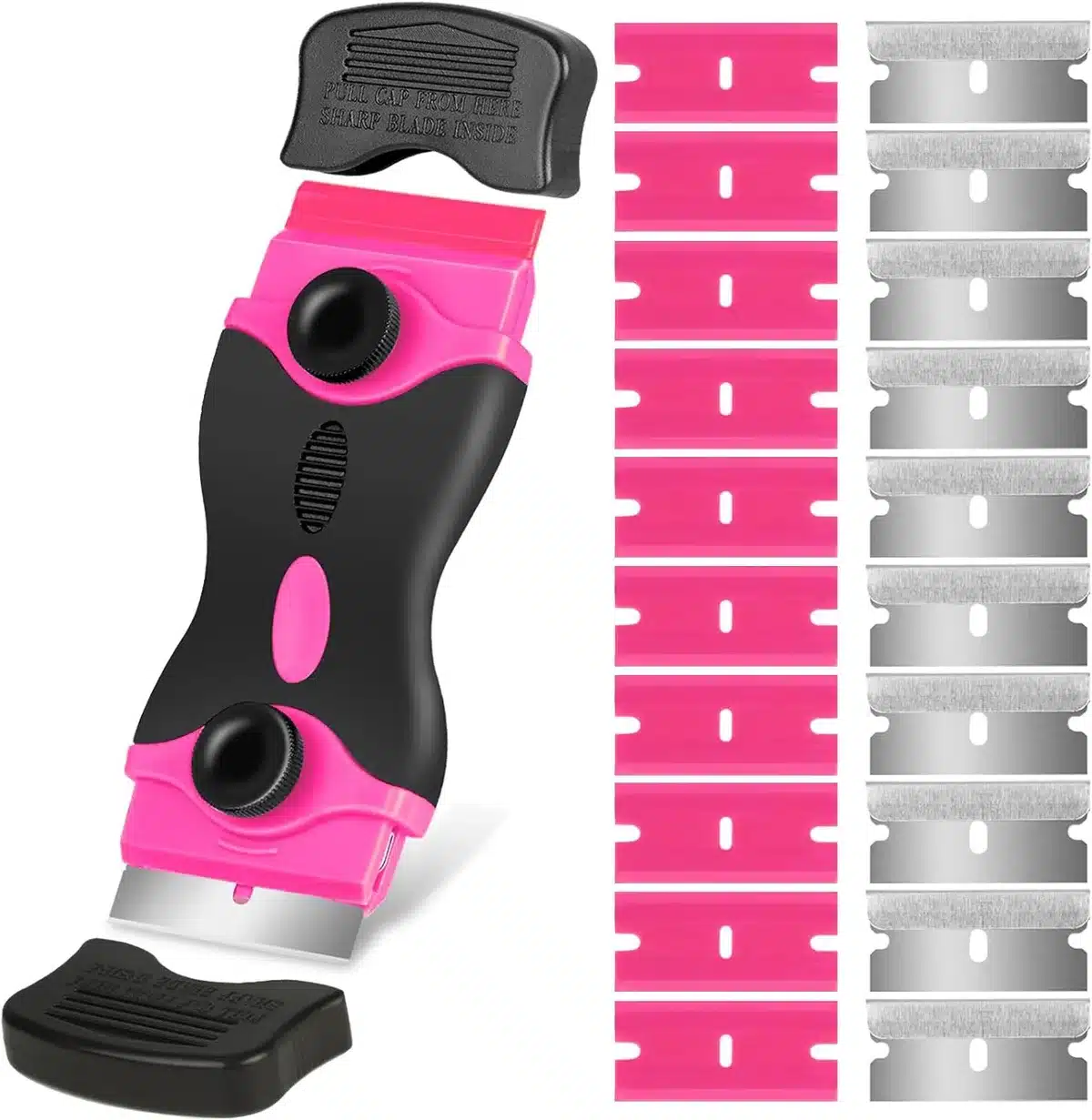
Image source: Web (Bing) / amazon.com (Web image (fair-use with source credit))
If your cooktop has removable haze, follow these steps. They work on glass-ceramic and induction surfaces alike.
What You'll Need
- Manufacturer-approved cooktop cleaner, cream or liquid
- Razor scraper with a new blade
- Two or three microfiber cloths
- White vinegar or citric acid powder
- Cerium oxide polish for micro-scratches
- A soft polishing pad
The Safe Cleaning and Polishing Sequence
- Let the cooktop cool completely. Warm glass can crack under cold water.
- Wipe away loose crumbs with a dry cloth.
- Apply warm soapy water and let it sit for two minutes.
- Use the razor scraper at 45 degrees on burnt-on bits.
- Apply cooktop cleaner and rub in circles with a soft pad.
- Wipe clean with a damp microfiber cloth.
- For mineral film, spray vinegar and water. Wait five minutes, then wipe.
- Rinse with clear water. Dry with a second microfiber cloth.
- For micro-scratches, apply cerium oxide polish and buff with a soft pad.
- Wipe away polish residue and buff to a shine.
How to Buff Back Clarity Without Scratching
Use light pressure. Let the polish do the work. Steel wool and scouring pads create new scratches.
Work in small sections and check your progress often.
Other kitchen gear benefits from the same gentle approach. Our guide to keeping your dishwasher filter clean follows the same logic. Good ventilation helps too, and fitting a ductless range hood cuts the grease that bakes onto the cooktop.
When Polish Won't Work: Repair vs Replace and What It Costs
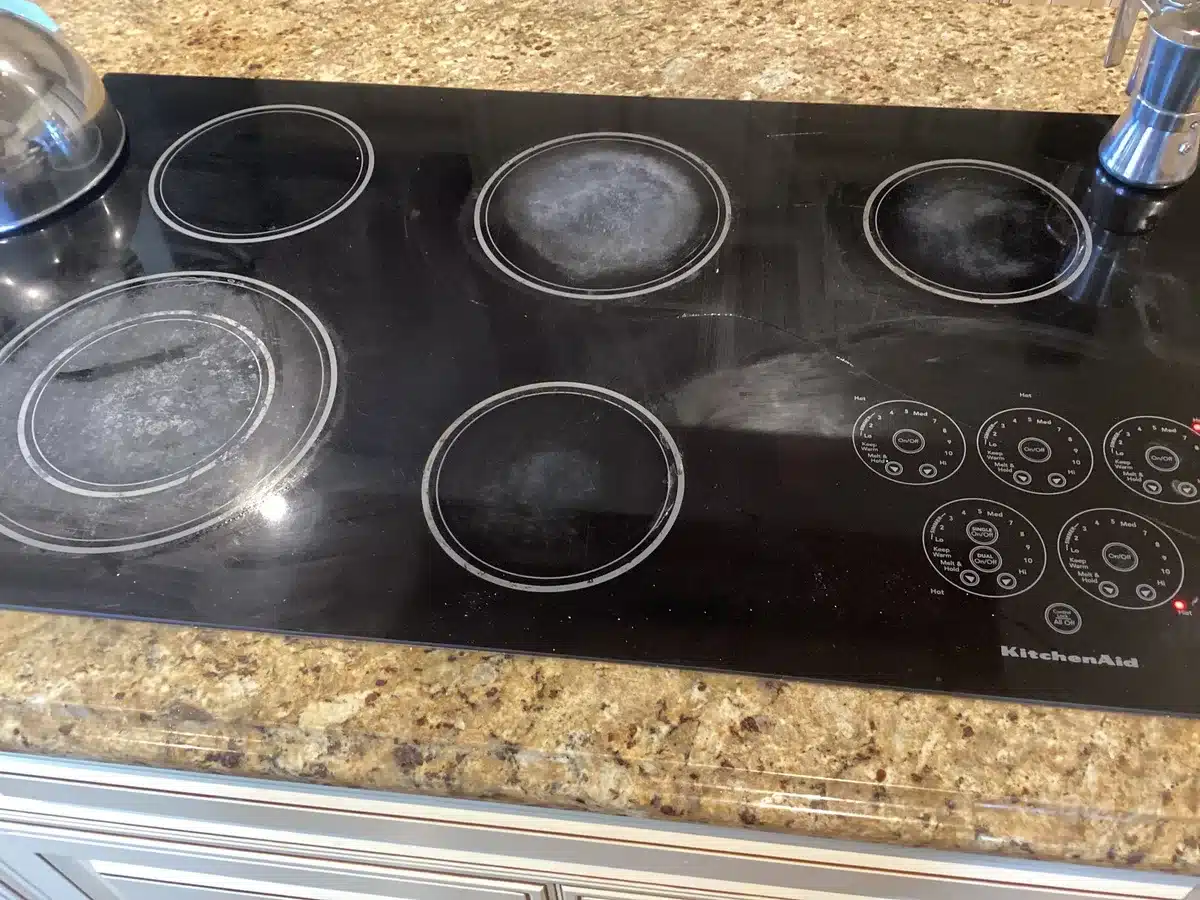
Image source: Web (Bing) / storage.googleapis.com (Web image (fair-use with source credit))
Etching, deep scratches, and heat tint ignore polish. Here's what to do instead.
Professional Glass-Ceramic Polishing
A pro can sometimes polish out light scratches with a rotary tool and cerium oxide. Most etching is too deep for that. Ask for photos of similar jobs before you pay.
Expect $100 to $400, as of 2026.
Cooktop Replacement vs Glass Panel Replacement
You have two options. Replace the whole cooktop or just the glass panel. Panel swaps cost less but aren't always available.
Many makers sell the glass as a single unit with the frame attached.
Costs, Timelines, and Realistic Outcomes
| Option | Cost Range | Timeline | Outcome |
|---|---|---|---|
| DIY polish kit | $15–$40 | 1–2 hours | Light scratches only |
| Pro polish | $100–$400 | 1–2 days | Mild scratches |
| Glass panel swap | $200–$600 | 1–2 weeks | Like new, if available |
| Full cooktop | $200–$1,200+ | 1–3 weeks | Like new |
Hard water film returns fast if your home supply is mineral-heavy. That's a plumbing issue as much as a cleaning one. Our piece on water quality from your pipes explains what to test.
Mistakes, Safety, and Warranty Risks That Can Make It Worse
A cloudy cooktop can go from fixable to ruined in one cleaning session. Most damage in aggregate user reports comes from a few avoidable choices.
Cleaners and Tools That Cause Permanent Damage
Never use oven cleaner on glass-ceramic. It's far too alkaline and can etch the surface. Bleach, ammonia, and scouring powder cause similar harm.
Steel wool and melamine foam leave micro-scratches. Those trap minerals and make future haze worse. Skip both.
Razor Scraper, Heat, and Electrical Safety Basics
Scrape only a cool surface. A hot cooktop plus a cold blade can crack the glass. Keep the blade at 45 degrees and swap it out when it dulls.
Never mix vinegar with bleach. The fumes are toxic. Ventilate the kitchen, and wear gloves when handling citric acid.
Manufacturer Warranty and Compliance Warnings
Improper cleaners can void your warranty. Check your manual before trying anything aggressive. Per UL 858 and IEC 60335-2-6, these surfaces are rated for normal cooking wear, not chemical stripping.
You can check recall status through the Consumer Product Safety Commission. For ventilation and fume guidance, the Occupational Safety and Health Administration publishes kitchen safety material.
Frequently Asked Questions
Can vinegar and baking soda remove cloudy film?
Yes, for mineral film and light grease. Use vinegar and water for haze, and a baking soda paste for burnt residue. Neither fixes etching or heat tint.
Rinse well afterward, because leftover paste leaves its own dull film.
Will cerium oxide polish restore a scratched cooktop?
It helps with light micro-scratches only. Cerium oxide is a fine abrasive that smooths shallow marks. Deep scratches and etching stay visible.
Expect improvement, not a full restore. Polish in small sections with light pressure.
Is cloudy heat tint permanent?
Yes. Heat tint comes from the glass itself changing, not from anything sitting on it. Rainbow rings and blue-gray shadows don't respond to cleaners or polish.
Replacing the glass panel or the full cooktop is the only real fix.
Does polishing void my warranty?
It can. Many manufacturers specify approved cleaners only. Abrasive polishing counts as unauthorized treatment on some models.
Read your warranty terms first. If the cooktop is still covered, ask the maker before you polish.
Can a professional make a cloudy cooktop look new again?
Sometimes, but only for surface-level problems. A pro can remove stubborn residue and polish mild scratches. Etching, deep scratches, and heat tint stay.
Get photos assessed before paying, then compare the quote against replacement cost.
Final Decision Guide: What to Try First, Skip, and When to Call a Pro
Work from the gentlest method upward. That one rule prevents most cooktop damage.
Try This First for Mild Haze
If the cloudiness is white, chalky, or streaky, start with warm soapy water. Move to a vinegar and water spray for minerals. Then use an approved cream cleaner with a soft pad.
Burnt-on crust gets the razor scraper at 45 degrees. Rinse, dry with microfiber, and check the result in good light.
Skip These If You Want to Avoid Permanent Damage
Skip oven cleaner, bleach, steel wool, and melamine foam. Skip dry scraping on a hot surface. Skip abrasive polishes on a cooktop still under warranty.
Call a Pro or Replace When the Damage Is Etched, Scratched, or Heat-Tinted
If the glass feels smooth but stays cloudy, it's etched. If you see fine lines that catch the light, those are scratches. If you see rainbow rings, that's heat tint.
None of those come back with cleaning. Compare a professional polish quote against replacement. Once the panel cost passes roughly half the price of a new unit, replacement usually wins.
For the rest of the kitchen, small maintenance habits do the heavy lifting. Our notes on dishwasher cleaning routines follow the same principle. Gentle, regular care beats aggressive fixes every time.
